

ESA’s Plato mission cleared a crucial review, confirming its 26-camera setup for exoplanet exploration.
The project, moving into its second phase, anticipates a critical design review in 2023 and a launch by 2026. Plato will study over 200,000 stars to enhance knowledge of exoplanets and stellar evolution.
Plato, ESA’s next-generation planet-hunting mission, has been given the green light to continue with its development after the critical milestone review concluded successfully on January 11, 2022.
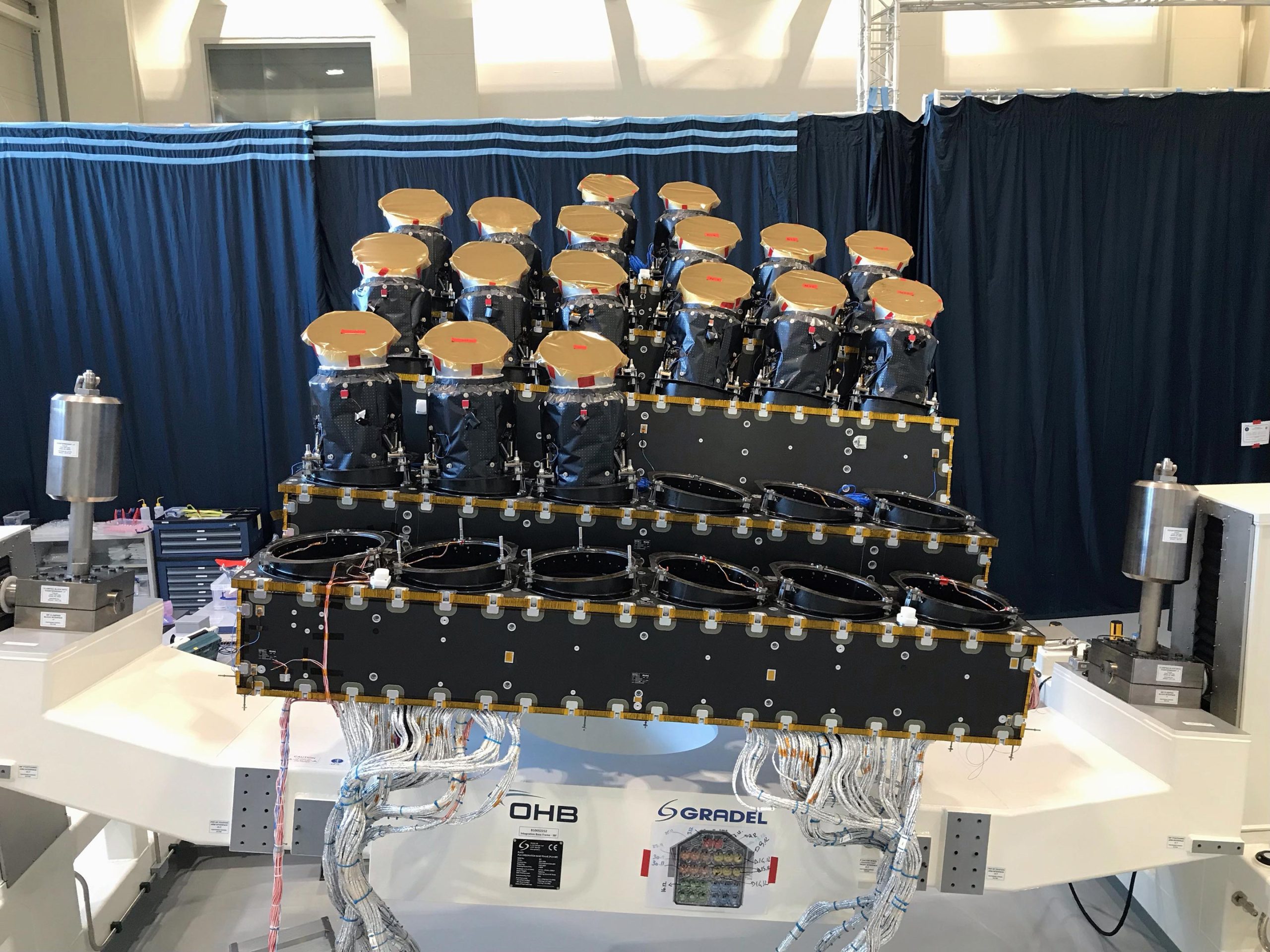
The review verified the maturity of the complete space segment (spacecraft platform and payload module), confirming the solidity of the spacecraft-to-payload interfaces, the payload schedule with particular focus on the series production of the 26 cameras, and the robustness of the spacecraft schedule. Plato will use the 26 cameras to discover and characterize exoplanets that orbit stars similar to our Sun.
Review Process and Technical Achievements
The critical milestone review was established specifically for Plato at the time of mission adoption because of the development risks associated with the series production of the cameras. The review was carried out during the period between July and December 2021. The review teams consisted of more than 100 people from ESA divided into two panels (one for the spacecraft and one for the payload) that submitted their findings to the board.
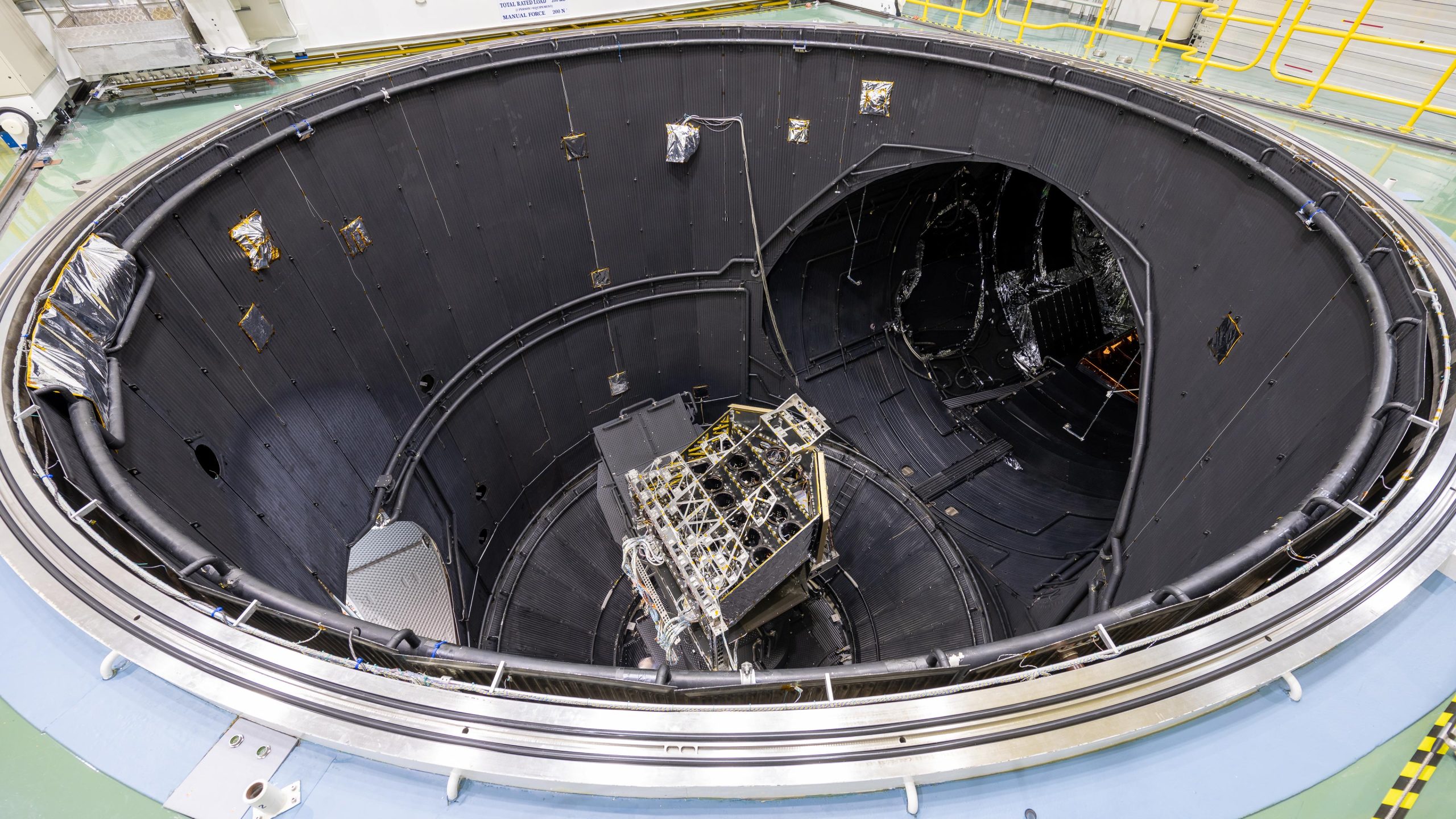
The review board meeting was held on 11 January 2022. Nearly all aspects of the cameras’ production, assembly, and testing have been exercised successfully with the tests of structural, engineering, and qualification models of the camera units carried out at several European facilities. The thermo-elastic properties of the optical bench, which hosts the cameras, were verified with a novel test technique developed by the spacecraft prime contractor, OHB System AG.
Next Steps and Collaboration
With the achievement of this milestone, the second phase of the industrial contract, led by OHB System AG as prime contractor with Thales Alenia Space in France and RUAG Space System Switzerland as part of the core team, can start.
The provision of the Plato payload is the responsibility of the European Space Agency in collaboration with a European consortium of institutes and industry, the Plato Mission Consortium (PMC) in accordance with the established Multi-Lateral Agreement (MLA) with the Agency.
Project Outlook and Anticipated Impact
The next major milestone for Plato is the spacecraft critical design review in 2023, which will verify the detailed design of the complete spacecraft before proceeding with its assembly.
“Plato continues a European tradition of excellence in all areas of space science,” said Filippo Marliani, project manager of Plato at ESA. “The mission will serve the science community to gather invaluable knowledge of planets in our galaxy, beyond our own solar system. The successful completion of the critical milestone and the formal start of the second phase of this extraordinary mission constitute an important boost of positive energy for the next challenges to be tackled with our industrial, institutional, and academic partners.”
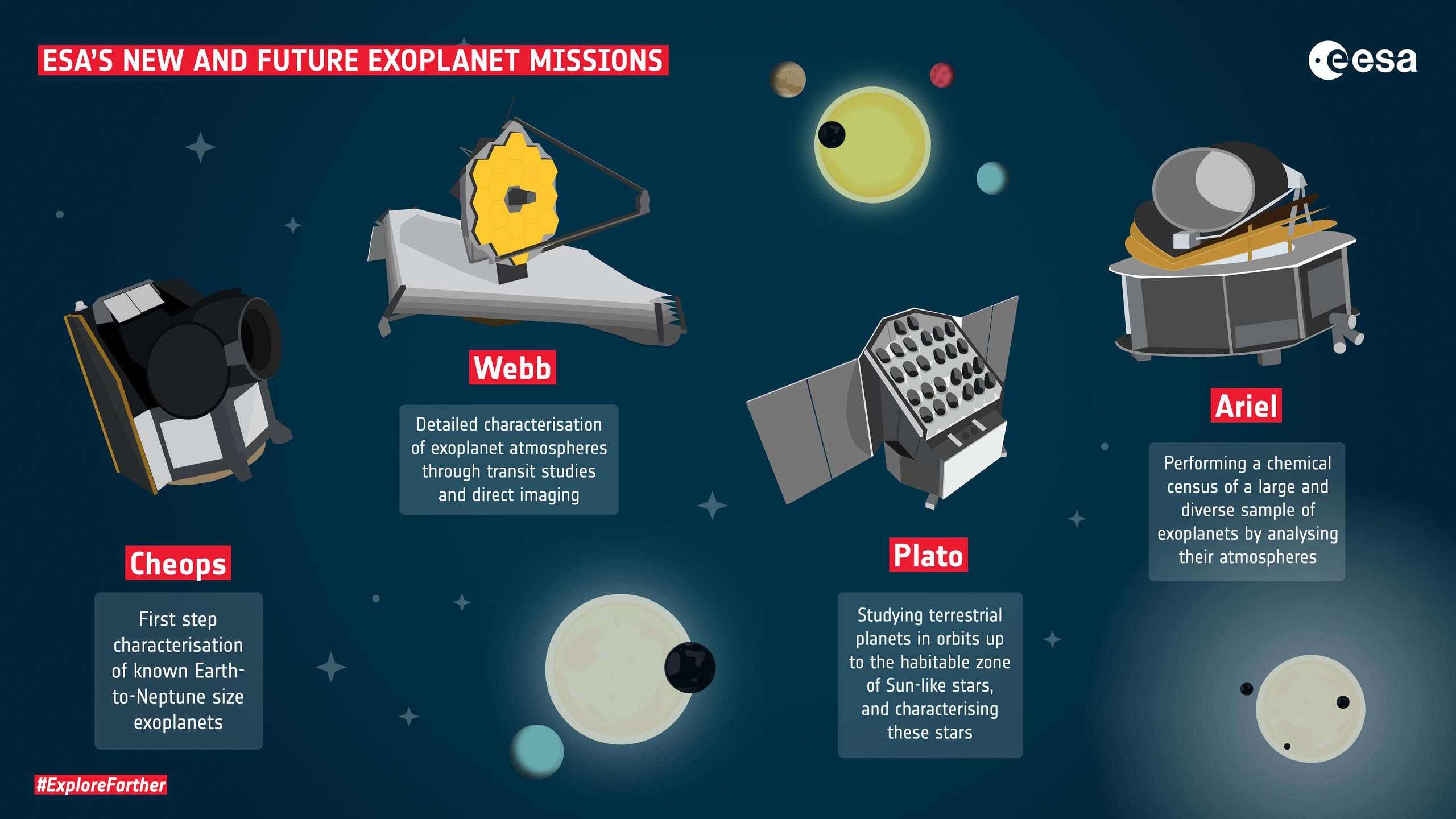
After launch, currently planned for end of 2026, Plato will travel to Lagrange point 2 in space, 1.5 million km (930,000 miles) beyond Earth in the direction away from the Sun. From this point the telescope will observe more than 200,000 stars during its four-year nominal operation, looking for regular dips in their light caused by the transit of a planet across the star’s disc. The analysis of these transits and of the stellar light variations will allow precise determinations of the properties of exoplanets and their host stars.
“After this successful review we can continue the implementation of this exciting mission that will revolutionize our knowledge of exoplanets down to Earth-size and open new venues in the study of the evolution of stars,” said Ana Heras, project scientist of Plato at ESA.
Plato, or PLAnetary Transits and Oscillations of stars, is the third medium-class mission in ESA’s Cosmic Vision program. Its objective is to find and study a large number of extrasolar planetary systems, with emphasis on the properties of terrestrial planets in the habitable zone around solar-like stars. Plato has also been designed to investigate seismic activity in stars, enabling the precise characterization of the planet host star, including its age.
Never miss a breakthrough: Join the SciTechDaily newsletter.
Follow us on Google and Google News.