
Close Menu
    Facebook X (Twitter) Instagram
    SciTechDaily
    • Biology
    • Chemistry
    • Earth
    • Health
    • Physics
    • Science
    • Space
    • Technology
    Facebook X (Twitter) Pinterest YouTube RSS
    SciTechDaily
    Home»Earth»NOAA-NASA Satellite Captures Fires, Smoke, Sulfur Dioxide, and Ash Across America
    Earth

    NOAA-NASA Satellite Captures Fires, Smoke, Sulfur Dioxide, and Ash Across America

    By Lynn Jenner, NASASeptember 10, 2020No Comments3 Mins Read
    Facebook Twitter Pinterest Telegram LinkedIn WhatsApp Email Reddit
    Share
    Facebook Twitter LinkedIn Pinterest Telegram Email Reddit
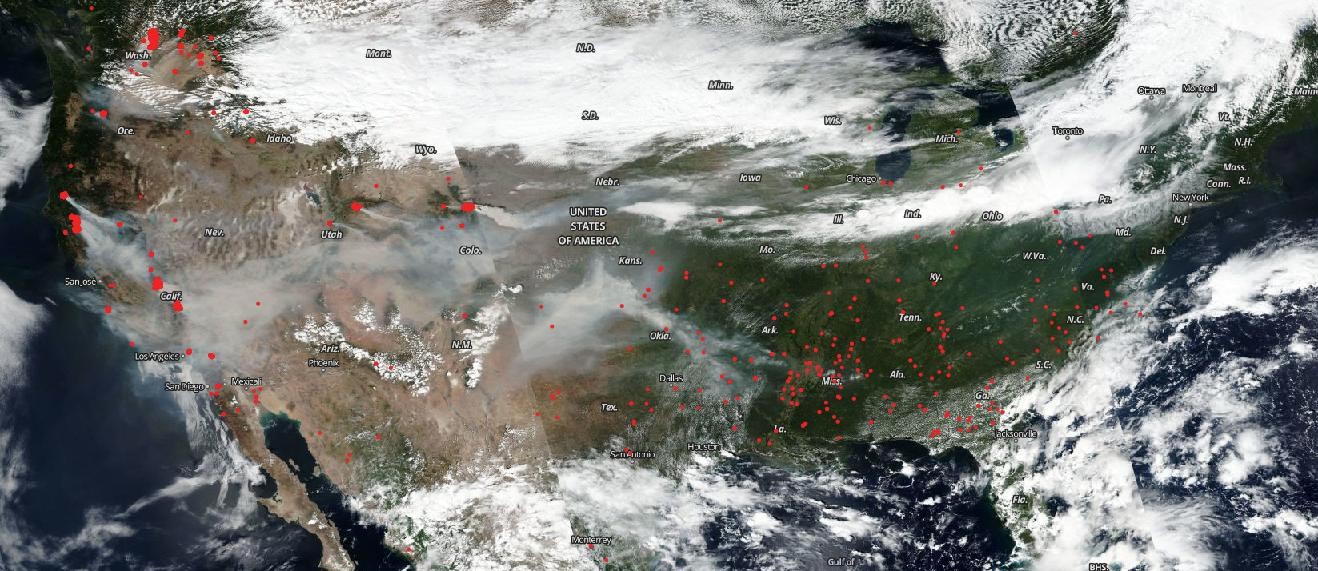
    Suomi NPP Satellite US Wildfires September 7, 2020
    The NOAA/NASA Suomi NPP satellite captured an image of fires across America on September 7, 2020. Credit: NOAA/NASA

    On September 7, 2020, NOAA/NASA’s Suomi NPP satellite provided two different views of how fires are affecting the U.S. A true-color image of the United States appears on the top image. Obscuring the surface is a blanket of smoke from California to Arkansas with a haze present over the East Coast as well. The Suomi NPP satellite also provided information about aerosols that were released from these fires and have traveled across the United States’ landscape as shown in the image below. 

    Although the OMPS suite was designed to measure ozone it also has the capability of measuring other atmospheric particles like sulfur dioxide and ash. The aerosol index (AI) value is related to both the thickness and height of the atmospheric aerosol layer. For most atmospheric events involving aerosols, the AI ranges from 0.0 to 5.0, with 5.0 indicating heavy concentrations of aerosols that could reduce visibilities or impact health. Color codes range from colorless (0.0) through yellow (.5 – 2.6), orange (2.7-3) deep red (>3 – 5.0). This image shows a significant area of deep red range which means aerosols in the area could potentially be dangerous to the health of those in that area.

    Suomi NPP Satellite OMPS US Wildfires September 7, 2020
    The OMPS (Ozone Mapper and Profiler Suite) on the Suomi NPP satellite was used to provide this image of the aerosols released from the burning fires which have traveled east. Credit: NOAA/NASA

    The smoke released by any type of fire (forest, brush, crop, structure, tires, waste or wood burning) is a mixture of particles and chemicals produced by incomplete burning of carbon-containing materials. All smoke contains carbon monoxide, carbon dioxide, and particulate matter (PM or soot). Smoke can contain many different chemicals, including aldehydes, acid gases, sulfur dioxide, nitrogen oxides, polycyclic aromatic hydrocarbons (PAHs), benzene, toluene, styrene, metals and dioxins. The type and amount of particles and chemicals in smoke varies depending on what is burning, how much oxygen is available, and the burn temperature.

    High aerosol concentrations not only can affect climate and reduce visibility, they also can impact breathing, reproduction, the cardiovascular system, and the central nervous system, according to the U.S. Environmental Protection Agency. Since aerosols are able to remain suspended in the atmosphere and be carried in prevailing high-altitude wind streams, they can travel great distances away from their source as evidenced in these images and their effects can linger.

    NASA’s Earth Observing System Data and Information System (EOSDIS) Worldview application provides the capability to interactively browse over 700 global, full-resolution satellite imagery layers and then download the underlying data. Many of the available imagery layers are updated within three hours of observation, essentially showing the entire Earth as it looks “right now.” Actively burning fires, detected by thermal bands, are shown as red points.

    Images Courtesy: NASA Worldview, Earth Observing System Data and Information System (EOSDIS).

    Never miss a breakthrough: Join the SciTechDaily newsletter.
    Follow us on Google and Google News.

    NASA Pollution Wildfires
    Share. Facebook Twitter Pinterest LinkedIn Email Reddit

    Related Articles

    NASA’s Eyes in the Sky Reveal LA’s Hidden Air Pollution Crisis

    Quebec Wildfires Spark “Hazardous” Air Crisis in Northeastern U.S.

    Northeast U.S. Chokes on Record-Breaking Wildfire Smoke From Quebec

    Unexpected Decrease in Air Pollution Over Parts of Africa

    NASA Satellite Data Shows Climate Change’s Impact on Fires [Video]

    NASA’s ECOSTRESS Detects Amazon Fires from International Space Station

    NASA Satellite Image: Amazon Fires Shroud South America in Smoke

    Carbon Monoxide From Brazil Fires Mapped by NASA Satellite

    NASA’s New Global View of CO2, Critical Step for Carbon-Cycle Science

    Leave A Reply Cancel Reply

    • Facebook
    • Twitter
    • Pinterest
    • YouTube

    Don't Miss a Discovery

    Subscribe for the Latest in Science & Tech!

    Trending News

    Scientists Discover New Compound That Burns Fat Without Killing Your Appetite

    Mount Vesuvius Buried These Scrolls for 2,000 Years – Now Scientists May Read Them

    The Asteroid That Killed the Dinosaurs Was Stranger Than We Thought

    Scientists Rewrite the Atomic Structure of Glass While It Melts

    DNA Has a Four-Letter Alphabet. Scientists Just Expanded It to Eight

    A Little-Known Protein Could Point to a New Way To Treat Alzheimer’s

    Scientists Turn Plastic Waste Into Protein-Rich Cookies

    New Findings Could Help Build Computers That Think More Like Your Brain

    Follow SciTechDaily
    • Facebook
    • Twitter
    • YouTube
    • Pinterest
    • Newsletter
    • RSS
    SciTech News
    • Biology News
    • Chemistry News
    • Earth News
    • Health News
    • Physics News
    • Science News
    • Space News
    • Technology News
    Recent Posts
    • Scientists Reassess a Major Risk of Breast Cancer Screening
    • Every Breath Leaves a Unique Signature in Your Brain, Study Finds
    • Natural Compound May Help Protect the Brain and Heart From Excess Salt
    • Could This Cellular “Cleanup Crew” Hold New Clues to Chronic Inflammation?
    • Four Million Ancient Coins Reveal What Really Held the Roman Empire Together
    Copyright © 1998 - 2026 SciTechDaily. All Rights Reserved.
    • Science News
    • About
    • Contact
    • Editorial Board
    • Privacy Policy
    • Terms of Use

    Type above and press Enter to search. Press Esc to cancel.