
Close Menu
    Facebook X (Twitter) Instagram
    SciTechDaily
    • Biology
    • Chemistry
    • Earth
    • Health
    • Physics
    • Science
    • Space
    • Technology
    Facebook X (Twitter) Pinterest YouTube RSS
    SciTechDaily
    Home»Earth»Unexpected Decrease in Air Pollution Over Parts of Africa
    Earth

    Unexpected Decrease in Air Pollution Over Parts of Africa

    By NASA Earth ObservatoryMarch 15, 20211 Comment3 Mins Read
    Facebook Twitter Pinterest Telegram LinkedIn WhatsApp Email Reddit
    Share
    Facebook Twitter LinkedIn Pinterest Telegram Email Reddit
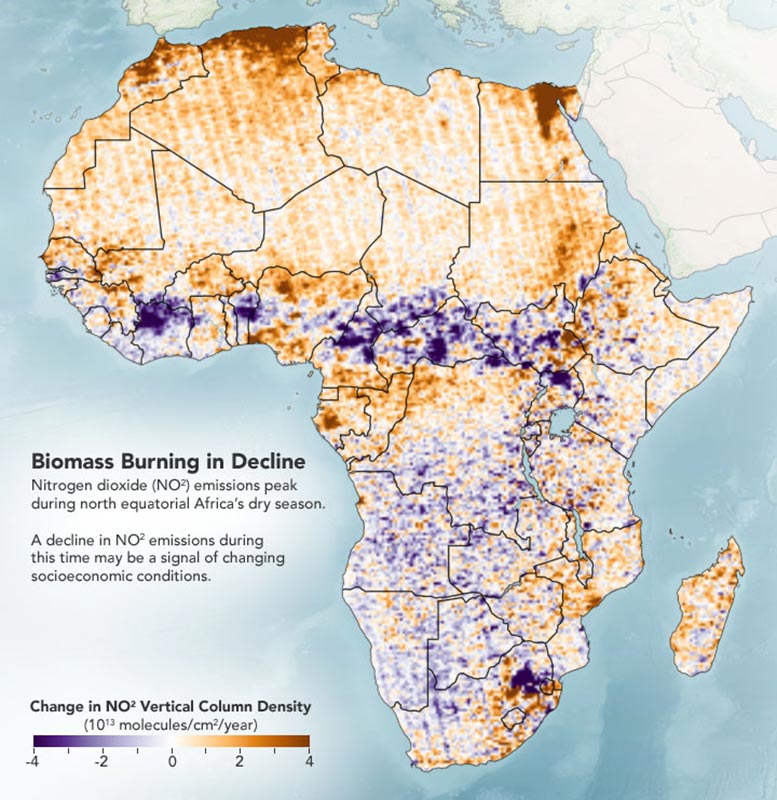
    Africa Biomass Burning in Decline
    2005 – 2017

    Changes in Fire Patterns Have Led to Seasonal Reductions in Nitrogen Dioxide Pollution

    Despite the growing use of fossil fuels in many African countries due to development and economic growth, there has been a small but unexpected decrease in air pollution over some parts of the continent in recent years. According to new research, the change is most evident during the dry season in areas where grassland fires traditionally occur. The small seasonal decrease may not be enough to offset increasing human-caused air pollution in the long term, but it does show an interesting shift in the region.

    Researchers from the U.S., France, and Cote d’Ivoire analyzed satellite observations of air pollution from 2005 to 2017. They found that nitrogen dioxide (NO2) concentrations over the northern grassland region of sub-Saharan Africa dropped by 4.5 percent during the dry season (November through February).

    NO2 is released as a byproduct of burning fossil fuels for electricity or transportation; from burning vegetation like grasslands or crops; and by the activity of soil microbes. The gas can cause or aggravate respiratory illnesses in humans and also can increase the formation of airborne particulates and ozone close to the Earth’s surface.

    Satellite Data Reveals Dry Season Trends

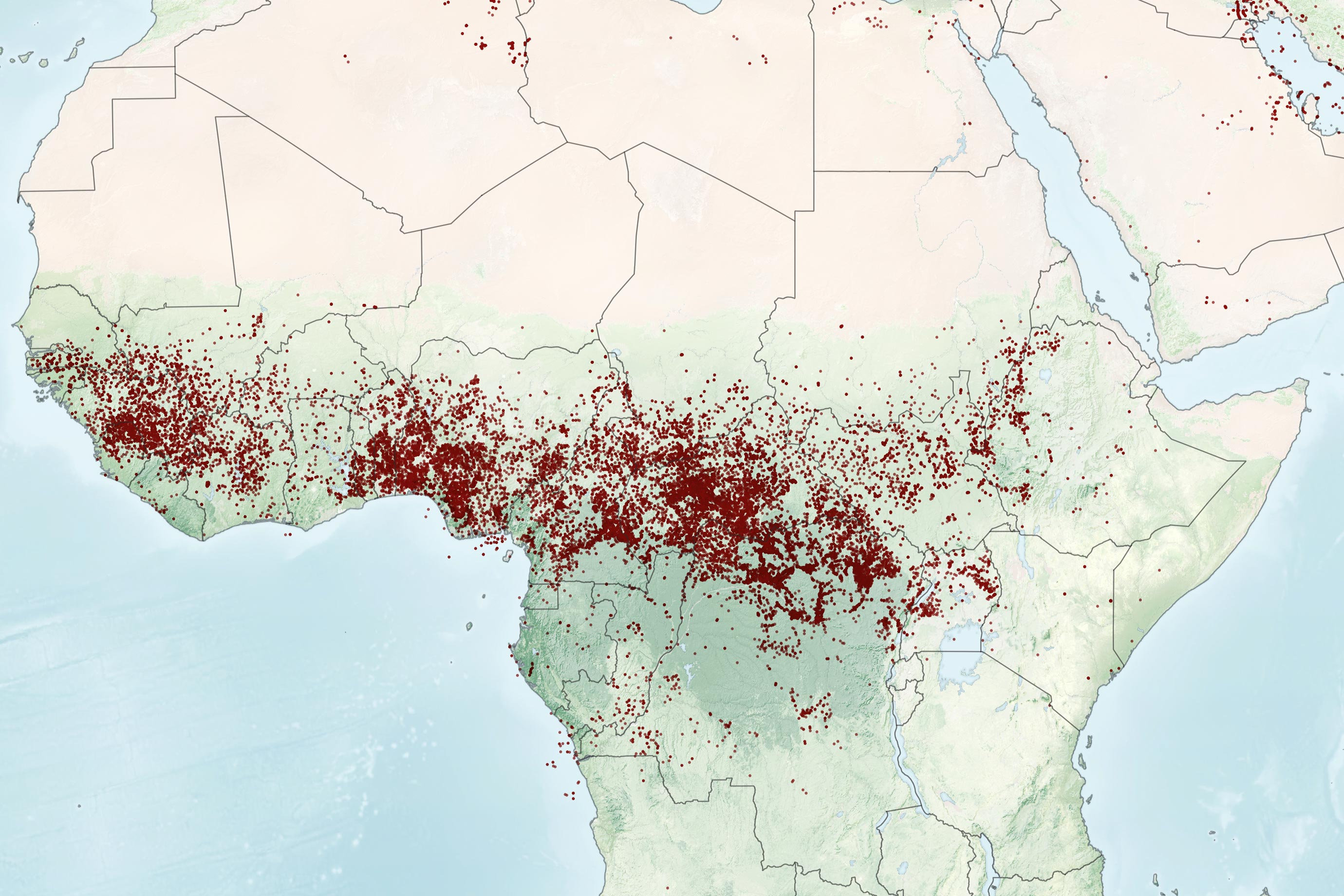
    The map above, derived from data collected by NASA’s Aura satellite, depicts changes in NO2 concentrations over Africa during November through February between 2005 to 2017. The natural-color image and map below displays fire detections and smoke in the region during a typical February, as observed by the Visible Infrared Imaging Radiometer Suite (VIIRS) on the Suomi NPP satellite.
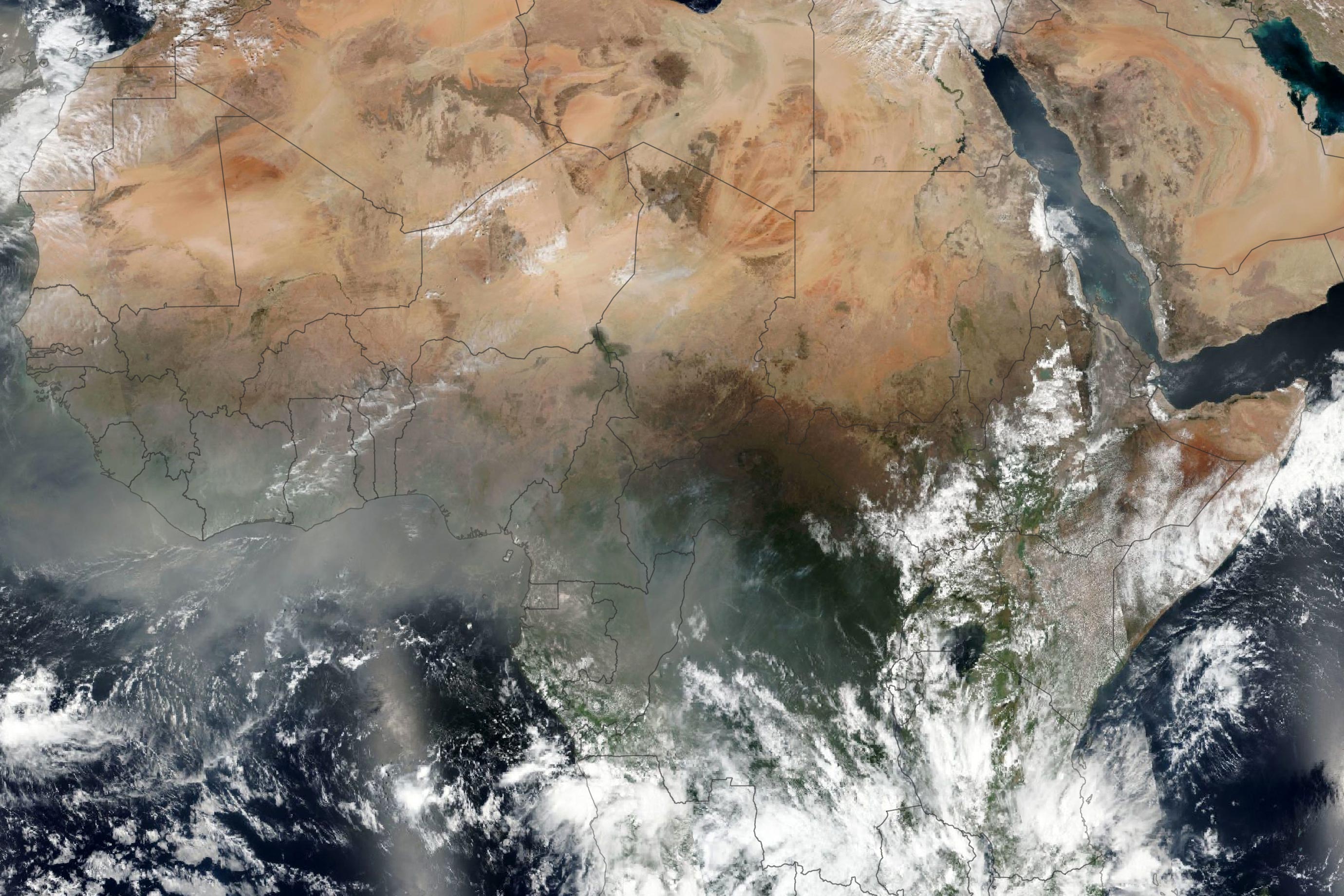
    Africa VIIRS February 2020 Annotated
    February 14, 2020. (Click the image for a high-resolution view.)
    Africa Fire Detections Map February 2020 Annotated
    February 14, 2020. (Click the image for a high-resolution view.)

    Urbanization and Changing Fire Practices

    Though the pollution decrease around equatorial Africa was small, it was unexpected because economies and urbanization have been growing in the region, and with it, fossil fuel consumption. The scientists attributed the change to a decrease in wildfires and controlled burns in grasslands during the dry season. The total area of savanna burned in sub-Saharan Africa is getting smaller each year as more people move into densely populated cities and towns, and as farming techniques and agricultural land use changes.

    Lead author Jonathan Hickman, a postdoctoral fellow at NASA’s Goddard Institute for Space Studies (GISS), cautions that this positive trend may continue only to a point. Eventually, there may be a net worsening of air quality as pollution from fossil fuel burning surpasses the seasonal decline in fires.

    NASA Earth Observatory images by Lauren Dauphin and Joshua Stevens, using VIIRS data from NASA EOSDIS LANCE, GIBS/Worldview and the Suomi National Polar-orbiting Partnership, and data courtesy of Hickman, J. E., et al. (2021). Story by Sofie Bates, NASA Earth Science News Team, with Mike Carlowicz.

    Never miss a breakthrough: Join the SciTechDaily newsletter.
    Follow us on Google and Google News.

    NASA NASA Earth Observatory Pollution Wildfires
    Share. Facebook Twitter Pinterest LinkedIn Email Reddit

    Related Articles

    NASA’s Eyes in the Sky Reveal LA’s Hidden Air Pollution Crisis

    Quebec Wildfires Spark “Hazardous” Air Crisis in Northeastern U.S.

    Northeast U.S. Chokes on Record-Breaking Wildfire Smoke From Quebec

    Smoke Shrouds the U.S. West After More Than 10,000 Lightning Strikes Ignite Hundreds of Wildfires Across California

    Thick Smoke Obscures California Skies After Wildfires Exploded Across the North

    NASA/NOAA Satellites Observe Surprisingly Rapid Increase in Scale and Intensity of Fires in Siberia

    Massive Mineral Fire Observed From Space – Burned More Than 28,000 Acres in California

    NASA Satellite Watches as Bush Fire Scorches Land Near Phoenix

    NASA Satellites Spot Several Wildfires Near Chernobyl Exclusion Zone

    1 Comment

    1. xABBAAA on March 19, 2021 1:37 am

      … plant the tree, don’t cut them,…
      … or if one needs one, plant at least three of new ones…

      Reply
    Leave A Reply Cancel Reply

    • Facebook
    • Twitter
    • Pinterest
    • YouTube

    Don't Miss a Discovery

    Subscribe for the Latest in Science & Tech!

    Trending News

    Millions Take These IBS Drugs, But a New Study Finds Serious Risks

    Scientists Unlock Hidden Secrets of 2,300-Year-Old Mummies Using Cutting-Edge CT Scanner

    Bread Might Be Making You Gain Weight Even Without Eating More Calories

    Scientists Discover Massive Magma Reservoir Beneath Tuscany

    Europe’s Most Active Volcano Just Got Stranger – Here’s Why Scientists Are Rethinking It

    Alzheimer’s Symptoms May Start Outside the Brain, Study Finds

    Millions Take This Popular Supplement – Scientists Discover a Concerning Link to Heart Failure

    The Universe Is Expanding Too Fast and Scientists Can’t Explain Why

    Follow SciTechDaily
    • Facebook
    • Twitter
    • YouTube
    • Pinterest
    • Newsletter
    • RSS
    SciTech News
    • Biology News
    • Chemistry News
    • Earth News
    • Health News
    • Physics News
    • Science News
    • Space News
    • Technology News
    Recent Posts
    • Doctors Surprised by the Power of a Simple Drug Against Colon Cancer
    • Why Popular Diabetes Drugs Like Ozempic Don’t Work for Everyone: The “Genetic Glitch”
    • Scientists Create Improved Insulin Cells That Reverse Diabetes in Mice
    • Scientists Stunned After Finding Plant Thought Extinct for 60 Years
    • A Common Diabetes Drug May Hold the Key to Stopping HIV From Coming Back
    Copyright © 1998 - 2026 SciTechDaily. All Rights Reserved.
    • Science News
    • About
    • Contact
    • Editorial Board
    • Privacy Policy
    • Terms of Use

    Type above and press Enter to search. Press Esc to cancel.