
Close Menu
    Facebook X (Twitter) Instagram
    SciTechDaily
    • Biology
    • Chemistry
    • Earth
    • Health
    • Physics
    • Science
    • Space
    • Technology
    Facebook X (Twitter) Pinterest YouTube RSS
    SciTechDaily
    Home»Earth»Smoke Shrouds the U.S. West After More Than 10,000 Lightning Strikes Ignite Hundreds of Wildfires Across California
    Earth

    Smoke Shrouds the U.S. West After More Than 10,000 Lightning Strikes Ignite Hundreds of Wildfires Across California

    By Kasha Patel, NASA Earth ObservatoryAugust 21, 2020No Comments3 Mins Read
    Facebook Twitter Pinterest Telegram LinkedIn WhatsApp Email Reddit
    Share
    Facebook Twitter LinkedIn Pinterest Telegram Email Reddit
    GOES California Wildfire Smoke August 2020 Annotated
    August 20, 2020. (Click image for high-resolution view.)

    After more than 10,000 lightning strikes in 72 hours, hundreds of wildfires erupted across California, particularly in the northern part of the state. The fires, which have been exacerbated by a historic heatwave, have burned more than 300,000 acres (1,200 square kilometers) in the state since August 16, 2020. Smoke has spread across large swaths of the western United States and the Pacific Ocean.

    Around noon on August 20, 2020, the Geostationary Operational Environmental Satellite 17 (GOES-17) captured a natural-color image of the smoke (above). GOES-17 is operated by the National Oceanic and Atmospheric Administration (NOAA); NASA helps develop and launch the GOES series of satellites.

    Wildfire smoke is dangerous because it carries tiny, harmful particles into the air. Known as aerosols, these solid and liquid particles can degrade air quality and cause breathing and lung problems, particularly for people with asthma. Long-term exposure to air pollution can also contribute to heart disease and cancer.

    The map below shows the concentration of black carbon particulates—commonly called soot—at 12:30 a.m. on August 20. Black carbon can harm humans and other animals by entering the lungs and bloodstream; it also plays a role in global warming. The black carbon data come from the GEOS forward processing (GEOS-FP) model, which assimilates data from satellite, aircraft, and ground-based observing systems. In this case, GEOS-FP assimilated fire and aerosol observations with meteorological data on air temperature, moisture, and winds to project the behavior and extent of the plume.
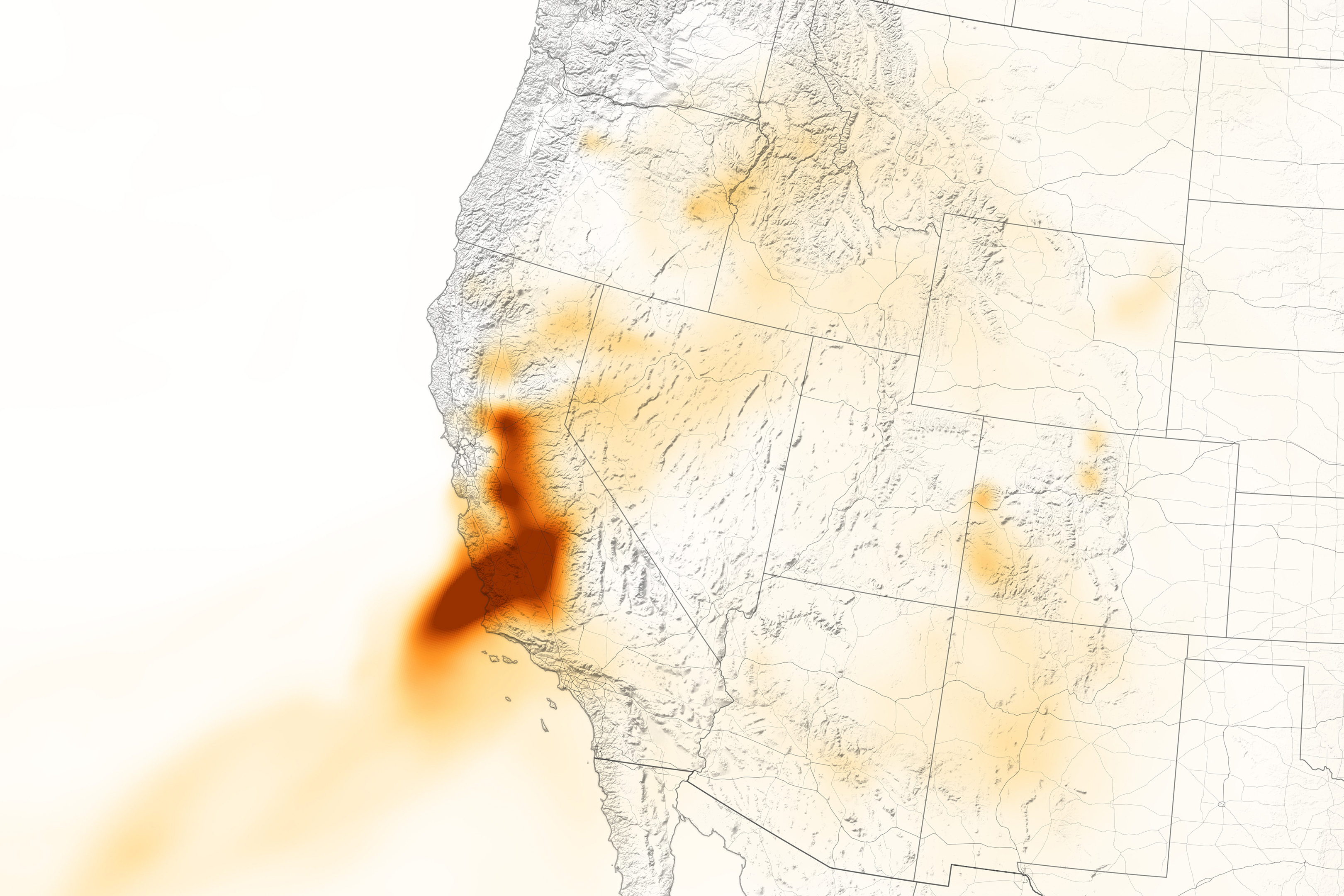
    California Wildfire Black Carbon August 2020 Annotated
    August 20, 2020. (Click image for high-resolution view.)

    On August 19, air quality monitors reported unhealthy levels of pollution across California as the smoke-tinged skies with red haze. In fact, atmospheric testing showed Northern California had the worst air quality in the world on that day. Unhealthy air was also reported in Southern California and the Sacramento and Napa Valleys.

    “This amount of smoke is extremely unusual,” said Michael Garay, an air quality researcher at NASA’s Jet Propulsion Laboratory. “The amount of smoke is due to both the large number of individual fires, as well as large ‘fire complexes,’ which are extremely large fires.”

    As of August 20, the largest fire in the state was the SCU Lightning Complex near San Jose. It had burned more than 137,000 acres across five counties since igniting on August 18. The second-largest fire is the LNU Lightning Complex near Sacramento, which had burned more than 130,000 acres since August 17.

    How long the smoke stays in the air will depend a lot on the weather, Garay said. Excessive heat warnings are in effect for several parts of the state through August 21. The National Weather Service issued forecasted poor air quality in California’s Central Valley until the fires are extinguished.

    NASA Earth Observatory images by Lauren Dauphin, using GOES 17 imagery courtesy of NOAA and the National Environmental Satellite, Data, and Information Service (NESDIS) and GEOS-5 data from the Global Modeling and Assimilation Office at NASA GSFC.

    Never miss a breakthrough: Join the SciTechDaily newsletter.
    Follow us on Google and Google News.

    NASA NASA Earth Observatory Wildfires
    Share. Facebook Twitter Pinterest LinkedIn Email Reddit

    Related Articles

    Intense Heat, Winds, and Drought Fuel Smoky Infernos Across Western United States

    Massive Clouds of Smoke From California Wildfires Blow Over the Pacific Ocean

    Relentless Wildfires Across Northern California Leave Vast Burn Scars

    Wildfires Rage – Smoke Continues to Spread Across the U.S. West

    Thick Smoke Obscures California Skies After Wildfires Exploded Across the North

    NASA/NOAA Satellites Observe Surprisingly Rapid Increase in Scale and Intensity of Fires in Siberia

    Massive Mineral Fire Observed From Space – Burned More Than 28,000 Acres in California

    NASA Satellite Watches as Bush Fire Scorches Land Near Phoenix

    NASA Satellites Spot Several Wildfires Near Chernobyl Exclusion Zone

    Leave A Reply Cancel Reply

    • Facebook
    • Twitter
    • Pinterest
    • YouTube

    Don't Miss a Discovery

    Subscribe for the Latest in Science & Tech!

    Trending News

    The Universe Is Expanding Too Fast and Scientists Can’t Explain Why

    “Like Liquid Metal”: Scientists Create Strange Shape-Shifting Material

    Early Warning Signals of Esophageal Cancer May Be Hiding in Plain Sight

    Common Blood Pressure Drug Shows Surprising Power Against Deadly Antibiotic-Resistant Superbug

    Scientists Uncover Dangerous Connection Between Serotonin and Heart Valve Disease

    Scientists Discover a “Protector” Protein That Could Help Reverse Hair Loss

    Bone-Strengthening Discovery Could Reverse Osteoporosis

    Scientists Uncover Hidden Trigger Behind Stem Cell Aging

    Follow SciTechDaily
    • Facebook
    • Twitter
    • YouTube
    • Pinterest
    • Newsletter
    • RSS
    SciTech News
    • Biology News
    • Chemistry News
    • Earth News
    • Health News
    • Physics News
    • Science News
    • Space News
    • Technology News
    Recent Posts
    • A Common Diabetes Drug May Hold the Key to Stopping HIV From Coming Back
    • Ancient “Syphilis-Like” Disease in Vietnam Challenges Key Scientific Assumptions
    • Drinking Alcohol To Cope in Your 20s Could Damage Your Brain for Life
    • Scientists Crack Alfalfa’s Chromosome Mystery After Decades of Debate
    • Ancient Ant-Plant Alliance Collapses As Predatory Wasps Move In
    Copyright © 1998 - 2026 SciTechDaily. All Rights Reserved.
    • Science News
    • About
    • Contact
    • Editorial Board
    • Privacy Policy
    • Terms of Use

    Type above and press Enter to search. Press Esc to cancel.