
Close Menu
    Facebook X (Twitter) Instagram
    SciTechDaily
    • Biology
    • Chemistry
    • Earth
    • Health
    • Physics
    • Science
    • Space
    • Technology
    Facebook X (Twitter) Pinterest YouTube RSS
    SciTechDaily
    Home»Earth»Number of Microbes Living on Earth Drastically Lower Than Previously Thought
    Earth

    Number of Microbes Living on Earth Drastically Lower Than Previously Thought

    By SciTechDailyAugust 28, 20121 Comment2 Mins Read
    Facebook Twitter Pinterest Telegram LinkedIn WhatsApp Email Reddit
    Share
    Facebook Twitter LinkedIn Pinterest Telegram Email Reddit
    microbes-sea-bed
    Researchers have created the most accurate model of the geographical distribution of microbes in marine sediment, leading to an estimate that the number of microbes living on Earth is drastically lower than previously thought.

    The floor of the ocean is home to 2.9×1029 single-celled organisms but this large number, 10 million trillion microbes for every human on planet Earth, is only 8% of the previous estimate of  35.5×1029. Jens Kallmeyer, a geomicrobiologist, and his colleagues at the University of Potsdam in Germany have created the most accurate model of the geographical distribution of microbes in the marine sediment. They published their findings in the journal Proceedings of the National Academy of Sciences.

    Kallmeyer states that for the last decade, scientists have had a suspicion that the earlier estimate was flawed in some manner. Recently, Kallmeyer and his colleagues amassed new data by drilling holes into the ocean floor to study microbes surviving at the extremes of nutrient starvation. This data was used to create global maps that could more accurately predict the biomass hidden kilometers beneath the ocean sediment.
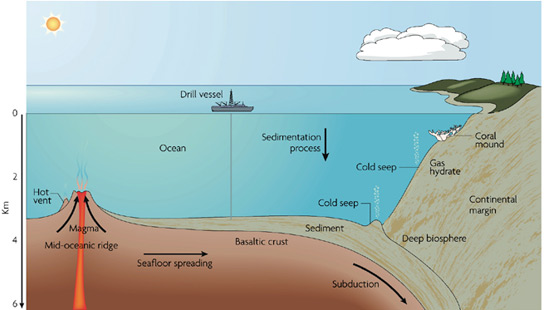
    microbial-drilling-estimate

    The new calculations decrease previous estimates by 92% and reduce the number of all microbes on Earth by 50% to between 9.2×1029 and 31.7×1029. This huge number means that they still play a key role in global biogeochemical cycles. The previous estimate was skewed because it was based on work done in nutrient-rich coastal areas whereas Kallmeyer’s research has been in barren areas, such as the South Pacific Gyre, one of the most nutrient-depleted regions in the oceans.

    While some think that these new numbers are far more accurate of the overall picture of microbial life on Earth, other geomicrobiologists, like John Parkes, think that the number of microbes is on the low side because of the difficulties associated with counting small numbers of cells encrusted in sediment.

    Reference: “Global distribution of microbial abundance and biomass in subseafloor sediment” by Jens Kallmeyer, Robert Pockalny, Rishi Ram Adhikari, David C. Smith and Steven D’Hondt, 27 August 2012, Proceedings of the National Academy of Sciences.
    DOI: 10.1073/pnas.1203849109

    Never miss a breakthrough: Join the SciTechDaily newsletter.
    Follow us on Google and Google News.

    Microbes Microbiology
    Share. Facebook Twitter Pinterest LinkedIn Email Reddit

    Related Articles

    Tiny Earthquakes Spark a Microbial Awakening Beneath Yellowstone

    Scientists Declare “We Have the Tools” To Fight Climate Change – Let’s Use Them To Save the Planet

    Against All Odds: Living Microbes Discovered in the Most Unlikely Place on Earth

    Breaking Biochemical Rules: Mysterious Ocean Microbes Offer New Hope Against Global Warming

    New AI Tool Tracks Your Steps by Reading the Bacteria You Carry

    Climate Game-Changer: Fossil Fuels Aren’t Behind Surging Methane Emissions

    Rethinking Carbon Cycling: Key Role of Soil Microbes Uncovered

    Global Cooling Breakthrough: Scientists Discover Ocean Algae’s Crucial Climate Impact

    Scientists Uncover Secret Driver of Climate Change

    1 Comment

    1. michael on November 14, 2014 12:19 pm

      Come on this is a guess just like the first one. They simply do not have enough samples to make an accurate guess. You would need tens of thousands of core samples accurately counted to get away from a guess to an estimate like the exit polls on election day. They do not have that daas.

      Reply
    Leave A Reply Cancel Reply

    • Facebook
    • Twitter
    • Pinterest
    • YouTube

    Don't Miss a Discovery

    Subscribe for the Latest in Science & Tech!

    Trending News

    Largest-Ever Study Finds Medicinal Cannabis Ineffective for Anxiety, Depression, PTSD

    250-Million-Year-Old Egg Solves One of Evolution’s Biggest Mysteries

    Living With Roommates Might Be Changing Your Gut Microbiome Without You Knowing

    Century-Old Cleaning Chemical Linked to 500% Increased Risk of Parkinson’s Disease

    What if Your Memories Never Happened? Physicists Take a New Look at the Boltzmann Brain Paradox

    One of the Universe’s Largest Stars May Be Getting Ready To Explode

    Scientists Discover Enzyme That Could Supercharge Ozempic-Like Weight Loss Drugs

    Popular Sweetener Linked to DNA Damage – “It’s Something You Should Not Be Eating”

    Follow SciTechDaily
    • Facebook
    • Twitter
    • YouTube
    • Pinterest
    • Newsletter
    • RSS
    SciTech News
    • Biology News
    • Chemistry News
    • Earth News
    • Health News
    • Physics News
    • Science News
    • Space News
    • Technology News
    Recent Posts
    • Challenging the Narrative: New Study Shows U.S. Life Expectancy Is Rising Across All States
    • Mystery Illness Kills 5 in Burundi As Doctors Scramble for Answers
    • Bone-Strengthening Discovery Could Reverse Osteoporosis
    • The Most Elusive Number in Physics Just Got Even More Mysterious
    • Scientists Uncover Hidden Trigger Behind Stem Cell Aging
    Copyright © 1998 - 2026 SciTechDaily. All Rights Reserved.
    • Science News
    • About
    • Contact
    • Editorial Board
    • Privacy Policy
    • Terms of Use

    Type above and press Enter to search. Press Esc to cancel.