
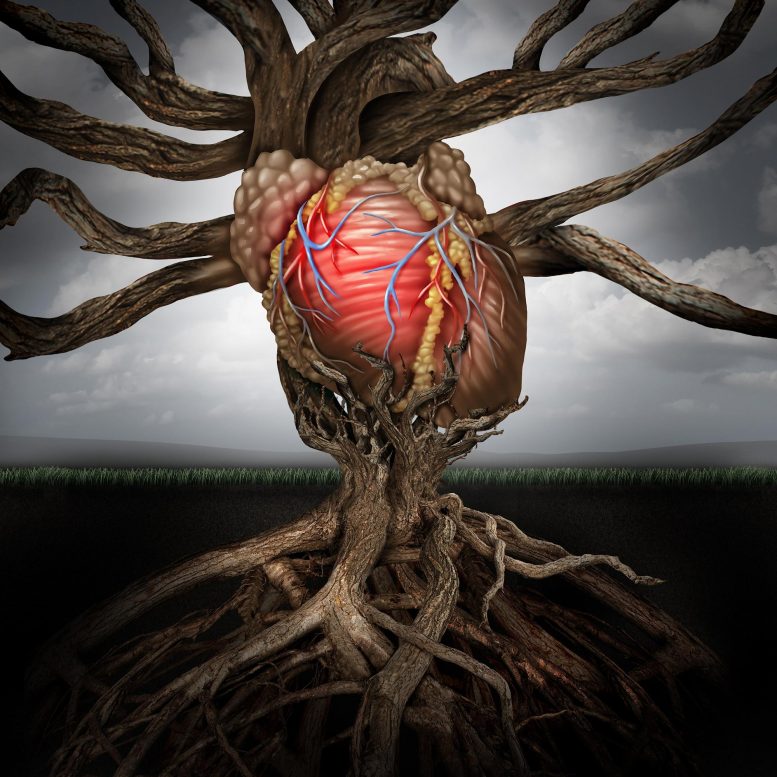
Soil pollutants, including heavy metals and pesticides, have been linked to cardiovascular diseases, with contaminants entering the body through inhalation and consumption.
Pesticides and heavy metals in soil may have adverse effects on the cardiovascular system, according to a review paper published recently in Cardiovascular Research, a journal of the European Society of Cardiology (ESC).
“Soil contamination is a less visible danger to human health than dirty air,” said author Professor Thomas Münzel of the University Medical Center Mainz, Germany. “But evidence is mounting that pollutants in soil may damage cardiovascular health through a number of mechanisms including inflammation and disrupting the body’s natural clock.”
Studies show that pollution of air, water, and soil is responsible for at least nine million deaths each year. Additionally, more than 60% of pollution-related diseases and deaths are due to cardiovascular diseases such as chronic ischaemic heart disease, stroke, heart attack, and heart rhythm disorders (arrhythmias).
Soil Pollutants and Cardiovascular Diseases
Relationships between soil pollution and human health, with a particular focus on cardiovascular disease, are highlighted in the research paper. Soil pollutants include heavy metals, plastics, and pesticides. According to the authors, contaminated soil may lead to cardiovascular disease by increasing oxidative stress in the blood vessels (with more “bad” free radicals and fewer “good” antioxidants), causing inflammation, and disturbing the body clock (circadian rhythm).
Dirty soil may enter the body by inhaling desert dust, fertilizer crystals, or plastic particles. Heavy metals such as cadmium and lead, plastics, and organic toxicants (such as those in pesticides) can also be consumed orally. Furthermore, soil pollutants wash into rivers and create dirty water which may be consumed.
“Soil contamination is a less visible danger to human health than dirty air. But evidence is mounting that pollutants in soil may damage cardiovascular health through a number of mechanisms including inflammation and disrupting the body’s natural clock.”
Professor Thomas Münzel
Pesticides have been linked with an increased risk of cardiovascular disease. Employees in the agricultural and chemical industries face the greatest exposure, but the general public may also ingest pesticides from contaminated food, soil, and water.
Cadmium is a heavy metal that occurs naturally in small amounts in air, water, soil, and food, and also comes from industrial and agricultural sources. In non-smokers, food is the main source of cadmium. According to the paper, population studies have shown mixed results on the relationship between cadmium and cardiovascular disease, and cites a Korean study showing that middle-aged Koreans with high blood cadmium had elevated risks of stroke and hypertension.
Lead is a naturally occurring toxic metal with environmental contamination through mining, smelting, manufacturing, and recycling. Studies have found associations between high blood lead levels and cardiovascular disease, including coronary heart disease, heart attack, and stroke, in women and in people with diabetes. Further studies have indicated a higher risk of death from cardiovascular disease associated with exposure to arsenic, a naturally occurring metalloid whose levels can increase due to industrial processes and using contaminated water to irrigate crops.
The Globalization of Soil Contamination
The paper states: “Although soil pollution with heavy metals and its association with cardiovascular diseases is especially a problem low- and middle-income countries since their populations are disproportionately exposed to these environmental pollutants, it becomes a problem for any country in the world due to the increasing globalization of food supply chains and uptake of these heavy metals with fruits, vegetables, and meat.”
The potential hazards of contaminated airborne dust are noted. Desert dust can travel long distances, and research has shown that particles from soil in China and Mongolia were related to increased odds of heart attacks in Japan. The number of cardiovascular emergency department visits in Japan was 21% higher on days with heavy exposure to Asian dust.
While there are no population studies on the cardiovascular health effects of nano- and microplastics in humans, research has shown that these particles can reach the bloodstream, making it plausible that they could travel to the organs and cause systemic inflammation and cardiometabolic disease.
Professor Münzel said: “More studies are needed on the combined effect of multiple soil pollutants on cardiovascular disease since we are rarely exposed to one toxic agent alone. Research is urgently required on how nano- and microplastic might initiate and exacerbate cardiovascular disease. Until we know more, it seems sensible to wear a face mask to limit exposure to windblown dust, filter water to remove contaminants, and buy food grown in healthy soil.”
Reference: “Soil and water pollution and human health: what should cardiologists worry about?” by Thomas Münzel, Omar Hahad, Andreas Daiber and Philip J. Landrigan, 30 June 2022, Cardiovascular Research.
DOI: 10.1093/cvr/cvac082
Funding: The present work was supported by a vascular biology research grant from the Boehringer Ingelheim Foundation for the collaborative research group “Novel and neglected cardiovascular risk factors: molecular mechanisms and therapeutic implications” to study the effects of environmental risk factors on vascular function and oxidative stress (A.D. and T.M.). The authors also acknowledge the continuous support by the Foundation Heart of Mainz and the DZHK (German Center for Cardiovascular Research), Partner Site Rhine-Main, Mainz, Germany.
Never miss a breakthrough: Join the SciTechDaily newsletter.
Follow us on Google and Google News.
2 Comments
Omg! That’s something so important to know about! Thank-you for sharing such useful piece of content.
its awesome blog I really impressed. thanks for sharing.