
Climate Change Was No Problem for the Big Fish
Research shows that sharks evolved from bottom dwellers to open ocean predators during a past global warming event, adapting with physical changes like elongated fins to become more efficient swimmers.
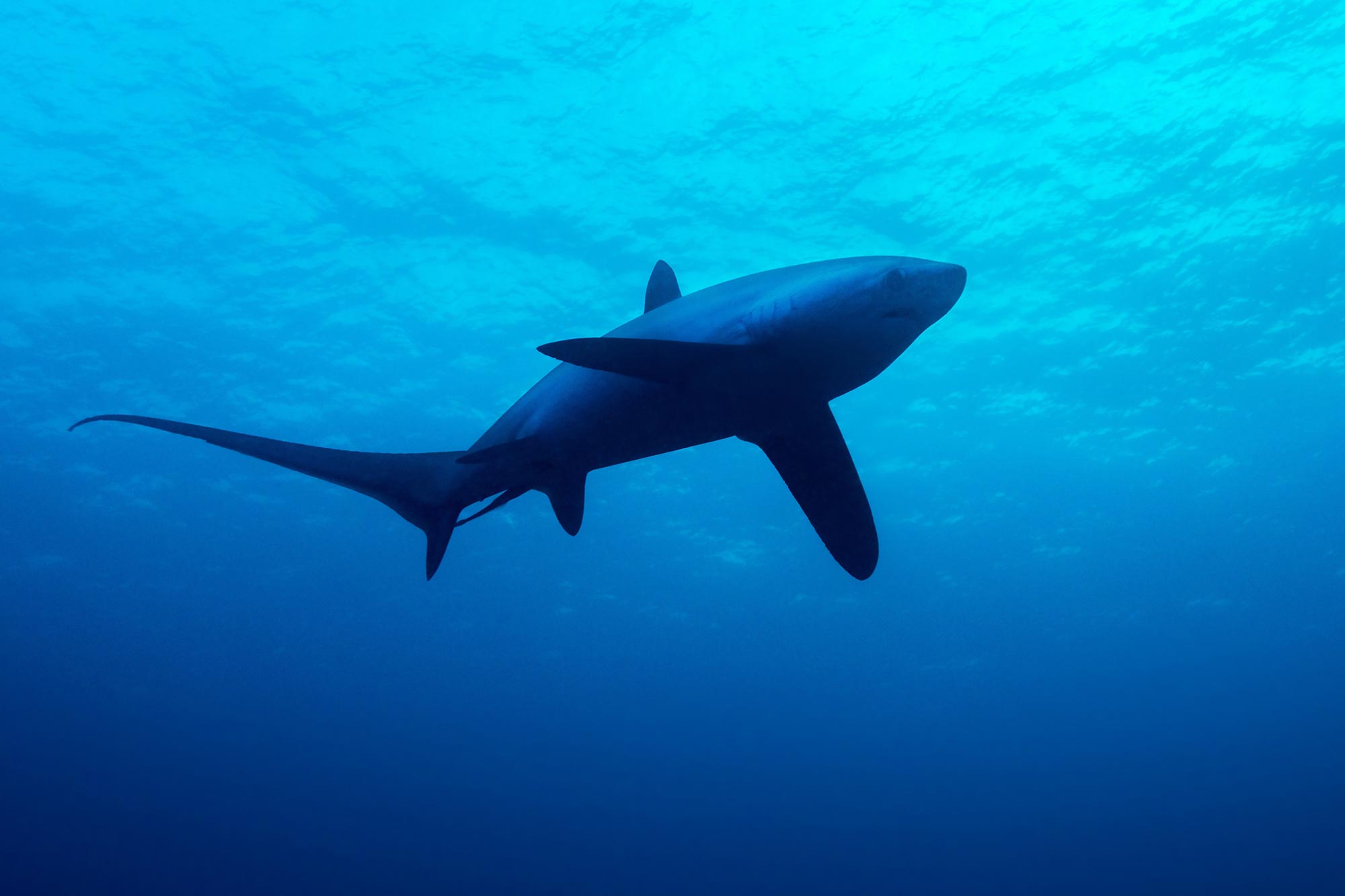
The sharks we know today as the open ocean’s top predators evolved from stubby bottom dwellers during a dramatic episode of global warming millions of years ago.
A massive outpouring of volcanic lava about 93 million years ago sent carbon dioxide levels soaring, creating a greenhouse climate that pushed ocean temperatures to their hottest. University of California, Riverside (UCR) researchers discovered that some sharks responded to the heat with elongated pectoral fins.
Scientific Discovery and Analysis
This discovery is documented in a paper published today (June 3) in the journal Current Biology. It was made by taking body length and fin measurements from over 500 living and fossilized shark species.
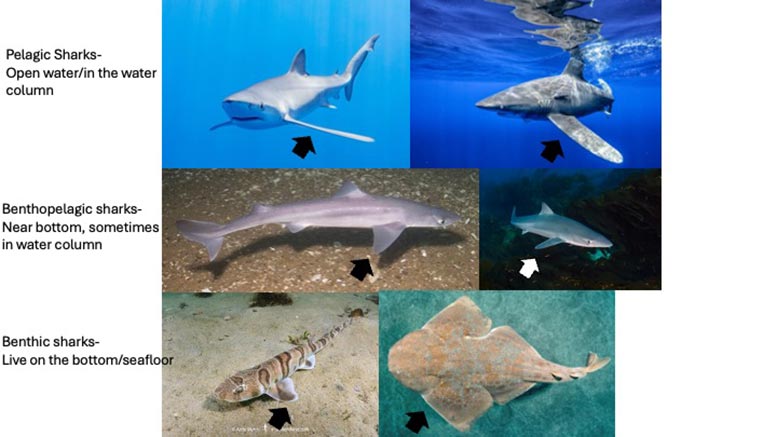
“The pectoral fins are a critical structure, comparable to our arms,” said UCR biology doctoral student and paper first author Phillip Sternes. “What we saw upon review of a massive data set, was that these fins changed shape as sharks expanded their habitat from the bottom to the open ocean.”
Adaptations and Efficiency
Longer pectoral fins help make shark movements much more efficient. “Their fins are comparable to the wings of commercial airplanes, long and narrow, to minimize the amount of energy needed for movement,” Sternes said.
The researchers also saw that the open-water sharks got faster compared to bottom dwelling sharks. “Shark muscle is very sensitive to temperature,” said Tim Higham, professor in UCR’s Department of Evolution, Ecology, and Organismal Biology and paper co-author.
“The data helped us make a correlation between higher temperatures, tail movement, and swimming speeds,” Higham said.
Habitats and Evolutionary Pressures
Most living shark species are still bottom dwellers, occupying what scientists refer to as the benthic zone. These benthic sharks do not loom as large in popular culture as their fierce open-water relatives. Many of the bottom dwellers are slender, flatter, more medium-sized predators.
Only about 13% of modern sharks are fast-swimming open-water predators. The researchers believe that breathing may have become difficult for their ancient relatives. Oxygen levels near the bottom during the Cretaceous period likely dropped as the heat increased.
Temperature Trends and Historical Context
Modern sea surface temperatures average about 68 degrees Fahrenheit. In the Cretaceous they were much warmer, reaching an average of about 83 degrees. The high heat of the Cretaceous did not happen overnight, and neither did the sharks’ evolution.
“We had pretty warm open-sea surface temperatures throughout the era, and then a distinct spike that took place over a one- or two-million-year period,” said associate professor at Claremont McKenna College and paper co-author Lars Schmitz.
Evolutionary Impact of Climate Change
As global warming drove an evolution in some groups of animals, including sharks, it caused the extinction of others. Because those evolutionary changes happened on a longer time scale in the past, it is difficult to predict exactly how sharks or other marine life will respond to current warming trends.
Biologists are seeing some sharks, including tropical species like tiger and bull sharks, starting to swim farther north. But it is unclear whether threatened sharks will again be able to adapt where they live and survive the rapidly increasing heat.
“The temperature is going up so fast now, there is nothing in the geologic record I am aware of that we can use for a true comparison,” Sternes said.
Reference: “The rise of pelagic sharks and adaptive evolution of pectoral fin morphology during the Cretaceous” by Phillip C. Sternes, Lars Schmitz and Timothy E. Higham, 3 June 2024, Current Biology.
DOI: 10.1016/j.cub.2024.05.016
Never miss a breakthrough: Join the SciTechDaily newsletter.
Follow us on Google and Google News.