
Close Menu
    Facebook X (Twitter) Instagram
    SciTechDaily
    • Biology
    • Chemistry
    • Earth
    • Health
    • Physics
    • Science
    • Space
    • Technology
    Facebook X (Twitter) Pinterest YouTube RSS
    SciTechDaily
    Home»Technology»OptiQ Ultra Thermal Windows Reduce Energy Loss by up to 40 Percent
    Technology

    OptiQ Ultra Thermal Windows Reduce Energy Loss by up to 40 Percent

    By Roland Risser, Department of EnergyJanuary 18, 20121 Comment2 Mins Read
    Facebook Twitter Pinterest Telegram LinkedIn WhatsApp Email Reddit
    Share
    Facebook Twitter LinkedIn Pinterest Telegram Email Reddit
    New OptiQ Ultra Thermal Windows
    OptiQ™ Ultra Thermal Windows reduce energy loss by up to 40% compared to other efficient double-pane low-emissivity windows. Credit: Callie Reed

    Traco and the DOE’s Office of Energy Efficiency and Renewable Energy partnered up to develop the new energy-efficient OptiQ Ultra Thermal Windows. These windows are up to 40 percent more efficient than double-pane windows, include a thermally optimized frame design, enhanced frame cavities, wider thermal breaks, and high-performance glazing, and are available today.

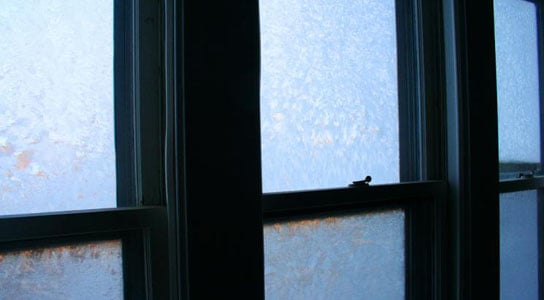
    Say what you want about the joys of Jack Frost nipping at your nose, but when it comes to winter wonderlands, I like mine outdoors. Etching icy messages on the insides of my windows is not exactly cozy. Therefore, I’m thankful for technology that provides an efficient and effective barrier from inclement weather.

    Traco, a division of Kawneer and window manufacturer since the early 1940s, recently partnered with the Energy Department’s Office of Energy Efficiency and Renewable Energy to utilize funds from the Recovery Act to develop new window technology. These OptiQ™ Ultra Thermal Windows can reduce energy loss by up to 40 percent compared to the efficient, commercially available double-pane low-emissivity windows that are already on the market.

    Each year, windows account for an estimated 4 quadrillion Btu of energy lost in U.S. buildings, totaling over $35 billion in heating and air conditioning costs. Future window systems like the OptiQ™ Ultra Thermal Windows will eventually outperform the best-insulated walls or roofs in terms of annual energy performance, peak demand reduction, and costs. This new innovation holds promise to boost both savings and comfort.

    What makes these new energy-efficient windows really innovative is that they include a thermally optimized frame design, enhanced frame cavities, wider thermal breaks, and high-performance glazing. The combination of these and other technologies has allowed an aluminum framed window to achieve more energy savings than ever before, all while maintaining its structural integrity. Also, these windows stand up to moisture and exposure, making them good fits for many applications, such as hospitals and schools, because they won’t rot or get moldy.

    The fact that windows like these are available today gives me a warm feeling about the advances the industry is making. This innovation brings us closer to meeting the Department’s goal of improving the energy performance of windows by 60 percent by 2020 — all while keeping Mr. Frost outside.

    Never miss a breakthrough: Join the SciTechDaily newsletter.
    Follow us on Google and Google News.

    Department of Energy Energy Efficient Windows
    Share. Facebook Twitter Pinterest LinkedIn Email Reddit

    Related Articles

    A Smart Electric Grid Could Save Consumers $50 Billion a Year

    Simple Software Could Significantly Boost Building Efficiency

    Open-Source “Unique Building Identifier” Can Help Track and Reduce Energy Use and Emissions

    Atomic Layer Etching Could Lead to Ever-More Powerful Microchips and Supercomputers

    Quantum Internet Breakthrough – Bell State Analyzer Presents Giant Leap Toward Fully Quantum Internet

    Low-Cost Device Generates Electricity Naturally in the Dark

    NREL Develops Switchable Photovoltaic Windows

    Berkeley Lab Software to Optimize Jail Microgrid

    Researchers Work on Nanopatterned Surfaces to Improve Efficiency of Power Plants

    1 Comment

    1. https://testmyspeed.onl/ on October 22, 2020 2:58 am

      The combination of these and other technologies has allowed an aluminum framed window to achieve more energy savings than ever before, all while maintaining its structural integrity.

      Reply
    Leave A Reply Cancel Reply

    • Facebook
    • Twitter
    • Pinterest
    • YouTube

    Don't Miss a Discovery

    Subscribe for the Latest in Science & Tech!

    Trending News

    New Study Reveals Why Ozempic Works Better for Some People Than Others

    Climate Change Is Altering a Key Greenhouse Gas in a Way Scientists Didn’t Expect

    New Study Suggests Gravitational Waves May Have Created Dark Matter

    Scientists Discover Why the Brain Gets Stuck in Schizophrenia

    Scientists Engineer “Tumor-Eating” Bacteria That Devour Cancer From Within

    Even “Failed” Diets May Deliver Long-Term Health Gains, Study Finds

    NIH Scientists Discover Powerful New Opioid That Relieves Pain Without Dangerous Side Effects

    Collapsing Plasma May Hold the Key to Cosmic Magnetism

    Follow SciTechDaily
    • Facebook
    • Twitter
    • YouTube
    • Pinterest
    • Newsletter
    • RSS
    SciTech News
    • Biology News
    • Chemistry News
    • Earth News
    • Health News
    • Physics News
    • Science News
    • Space News
    • Technology News
    Recent Posts
    • This 15,000-Year-Old Discovery Changes What We Know About Early Human Creativity
    • 35-Million-Year-Old Mystery: Strange Arachnid Discovered Preserved in Amber
    • Revolutionary Gas Turbine Generates Power Without Air Compression
    • Is AI Really Just a Tool? It Could Be Altering How You See Reality
    • JWST Reveals a “Forbidden” Planet With a Baffling Composition
    Copyright © 1998 - 2026 SciTechDaily. All Rights Reserved.
    • Science News
    • About
    • Contact
    • Editorial Board
    • Privacy Policy
    • Terms of Use

    Type above and press Enter to search. Press Esc to cancel.