
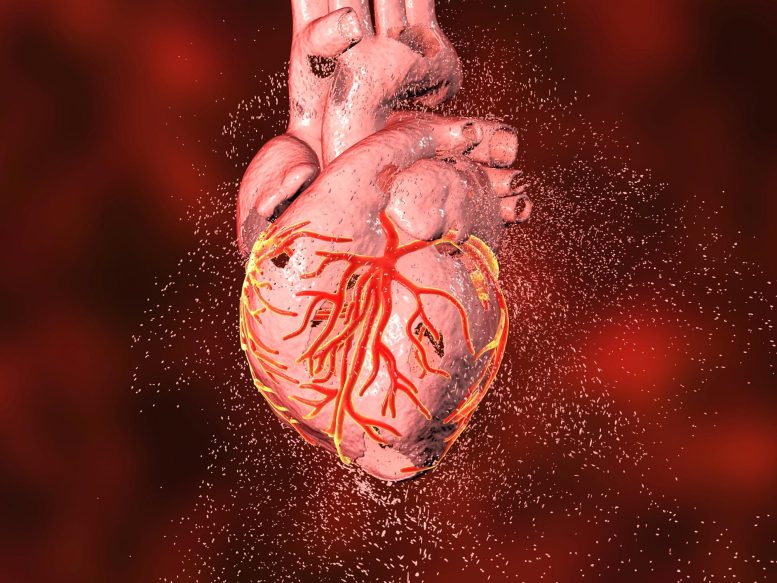
This is the first study in the United States to measure cardiovascular health using the American Heart Association’s new criteria and scoring.
According to the first research to use the American Heart Association’s new “Life’s Essential 8” metrics and scoring methodology for assessing cardiovascular health levels in adults and children, most children and adolescents in the United States have poor scores for cardiovascular health (CVH). In total, less than 30% of children aged 2 to 19 had high CVH.
The number of children with high CVH decreased considerably with age: 56% of 2-5-year-olds had high CVH, compared to 33% of 6-11-year-olds and 14% of 12-19-year-olds. The research was published in the journal Circulation.
Poor Diet as a Major Contributor
“We found that among U.S. children, scores were lowest for the diet metric, which is comparable to what we saw in adults,” said senior author Amanda Marma Perak, MD, a cardiologist at Ann & Robert H. Lurie Children’s Hospital of Chicago and Assistant Professor of Pediatrics at Northwestern University Feinberg School of Medicine.
“Individuals and families who improve their eating patterns can markedly improve their total cardiovascular health, even independent of weight change. In addition to families’ efforts to improve, we also need policy-level support for better diets, such as subsidies for fruit and vegetable production or making healthier foods more readily available and removing sugar-sweetened beverage options in schools.”
The revised CVH definition comprises eight components: sleep duration, a new metric, as well as modified versions of the previous seven metrics: diet, physical activity, nicotine exposure, BMI, blood lipids, blood glucose, and blood pressure. Researchers utilized data from the National Health and Nutrition Examination Surveys (NHANES) from 2013 to 2018 for their investigation. There were 13,521 adult participants and 9,888 child participants, representing more than 201 million people and 74 million children in the United States.
Only three CVH metrics (diet, physical activity, and BMI) were available in NHANES for all children aged 2 to 19 years. With increasing age, other measurements were added: lipids at 6 years, blood pressure at 8 years, nicotine and glucose at 12 years, and sleep at 16 years.
Importance of Maintaining High CVH in Childhood
“Maintenance of higher cardiovascular health at all ages is associated with extremely favorable health outcomes,” said Dr. Marma Perak, who was the pediatric expert for the simultaneously published American Heart Association Presidential Advisory that redefined the concept of CVH through the new metrics.
“Children with high CVH have lower burdens of subclinical cardiovascular disease in mid-life. And for children who manage to maintain high CVH into late adolescence or young adulthood, their risk for premature clinical cardiovascular disease events over the next 30 years is extremely low. Ultimately, the new measures of CVH will allow clinicians and scientists to track changes with more precision so that they can intervene earlier and set kids on a healthier path into adulthood.”
Reference: “Status of Cardiovascular Health in US Adults and Children Using the American Heart Association’s New “Life’s Essential 8″ Metrics: Prevalence Estimates from the National Health and Nutrition Examination Survey (NHANES), 2013-2018” by Donald M. Lloyd-Jones, Hongyan Ning, Darwin Labarthe, LaPrincess Brewer, Garima Sharma, Wayne Rosamond, Randi E. Foraker, Terrie Black, Michael A. Grandner, Norrina B. Allen, Cheryl Anderson, Helen Lavretsky and Amanda M. Perak, 29 June 2022, Circulation.
DOI: 10.1161/CIRCULATIONAHA.122.060911
Research at Ann & Robert H. Lurie Children’s Hospital of Chicago is conducted through Stanley Manne Children’s Research Institute.
Never miss a breakthrough: Join the SciTechDaily newsletter.
Follow us on Google and Google News.
2 Comments
Crap food, video games and social media are what they consume. Crap body, crap mind, crap emotions are the result; GIGO effect.
Years of riding in cars is starting to show its effects .