
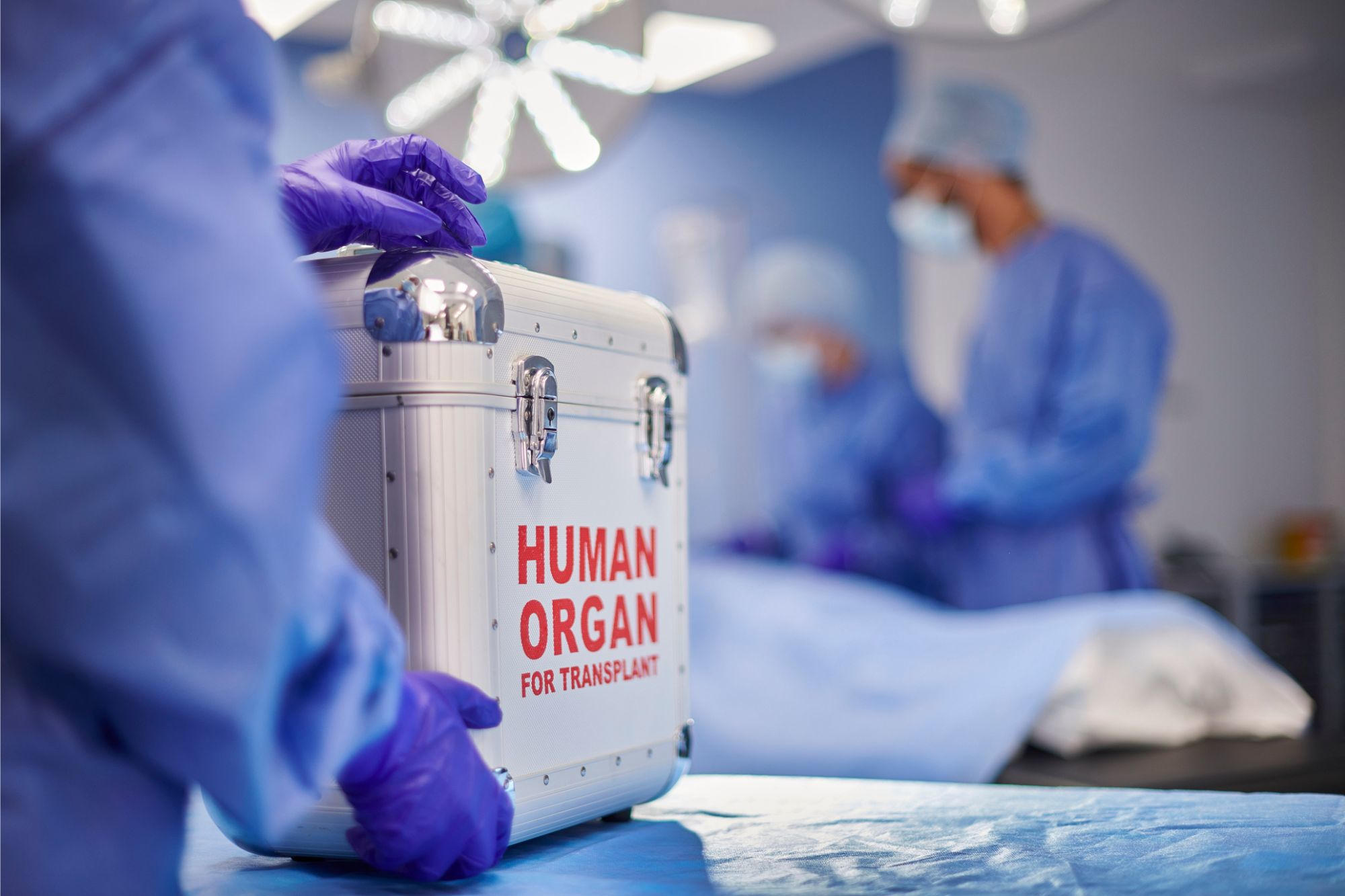
Significant advancements in preservation techniques could liberate more hearts for transplantation.
More than five decades after the first human-to-human heart transplant, over 5,000 heart transplants are performed annually worldwide. However, this number falls significantly short of meeting the demand, as up to 50,000 individuals may require a transplant at any given moment. The wait time for a transplant can span years, influenced by the severity of the patient’s condition as well as various physiological and logistical factors. A major limitation in meeting this need is the scarcity of suitable donor hearts, partly due to the very short time window for transplantation once the heart is removed from the deceased donor.
The current ‘gold standard’ for preserving donor hearts is cold static storage (CSS), where hearts are kept on ice until transplantation. Transplantation is most successful when CSS lasts less than six hours, before the heart or its blood vessels undergo damage. Periods up to 12 hours are sometimes possible, but require mechanical life support such as extracorporeal membrane oxygenation (ECMO) for several days on the recipient. Prolonging the storage period beyond six hours without the need for ECMO would thus be a medical breakthrough.
Now, researchers publishing in Frontiers in Cardiovascular Medicine have shown it’s possible to keep transplanted pig hearts alive outside the body for more than 24 hours using a process called normothermic ex-vivo heart perfusion (NEHP).
“If translated to humans, this would be a major improvement to the six-hour-long time window in standard clinical practice,” said Dr Robert Bartlett, an emeritus professor and head of the Extracorporeal Life Support Laboratory at the University of Michigan Medical School at Ann Arbor.
Keep it pumping
NEHP means that hearts, once removed from their donor, are kept in a partly physiological state at room temperature by pumping oxygenated, nutrient-rich fluid (‘perfusate’) derived from blood plasma through them until transplantation. Drugs and tissue-repairing stem cells can be delivered to the heart through the perfusate. Currently, the only variant of NEHP approved for clinical use by the US Food and Drug Administration is Transmedics-OCS, which like CSS is limited to six hours.
Over the past seven years, the Extracorporeal Life Support Laboratory has worked on steadily extending the shelf-life of donor hearts through improvements to NEHP. Their previous experiments have shown that a critical step is to filter the perfusate to remove all molecules smaller than 26 kilodaltons. Without this, for unknown reasons, hearts quickly become unusable for transplantation.
Here, Bartlett and his colleagues kept the hearts of 30 immature and 10 juvenile pigs alive for various periods with experimental variants of NEHP. For example, the perfusate for all donor hearts was a solution of blood plasma and packed red blood cells (from additional healthy pigs), electrolytes, glucose, and antibiotics. The perfusate was pumped through the heart at a mean rate of 0.7 milliliters per minute per gram heart weight, and replaced every 60 minutes.
HEHP – with a difference
They then compared the effects between three variants: NEHP with hemofiltration to continuously purify the perfusate and remove toxins (10 immature pig hearts); NEHP where the plasma component in the perfusate was exchanged continuously (five immature hearts); and control NEHP without modifications (15 immature hearts).
To test these methods on larger hearts, they also used NEPH with hemofiltration on five hearts from juvenile pigs, and NEPH with an additional modification (intermittent left atrial perfusion or iLA) on a further seven hearts from juveniles, to monitor heart function. In iLA, a fixed volume of blood is injected into the left atrium at regular intervals, to test its continued power to eject this blood.
The authors monitored the health of the preserved hearts in real-time by visually checking its contractility, rhythm, color, and edema, and by measuring the concentration of lactate (a by-produce of cellular damage) every hour. Each heart was maintained until it went into asystole or arrhythmia, showed minimal systolic blood pressure in the left ventricle, or showed elevated lactate concentrations for at least two hours.
Strong improvements
All control hearts died between 10 and 24 hours after removal from the donor, while all hearts that had been maintained with modifications to standard NEPH survived for the full 24 hours. The authors conclude that hemofiltration, plasma exchange, and iLA are major improvements that enable the routine preservation of hearts to beyond one day. Which of the latter three methods is better can’t be answered yet.
“I think the major difference will be when we extend our experiments beyond 24 hours, where perhaps plasma exchange is better as larger toxins can be removed. iLA also seems a major improvement, as in principle it would allow NEPH to be used on hearts that have suffered injuries or have a borderline function in the donor,” said Bartlett.
More hearts available for transplantation
“This work could ultimately increase the donor pool. First, by extending the preservation time, thus overcoming limitations due to logistics. Second, by giving an objective assessment of the viability of each potential donor heart, to reduce the number that currently aren’t used when it’s not clear how well they function inside the donor,” said Dr. Alvaro Rojas-Pena, a research investigator at the same institute and the corresponding author of the study.
“The major challenge for clinical application will be the validation of the methods in humans. To this end, we have started to work with human hearts rejected for transplantation,” said Rojas-Pena.
Reference: “Extending heart preservation to 24 h with normothermic perfusion” by Brianna L. Spencer, Spencer K. Wilhelm, Christopher Stephan, Kristopher A. Urrea, Daniela Pelaez Palacio, Robert H. Bartlett, Daniel H. Drake and Alvaro Rojas-Pena, 15 February 2024, Frontiers in Cardiovascular Medicine.
DOI: 10.3389/fcvm.2024.1325169
Never miss a breakthrough: Join the SciTechDaily newsletter.
Follow us on Google and Google News.