
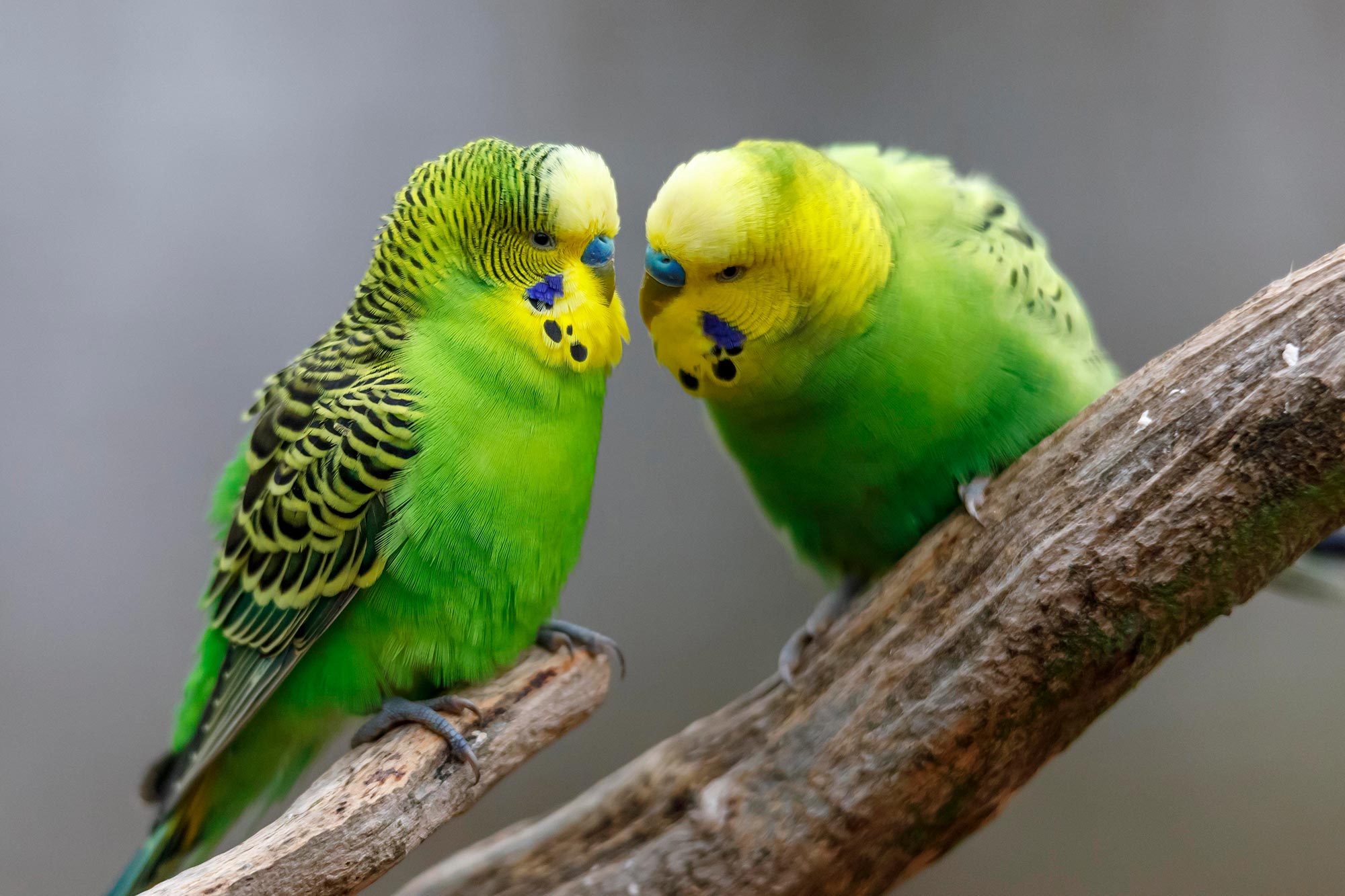
Monk parakeets meeting strangers move through a slow series of trust-building steps. Researchers found that the birds begin with cautious approaches before deciding whether a new companion is friendly.
Many eventually perch together, groom each other or form stronger bonds. Their gradual method reflects a strategy seen in other social animals.
How Parakeets Approach New Social Encounters
Forming new relationships can be difficult, even in the animal world. Researchers at the University of Cincinnati discovered that monk parakeets introduced to unfamiliar birds tend to “test the waters” before deciding whether a potential companion is safe. Instead of approaching immediately, they move in gradually, becoming comfortable over time before engaging in interactions that carry a higher risk of conflict or injury.
The work was published in the journal Biology Letters.
Why Parrots Value Close Social Bonds
“There can be a lot of benefits to being social, but these friendships have to start somewhere,“ said Claire O’Connell, the study’s lead author and a doctoral student in UC’s College of Arts and Sciences.
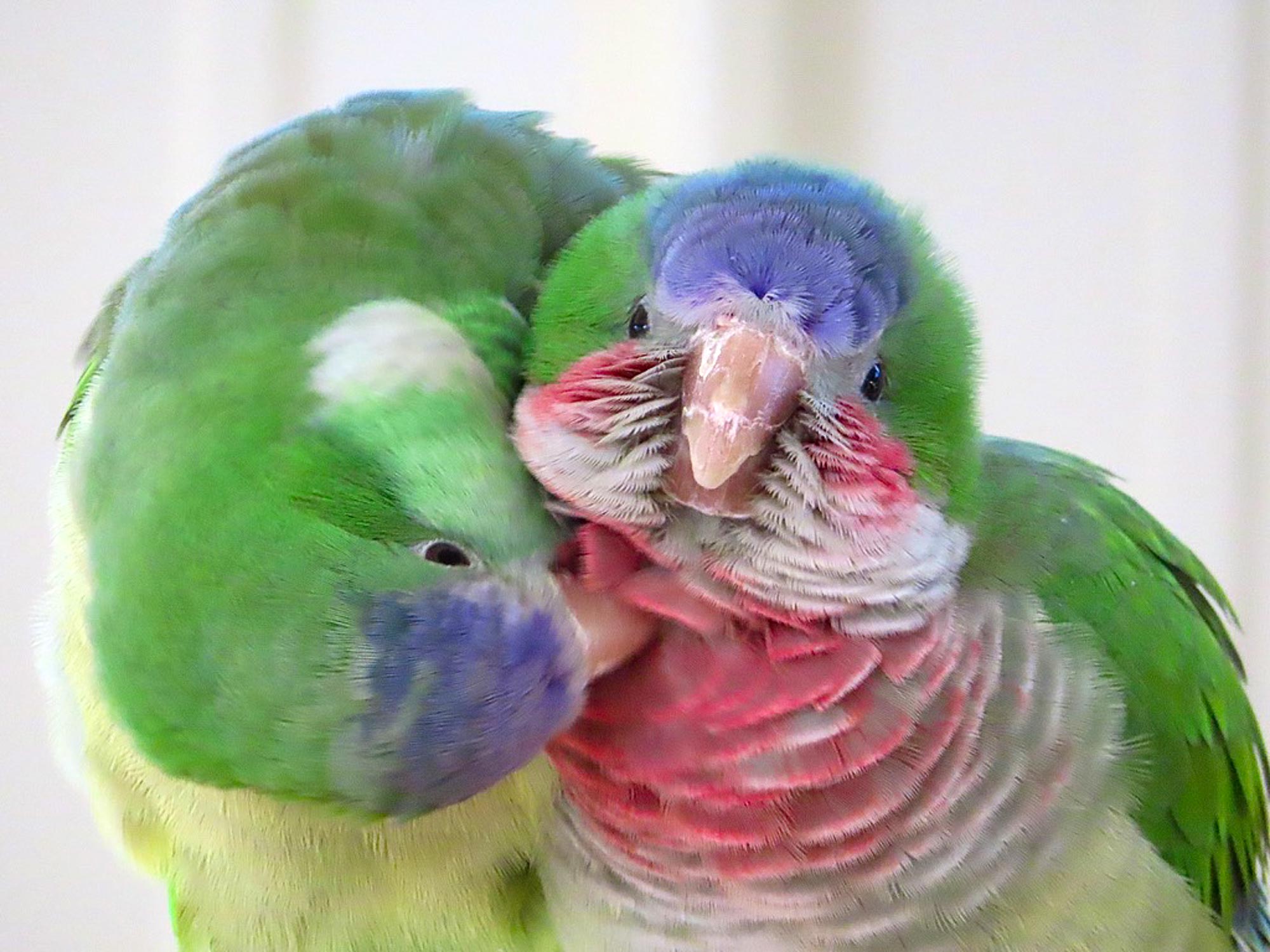
O’Connell conducted the study with UC Associate Professor Elizabeth Hobson, former UC postdoctoral researcher Annemarie van der Marel, and Princeton University Associate Professor Gerald Carter. She explained that many parrot species develop deep connections with one or two trusted partners. These pairs may spend long periods together, groom each other, or form reproductive partnerships. According to O’Connell, maintaining strong bonds such as these is often associated with reduced stress and higher reproductive success.
The Risks of First Contact
Even with the advantages of close companionship, the earliest stages of a new interaction can be risky. O’Connell noted that some birds respond aggressively if they do not want attention from a newcomer, which can lead to injuries.
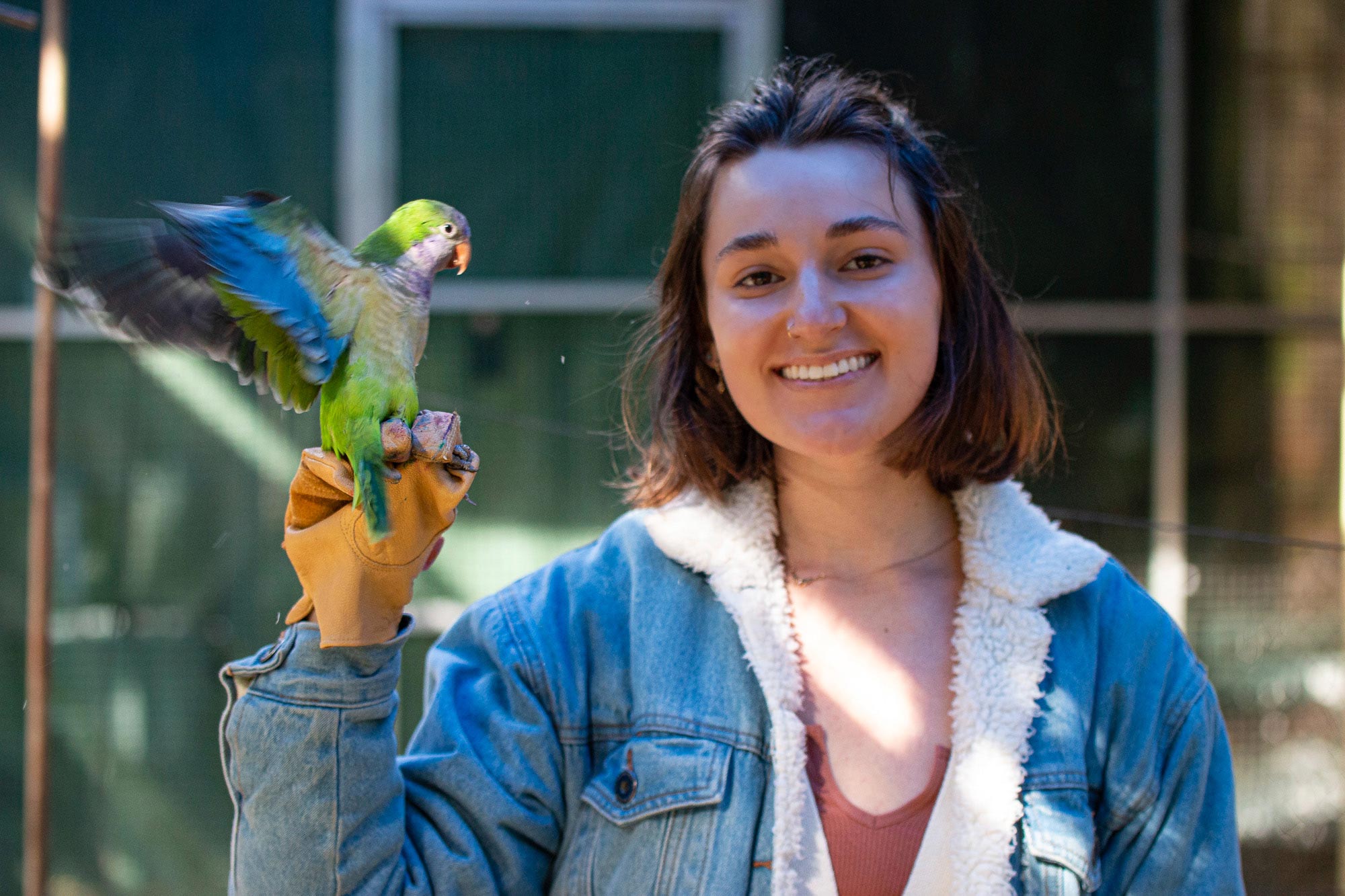
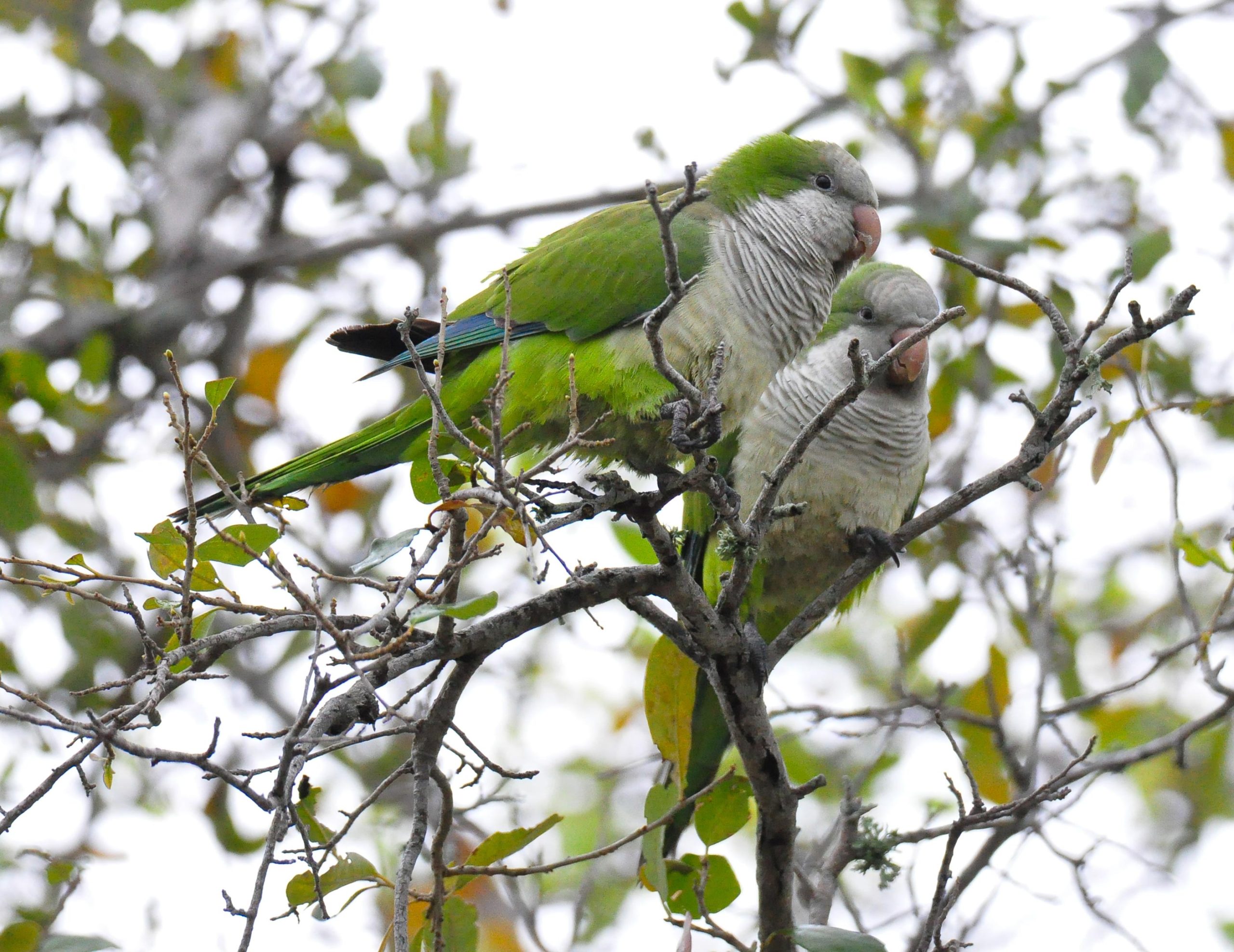
To explore how new ties develop, the researchers placed groups of wild-caught monk parakeets in a roomy flight pen. Some of the birds had no prior relationship. The team observed how close individuals allowed each other to get and recorded which pairs began grooming or participating in other friendly behaviors as time passed.
Tracking How Relationships Form
The researchers analyzed more than 179 relationships using computational techniques and statistical models. Their goal was to determine whether the pattern of forming new bonds aligned with earlier studies on the idea of testing the waters.
“Capturing the first moments between strangers can be challenging, so we were really excited that our experiments gave us the chance to observe that process up close,” O’Connell said.
Their findings showed that unfamiliar birds behaved far more cautiously than birds that already knew one another. Strangers slowly learned to share space, eventually sitting side by side, touching beaks or preening each other. In some cases, the relationship deepened further, progressing to shared food or mating.
A Pattern Seen in Other Species
The results were similar to those from a 2020 study of vampire bats, which reported that newcomers also test the waters by moving from simple grooming to cooperative food sharing as trust grows.
“What’s really fascinating about testing the waters is how intuitive it feels,” O’Connell said.
“I can definitely relate! I started observing the parakeets shortly before I moved to Cincinnati to start graduate school,” she said. “I was excited but also a little nervous about making new friends. At the same time, I was literally watching the parakeets make new friends themselves, although some did better than others. I started realizing there may be something I could learn from the parakeets.”
Reference: “Monk parakeets ‘test the waters’ when forming new relationships” by Claire L. O’Connell, Gerald G. Carter, Annemarie van der Marel and Elizabeth A. Hobson, 12 November 2025, Biology Letters.
DOI: 10.1098/rsbl.2025.0399
Never miss a breakthrough: Join the SciTechDaily newsletter.
Follow us on Google and Google News.
8 Comments
Monk parakeets are true parrots, they are not parakeets. Calling them parakeets or extrapolating this study to parakeets is incorrect.
Also budgies are used in the main article photo.
A parakeet is a parrot. I think you are confused.
For your infirmation, Pat, there are 463 species if Parrot and each species has subspecies. All parakeets are Parrots but not all Parrots are parakeets. I think ornithologists would not maje a nomenclature mistake. Obviously you are neither an ornithologist nor a scientist of any kind.
they’re the same thing..
Monk Parakeets, also known as Quaker Parrots (Myiopsitta monachus), are both parrots and parakeets. The term “parakeet” refers to certain small, long-tailed parrots, so it is correct to classify them as both. Budgies (Melopsittacus undulatus) also fall into this group. Conures, such as the Green-cheeked Conure (Pyrrhura molinae) or Sun Conure (Aratinga solstitialis), do have long tails like parakeets, but they are not called parakeets because they belong to a different branch of the parrot family. Many other small parrots are also not considered parakeets, including cockatiels (Nymphicus hollandicus) and caiques, such as the Black-headed Caique (Pionites melanocephalus) and White-bellied Caique (Pionites leucogaster). The distinctions can be confusing, but they are based on how different groups of parrots evolved and are classified within their respective families.
Also came here to request the authors change the featured image. Budgerigars ( Melopsittacus undulatus) are not closely related to the Monk Parakeets (Myiopsitta monachus) which are the birds in the study.
Please update the article photo and caption to accurately reflect the study.