
Close Menu
    Facebook X (Twitter) Instagram
    SciTechDaily
    • Biology
    • Chemistry
    • Earth
    • Health
    • Physics
    • Science
    • Space
    • Technology
    Facebook X (Twitter) Pinterest YouTube RSS
    SciTechDaily
    Home»Technology»Prototype Large-Scale Quantum Processor Made Entirely of Light
    Technology

    Prototype Large-Scale Quantum Processor Made Entirely of Light

    By Centre for Quantum Computation & Communication TechnologyOctober 18, 20191 Comment3 Mins Read
    Facebook Twitter Pinterest Telegram LinkedIn WhatsApp Email Reddit
    Share
    Facebook Twitter LinkedIn Pinterest Telegram Email Reddit
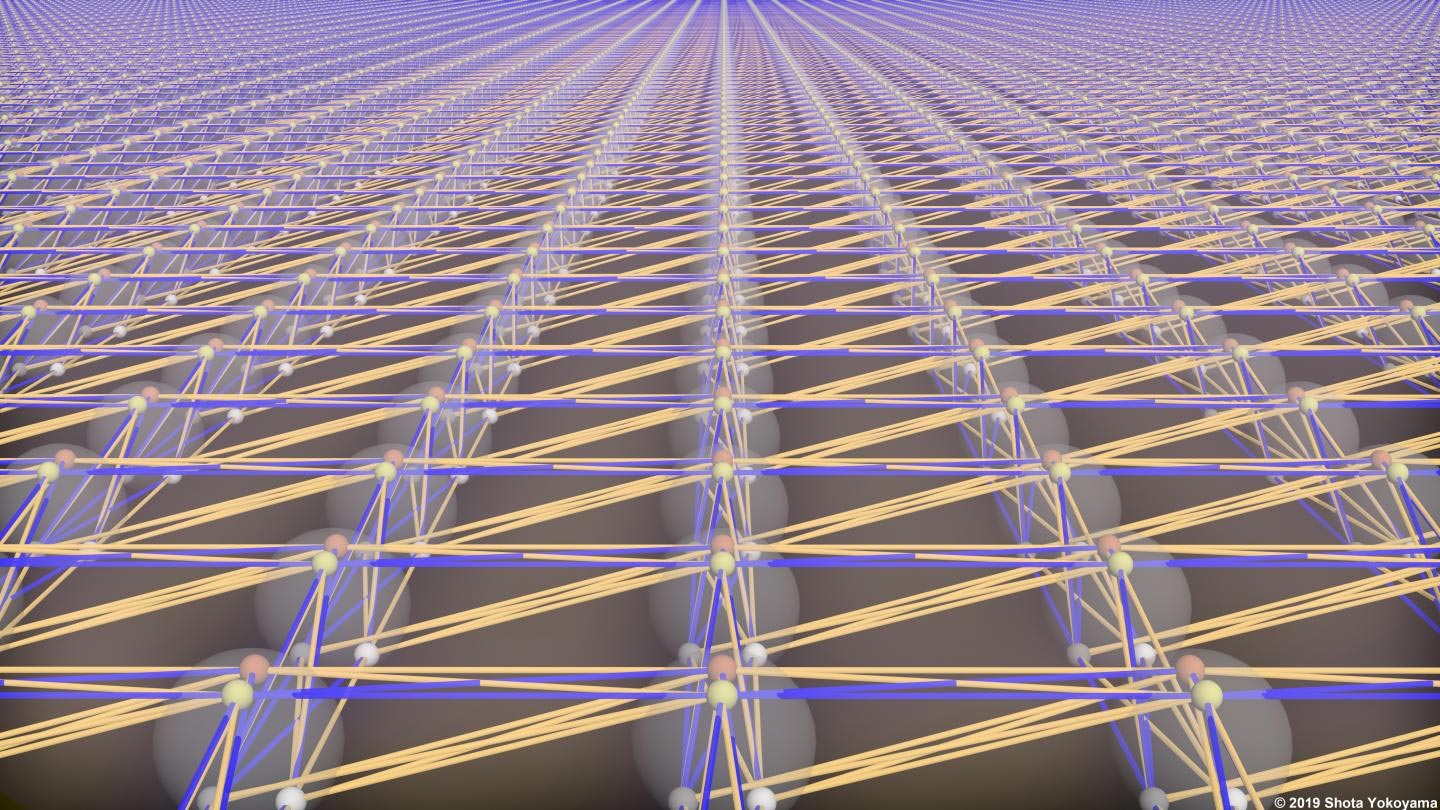
    Quantum Processor Made of Light
    The entanglement structure of a large-scale quantum processor made of light. Credit: Shota Yokoyama 2019

    Researchers open a new avenue to quantum computing with a breakthrough experiment: a large-scale quantum processor made entirely of light.

    An international team of scientists from Australia, Japan, and the United States has produced a prototype of a large-scale quantum processor made of laser light.

    Based on a design ten years in the making, the processor has built-in scalability that allows the number of quantum components – made out of light – to scale to extreme numbers. The research was published in Science today, October 18, 2019.

    Quantum computers promise fast solutions to hard problems, but to do this they require a large number of quantum components and must be relatively error free. Current quantum processors are still small and prone to errors. This new design provides an alternative solution, using light, to reach the scale required to eventually outperform classical computers on important problems.

    Network of Optical Devices
    A network of optical devices – mirrors, beamsplitters, and optical fibers – weave laser light into an optical quantum processor. Credit: CQC2T

    “While today’s quantum processors are impressive, it isn’t clear if the current designs can be scaled up to extremely large sizes,” notes Dr. Nicolas Menicucci, Chief Investigator at the Centre for Quantum Computation and Communication Technology (CQC2T) at RMIT University in Melbourne, Australia.

    “Our approach starts with extreme scalability – built in from the very beginning – because the processor, called a cluster state, is made out of light.”

    Using light as a quantum processor

    A cluster state is a large collection of entangled quantum components that performs quantum computations when measured in a particular way.

    “To be useful for real-world problems, a cluster state must be both large enough and have the right entanglement structure. In the two decades since they were proposed, all previous demonstrations of cluster states have failed on one or both of these counts,” says Dr. Menicucci. “Ours is the first ever to succeed at both.”

    To make the cluster state, specially designed crystals convert ordinary laser light into a type of quantum light called squeezed light, which is then weaved into a cluster state by a network of mirrors, beamsplitters, and optical fibers.
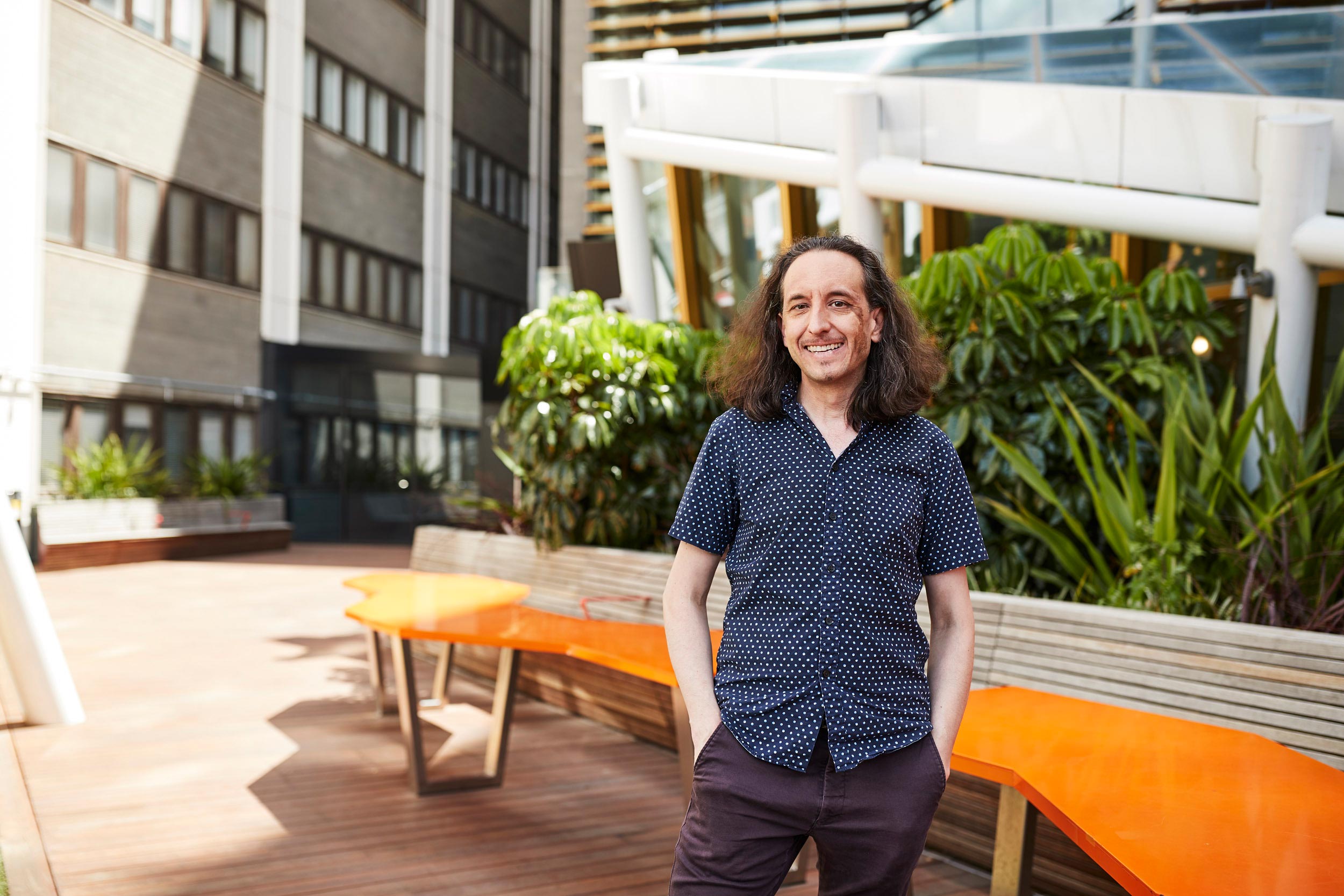
    Dr. Nicolas Menicucci
    Dr. Nicolas Menicucci, Chief Investigator at the RMIT node of CQC2T. Credit: CQC2T

    The team’s design allows for a relatively small experiment to generate an immense two-dimensional cluster state with scalability built in. Although the levels of squeezing – a measure of quality – are currently too low for solving practical problems, the design is compatible with approaches to achieve state-of-the-art squeezing levels.

    The team says their achievement opens up new possibilities for quantum computing with light.

    “In this work, for the first time in any system, we have made a large-scale cluster state whose structure enables universal quantum computation.” Says Dr. Hidehiro Yonezawa, Chief Investigator, CQC2T at UNSW Canberra. “Our experiment demonstrates that this design is feasible – and scalable.”

    Reference: “Generation of time-domain-multiplexed two-dimensional cluster state” by Warit Asavanant, Yu Shiozawa, Shota Yokoyama, Baramee Charoensombutamon, Hiroki Emura, Rafael N. Alexander, Shuntaro Takeda, Jun-ichi Yoshikawa, Nicolas C. Menicucci, Hidehiro Yonezawa and Akira Furusawa, 18 October 2019, Science.
    DOI: 10.1126/science.aay2645

    The experiment was an international effort, with the design developed through collaboration by Dr. Menicucci at RMIT, Dr. Rafael Alexander from the University of New Mexico, and UNSW Canberra researchers Dr. Hidehiro Yonezawa and Dr. Shota Yokoyama. A team of experimentalists at the University of Tokyo, led by Professor Akira Furusawa, performed the ground-breaking experiment.

    Never miss a breakthrough: Join the SciTechDaily newsletter.
    Follow us on Google and Google News.

    Centre for Quantum Computation & Communication Technology Optics Popular Quantum Computing
    Share. Facebook Twitter Pinterest LinkedIn Email Reddit

    Related Articles

    Pioneering Quantum Simulations on Photonic Chips: A New Era in Quantum Computing

    Stanford’s Simple New Quantum Computer Design: Photonic Computation in a Synthetic Time Dimension

    Secret to Building Superconducting Quantum Computers With Massive Processing Power

    Russian Scientists Break Google’s Quantum Algorithm

    Blanket of Entangled Light Pulses for Larger and More Powerful Quantum Computers

    New Tunable Optical Chips Can Be Used As Building-Blocks for Next Generation Quantum Computers

    Engineers Show Feasibility of Organic Topological Insulators

    Yale Physicists Observe Quantum Information While Preserving Its Integrity

    Electronic Read-Out of the Quantum State of an Atom

    1 Comment

    1. Sai on October 19, 2019 9:14 am

      Another 10 years to impact the plebs

      Reply
    Leave A Reply Cancel Reply

    • Facebook
    • Twitter
    • Pinterest
    • YouTube

    Don't Miss a Discovery

    Subscribe for the Latest in Science & Tech!

    Trending News

    Even Occasional Binge Drinking May Triple Liver Damage Risk

    Liftoff! NASA’s Artemis II Launch Sends Astronauts Around the Moon for First Time in 50 Years

    Scientists Discover New Way To Eliminate “Zombie Cells” Driving Aging

    This New Quantum Theory Could Change Everything We Know About the Big Bang

    This One Vitamin May Help Protect Your Brain From Dementia Years Later

    Stopping Weight-Loss Drugs Like Ozempic Can Quickly Erase Heart Benefits

    A 500-Million-Year-Old Surprise Is Forcing Scientists to Rethink Spider Evolution

    Coffee and Blood Pressure: What You Need To Know Before Your Next Cup

    Follow SciTechDaily
    • Facebook
    • Twitter
    • YouTube
    • Pinterest
    • Newsletter
    • RSS
    SciTech News
    • Biology News
    • Chemistry News
    • Earth News
    • Health News
    • Physics News
    • Science News
    • Space News
    • Technology News
    Recent Posts
    • Tiny 436-Million-Year-Old Fish Fossil Rewrites the Origins of Vertebrates
    • 1,800 Miles Down: Scientists Uncover Mysterious Movements at the Edge of Earth’s Core
    • Scientists Uncover Earth’s Hidden “Gold Kitchen” Beneath the Ocean Floor
    • You Don’t Need To Be Rich: New Study Reveals a Simple Life Is the Real Secret to Happiness
    • “Crazy Dice” Help Scientists Prove Only One 150-Year-Old Theory About Randomness Works
    Copyright © 1998 - 2026 SciTechDaily. All Rights Reserved.
    • Science News
    • About
    • Contact
    • Editorial Board
    • Privacy Policy
    • Terms of Use

    Type above and press Enter to search. Press Esc to cancel.