
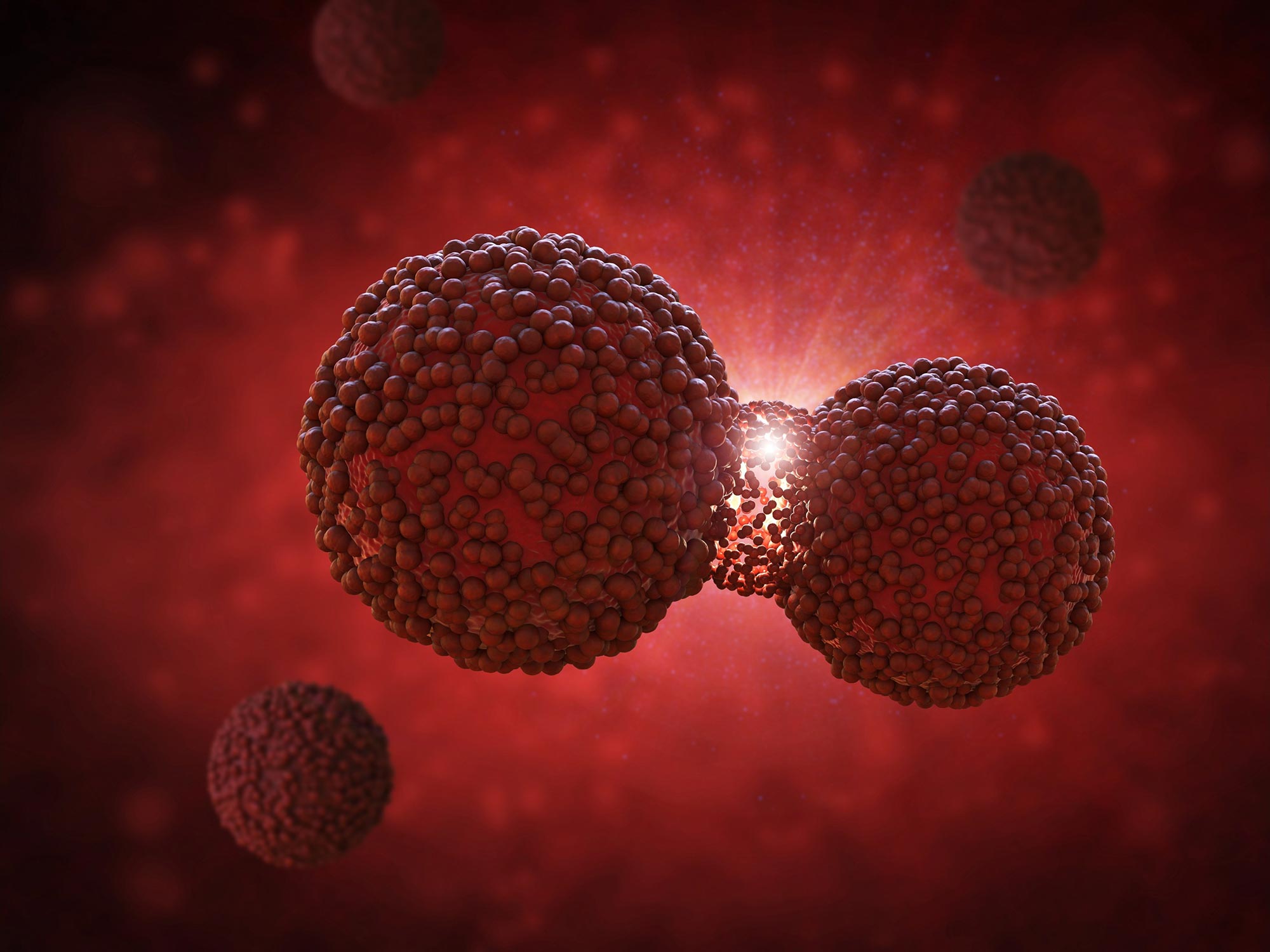
A new nasal delivery method for amifostine could protect healthy tissue during pancreatic cancer radiation therapy, potentially improving survival and expanding treatment options.
A novel approach developed by scientists, including Rice University chemist James Tour, could revolutionize the treatment of pancreatic cancer, one of the deadliest cancers with limited therapeutic options.
Researchers have introduced a targeted nasal delivery method for WR-2721, generically known as amifostine—a radioprotective prodrug historically administered intravenously. This advancement, now advancing to phase 1 and 2 clinical trials, aims to protect healthy tissue from radiation damage while improving outcomes for patients battling the disease.
Pancreatic cancer remains a leading cause of cancer-related deaths, claiming nearly 52,000 lives annually in the United States, according to the American Cancer Society. Its proximity to critical organs, such as the small intestine, complicates treatment, as high-dose radiation therapy often results in severe gastrointestinal toxicity.
Therapeutic options are minimal for pancreatic cancer patients with tumors that are not surgically removable. Building on earlier research by Tour, the T.T. and W.F. Chao Professor of Chemistry at Rice, and subsequent collaborations with the University of Texas MD Anderson Cancer Center and Xerient, a biotech startup founded with Rice and MD Anderson in 2019, scientists are taking a promising path forward.
“We’re pushing the boundaries of radiation treatment while safeguarding healthy tissue,” Tour said. “This breakthrough will hopefully soon help patients who previously had limited options in treatment.”
Decades in the making
The journey began with Tour’s nearly two-decades-old research funded by the Defense Advanced Research Projects Agency, which explored nanoparticle solutions for radiation poisoning in nuclear fallout scenarios. Over time, this work inspired the repurposing of amifostine, originally developed at Walter Reed Medical Center in the 1970s and approved by the U.S. Food and Drug Administration for intravenous use to prevent damage to surrounding tissue when a tumor is treated with radiation.

While intravenous amifostine effectively protects healthy tissues during radiation therapy, its side effects, including nausea and hypotension, have limited its adoption. Tour’s team demonstrated that oral administration could selectively shield the gastrointestinal tract from radiation while reducing adverse effects. However, direct oral delivery posed challenges as stomach acids degraded the drug before it reached the intestines.
Progress on this discovery stalled due to funding constraints. It regained momentum through Tour’s partnerships at MD Anderson with Kathryn Mason, a retired researcher, and the late radiation oncologist Cullen Taniguchi.
Preclinical studies in mouse models revealed groundbreaking results: Mice treated with oral amifostine and simulated radiotherapy achieved a 100% survival rate after 10 days, while untreated mice succumbed. In a pancreatic tumor model, the combination of amifostine and stereotactic body radiotherapy nearly tripled survival time in mice, which if translated to humans could be an enormous breakthrough, adding years of survival to patients.
Protecting the duodenum
Expanding upon these findings, a new delivery method developed by Xerient and funded in part by the Cancer Prevention and Research Institute of Texas uses either a nasoduodenal tube or a coated oral tablet designed to bypass stomach acids and deliver amifostine directly to the duodenum, the upper part of the gastrointestinal tract. This targeted approach delivers the drug to the exact location where it shields healthy cells from radiation damage without causing systemic side effects.
“The duodenum is particularly vulnerable during radiation therapy for pancreatic cancer,” said Guy Yachin, co-founder and CEO of Xerient. “Our method protects this critical area while enabling aggressive treatment of pancreatic tumors.”
Credit: Brandon Martin/Rice University
By safeguarding the duodenum, Xerient’s platform allows the safe delivery of high-dose radiation to pancreatic tumors, an option previously limited by the risk of gastrointestinal injury.
High-dose radiation has shown promise in improving survival rates for patients with unresectable pancreatic cancer, according to multiple studies at leading institutions. Doses above 45 Gy, the international system of units for measuring radiation dosage, can harm the gastrointestinal tract. However, the scientists found that significantly higher doses are often necessary to eradicate pancreatic tumors effectively.
“High-dose radiation has always been an option in theory, but we’ve lacked the tools to protect the surrounding healthy tissues,” Yachin said. “This innovation could finally make that option a reality.”
Accelerating clinical development
With FDA approval, the research team plans to initiate phase 1 and 2 clinical trials to evaluate the safety and efficacy of the ND tube delivery method to ensure precise administration of the drug to the duodenum, expediting its clinical translation.
“The nasogastric delivery system offers several advantages, including precise drug delivery and activation and reduced idle radiation machine time,” Yachin said, adding that for future use and other indications, Xerient is also developing an oral pill to enhance patient convenience.
Beyond pancreatic cancer, amifostine could enable high-dose radiation therapy for other abdominal and pelvic cancers, including hepatobiliary tumors and metastatic abdominal diseases.
Its potential extends beyond oncology, Tour said, including offering protection for astronauts against solar radiation and returning to its origins by serving as an emergency radioprotective measure during nuclear disasters.
“We’re repurposing a known drug to address an unmet clinical need,” Tour said. “This innovation can potentially extend cancer treatment and radiation protection, saving lives in scenarios where other methods are ineffective.”
Never miss a breakthrough: Join the SciTechDaily newsletter.
Follow us on Google and Google News.
2 Comments
Thanks for following your passion
My Dad just passed in November from Metastatic adenocarcinoma- although I obviously wish that he was able to be afforded this treatment, I am very thankful and grateful that it has been discovered- now if we could just create something less toxic than radiation and chemotherapy, the survival rates, as well as quality of life would increase and improved automatically.
Please extend my thanks to those scientific innovators