
Astronomers have uncovered a rare finding: a small, chilly exoplanet accompanied by a significantly larger outer companion, providing new insights into how Earth-like planets are formed.
The findings include a planet with a radius and mass between that of the Earth and Neptune, with a potential orbit around its host star of 146 days. The star system also contains an outer, large companion, 100 times the mass of Jupiter.
This is a rare discovery, with exoplanets smaller and lighter than Neptune and Uranus being notoriously hard to detect, with only a few being identified to this day. Such rare systems are particularly interesting to better understand planetary formation and evolution; they are thought to be a key step for the detection of Earth-like planets around stars.
The new planetary system is discovered around the star HD88986. This star has a similar temperature to the Sun with a slightly larger radius and is bright enough to be seen by keen observers at dark sky sites across the UK, such as Bannau Brycheiniog National Park (Brecon Beacons).
This study, published in the journal Astronomy & Astrophysics, is led by Neda Heidari, an Iranian postdoctoral fellow at the Institut d’astrophysique de Paris (IAP). In the UK, Thomas Wilson, a senior research fellow at the University of Warwick, co-led the analysis of satellite data including searching for new planets. The team also includes researchers at 29 other institutes from nine countries including Switzerland, Chile, and the USA.
A cold, Neptune-like exoplanet
The planetary system includes a cold planet smaller than Neptune, a so-called sub-Neptune, HD88986b. This planet has the longest orbital period (146 days) among known exoplanets smaller than Neptune or Uranus with precise mass measurements.
Neda Heidari, IAP, explained: “Most of the planets we’ve discovered and measured for their mass and radius have short orbits, typically less than 40 days. To provide a comparison with our solar system, even Mercury, the closest planet to the Sun, takes 88 days to complete its orbit. This lack of detection for planets with longer orbits raises challenges in understanding how planets form and evolve in other systems and even in our solar system. HD88986b, with its orbital period of 146 days, potentially has the longest known orbit among the population of small planets with precise measurements.”
HD88986b was detected using the SOPHIE – a high-precision spectrograph (a machine that analyses wavelengths of light from exoplanets) at the Haute-Provence Observatory, France. SOPHIE detects and characterizes exoplanets using the ‘radial-velocity method’; measuring tiny motion variations of the star induced by planets orbiting it.
These observations revealed the planet and allowed the team to estimate its mass to be approximately 17 times that of the Earth.
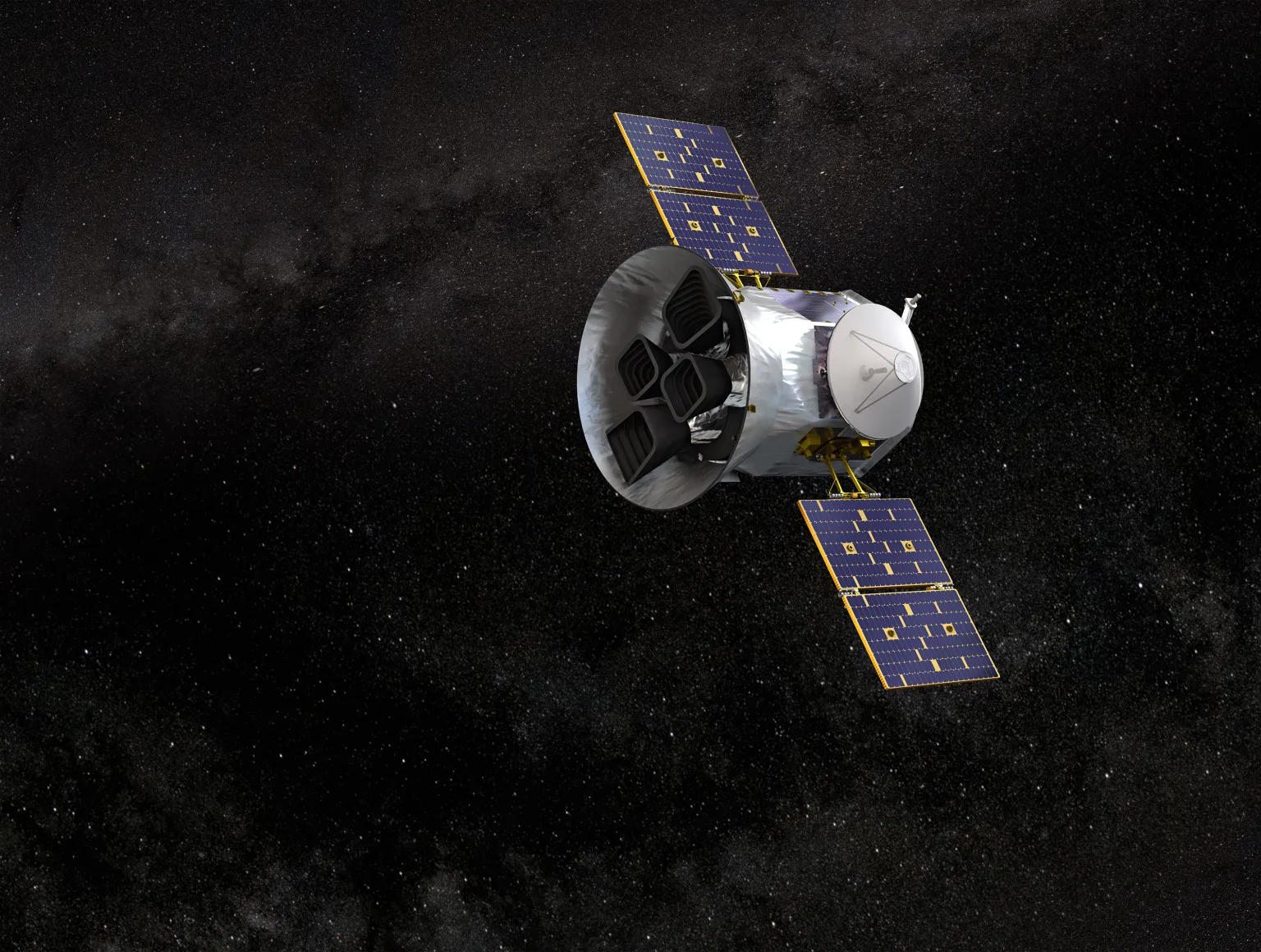
Complementary observations obtained with NASA’s space telescope Transiting Exoplanet Survey Satellite (TESS) and the European Space Agency’s (ESA) space telescope CHaracterising ExOPlanet Satellite (CHEOPS) indicate that the planet probably “transits” in front of it host star. This occurs when its orbit passes on the line of sight between the Earth and the star, partially occulting the star – causing a decrease in its brightness that can be observed and quantified.
These observations by both satellites allowed the team to directly estimate the diameter of the planet as about twice that of the Earth. The findings of the study rely on more than 25 years of observations, also including data from ESA’s Gaia satellite and the Keck Telescope in Hawaii.
Moreover, with an atmosphere temperature of only 190 Celsius degrees, HD88986b provides a rare opportunity for studying the composition of the so-called “cold” atmospheres, as most of the detected atmospheres for exoplanets are above 1,000 Celsius degrees.
Due to the wide orbit of the sub-Neptune HD88986b (as large as 60% of the Earth-Sun distance), HD88986b probably underwent rare interactions with other planets that may exist in the planetary system, and weak loss of mass from the strong ultraviolet radiation of the central star. It may therefore have retained its original chemical composition, allowing scientists to explore the possible scenarios for the formation and evolution of this planetary system.
Thomas Wilson, Department of Physics, University of Warwick, said: “HD88986b is essentially a scaled-down Neptune, between the orbits of Mercury and Venus. It becomes one of the best-studied small, cold exoplanets paving the way for studying its atmosphere to understand the similarity to our own planet Earth. It also orbits a star with a similar temperature to the Sun making it a precursor to the Earth-like planets to be found by the PLATO space telescope, in which Warwick plays a leading role.”
A second, outer companion
The astronomers also revealed a second, outer companion around the central star. This exoplanet is particularly massive (more than 100 times the mass of Jupiter), and its orbit has a period of several tens of years. Further observations are needed to understand its nature and better determine its properties.
Thomas Wilson added: “We collected data from telescopes pointing at HD88986 for over 25 years making this one of the longest-studies exoplanet systems. This wealth of data revealed a second outer companion more massive than Jupiter that may have been important for the formation of the Neptune-like planet in a similar way to Jupiter in our own Solar System.”
Reference: “The SOPHIE search for northern extrasolar planets – XIX. A system including a cold sub-Neptune potentially transiting a V = 6.5 star HD 88986” by N. Heidari, I. Boisse, N. C. Hara, T. G. Wilson, F. Kiefer, G. Hébrard, F. Philipot, S. Hoyer, K. G. Stassun, G. W. Henry, N. C. Santos, L. Acuña, D. Almasian, L. Arnold, N. Astudillo-Defru, O. Attia, X. Bonfils, F. Bouchy, V. Bourrier, B. Collet, P. Cortés-Zuleta, A. Carmona, X. Delfosse, S. Dalal, M. Deleuil, O. D. S. Demangeon, R. F. Díaz, X. Dumusque, D. Ehrenreich, T. Forveille, M. J. Hobson, J. S. Jenkins, J. M. Jenkins, A. M. Lagrange, D. W. Latham, P. Larue, J. Liu, C. Moutou, L. Mignon, H. P. Osborn, F. Pepe, D. Rapetti, J. Rodrigues, A. Santerne, D. Segransan, A. Shporer, S. Sulis, G. Torres, S. Udry, F. Vakili, A. Vanderburg, O. Venot, H. G. Vivien and J. I. Vines, 11 January 2024, Astronomy & Astrophysics.
DOI: 10.1051/0004-6361/202347897
Never miss a breakthrough: Join the SciTechDaily newsletter.
Follow us on Google and Google News.
1 Comment
Parts of this article require correction. A planet 17 times the mass of Earth is a Neptune analog, not a sub-Neptune. Our Neptune has 17.147 Earth masses. The 146 day orbit around a star hotter than our sun would give that planet Venus-like, broiling-hot temperatures. It would not be chilly or cold. The other object at a whopping 100 Jupiter masses is either the new record holder for the most massive brown dwarf known or (more likely) a red dwarf star.