
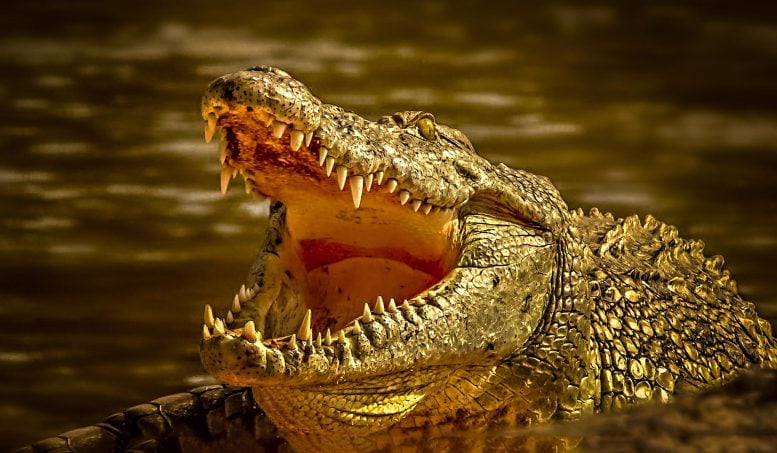
New research led by the University of Oxford has revealed that the most endangered turtle and crocodile species are those that are most unique. Their loss could have widespread impacts on the ecosystems they live in, since they carry out critical processes important for many other species.
Turtles and crocodiles are two of the world’s most endangered animal groups, with approximately half of species globally threatened (International Union for Conservation of Nature, IUCN). A greater understanding of which species are most threatened and why is urgently needed to inform conservation efforts to save them.
In a new study led by researchers at the Department of Biology, University of Oxford, an international team examined the greatest risks to wild populations of turtles and crocodiles worldwide. The results, published today (March 28, 2023) in the journal Nature Communications, demonstrate that the most endangered turtles and crocodile species are those that have evolved unique life strategies. These species typically carry out highly specific roles within their ecosystems that are unlikely to be taken up by other species if they disappeared.
The researchers used models to simulate extinctions as a result of human-led threats, assessing the impacts that would be seen for species with different life strategies. A life strategy is how an organism divides its resources and energy between its own survival, reproduction, and growth.
Professor Rob Salguero-Gómez (Department of Biology, University of Oxford), senior author of this research, commented: “A key finding is that the threats do not affect all species equally; they tend to impact particular life history strategies. For example, unsustainable consumption of turtles and crocodiles mainly affects the longest-lived species with the largest clutch sizes, such as sea turtles.”
Key findings:
- The results indicated that if all species of turtles, tortoises, and crocodiles currently assessed as Critically Endangered according to the IUCN went extinct, 13% of unique life strategies would be lost.
- Habitat loss was the main threat to all species of turtles, tortoises, and crocodiles worldwide. Compared to any other threat examined, this had the potential to cause double the functional diversity loss (the range of things that organisms do in ecosystems).
- Climate change and global trade were also major threats that affected all species, independent of their life history strategy.
- Species with unique life history strategies were also particularly affected by unsustainable local consumption, diseases, and pollution.
- Species with ‘slow’ life histories (characterized by late maturity and low numbers of offspring) were particularly vulnerable to threats from invasive species and diseases. For example, in Sumatra, a significant threat to the “False Gharial” (Tomistoma schlegelii) is predation of their eggs by the introduced wild pig (Sus scrofa).
- Threats from pollution were particularly associated with species with high reproductive output (higher clutch sizes), such as freshwater turtles and saltwater crocodiles. For example, the three-striped roofed turtle (Batagur dhongoka) is highly susceptible to major hydrological projects and their impacts on river flow dynamics and nesting beaches, and water pollution.
- Local consumption was a particular threat for species with higher clutch sizes, and longer maximum lifespans. For example, the long-lived Asian Giant tortoise (Manouria emys) is generally killed and butchered on the spot for its meat whenever encountered by local hunter-gatherers through much of its range, as well as collected for export trade for consumption in East Asia.
According to the researchers, the fact that tortoises, turtles, and crocodiles with unique life histories are more vulnerable to vanishing is highly concerning, since many of these perform important functions in ecosystems. For instance, some are effective seed dispersers, some create habitats for other species by making burrows, and others are predators that help maintain balance in the ecosystem.
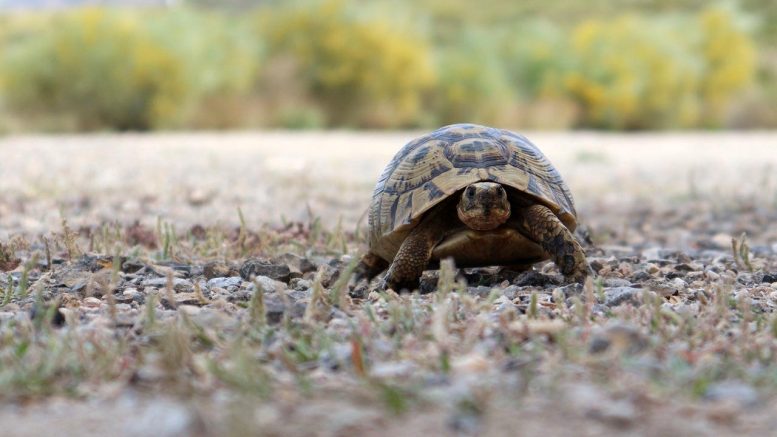
Having had these functions for millions of years, they are inextricably tied to the unique and diverse life strategies that species have evolved. Many of these species are also highly charismatic, such as the “spur-thighed tortoise,” native to the Mediterranean basin in the north of Africa and the East of Europe.
Lead author Dr. Roberto Rodriguez (Department of Biology, University of Oxford at the time of the study, now at the University of Alicante) said: “The main threat to the viability of these groups of reptiles is habitat loss and fragmentation, which is especially common in species inhabiting the Northern hemisphere. The disappearance of wetlands, increasing urbanization, and the development of intensive agriculture, which already have tangible effects, will likely continue to negatively affect these species and their ability to persist in the mid- to long-term.”
Global and Untargeted Threats
Other threats, however, had a more global and untargeted effect. Dr. Molly Grace (Department of Biology, University of Oxford), co-author of the study, added: “While sustainable use and trade of wildlife can sometimes benefit species conservation, unsustainable trade of live animals or their parts threaten these reptiles throughout the world, regardless of their life history strategies.” The capture and trafficking of turtles is common for keeping them in captivity, and crocodile skin is of great commercial interest; for example, although there are some controls on trade, Mugger crocodiles (Crocodylus palustris) in Pakistan are still illegally hunted for their skin.
According to the researchers, the results of this study highlight the urgent need for effective conservation management plans that protect species overall, but also unique life history strategies and functional diversity. Incorporating functional diversity into conservation policies for these highly endangered groups may be a promising approach to help prioritise conservation efforts in the face of current and future threats. “IUCN red lists of threatened species could incorporate information regarding the functional uniqueness to help managers make local decisions that would impact global conservation most efficiently,” added Dr. Rob Salguero- Gómez.
The researchers add that people concerned about the loss of turtles and crocodiles should avoid purchasing products made from them and, particularly for turtles and tortoises, should not consider them as pets. Moreover, they can support organizations that develop conservation projects to protect their habitats and wild populations. Responsible ecotourism or citizen science activities, such as volunteering programs or crowdsourced data collection, can also offer opportunities to positively contribute towards turtle and crocodile conservation.
Reference: “Anthropogenic impacts on threatened species erode functional diversity in chelonians and crocodilians” 28 March 2023, Nature Communications.
DOI: 10.1038/s41467-023-37089-5
Never miss a breakthrough: Join the SciTechDaily newsletter.
Follow us on Google and Google News.
1 Comment
All so call crocodile dinosaur which will help because they are dinosaur no more tabloid film aka jurrasic park .?