
Close Menu
    Facebook X (Twitter) Instagram
    SciTechDaily
    • Biology
    • Chemistry
    • Earth
    • Health
    • Physics
    • Science
    • Space
    • Technology
    Facebook X (Twitter) Pinterest YouTube RSS
    SciTechDaily
    Home»Science»Revealing Genetic Secrets Using DNA Extracted From Extinct and Ancient Museum Specimens
    Science

    Revealing Genetic Secrets Using DNA Extracted From Extinct and Ancient Museum Specimens

    By Flinders UniversityFebruary 1, 2020No Comments3 Mins Read
    Facebook Twitter Pinterest Telegram LinkedIn WhatsApp Email Reddit
    Share
    Facebook Twitter LinkedIn Pinterest Telegram Email Reddit
    Vortex Fluidic Device DNA Recovery Technique
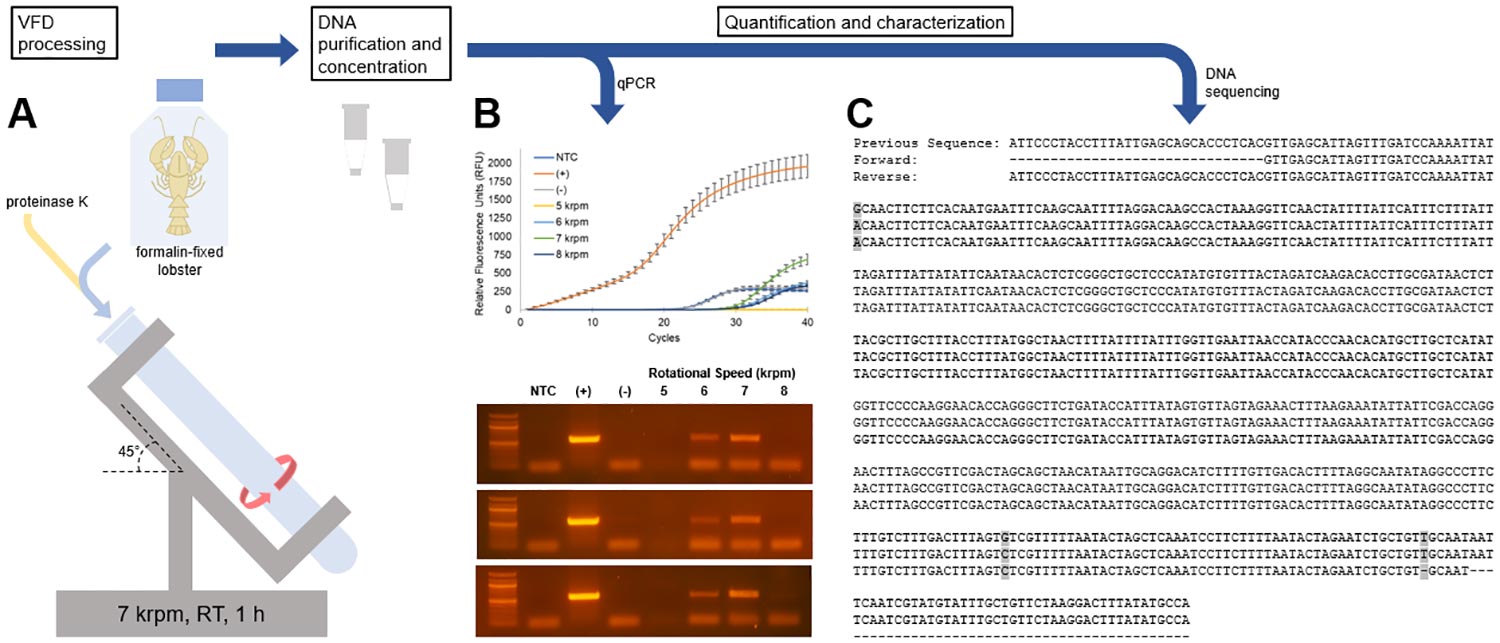
    The protocol begins with Vortex Fluidic Device (VFD) treatment of a mixture of proteinase K and the frozen, then broken-up tissue. The reaction mixture is next processed to remove solids and DNA polymerase inhibitors. The recovered DNA is then purified and concentrated. Finally, the DNA is amplified, quantified, and characterized by (B) qPCR and (C) DNA sequencing of the samples. Credit: PLOS ONE

    DNA proteins extracted using a vortex fluidic device (VFD) could help answer important questions about extinct and ancient museum specimens.

    DNA in preserved museum specimens can allow scientists to explore the history of species and humanity’s impact on the ecosystem, but samples are typically preserved in formaldehyde which can damage DNA and make it very difficult to recover.

    Researchers have used a vortex fluidic device (VFD) to speed up DNA extraction from an American lobster preserved in formaldehyde — with the results providing a roadmap for exploring DNA from millions of valuable and even extinct species in museums worldwide.

    Flinders Ph.D. candidate Jessica Phillips says processing the preserved tissue from museum specimens in the VFD breaks apart proteins, releasing DNA which offers important historical genetic information.
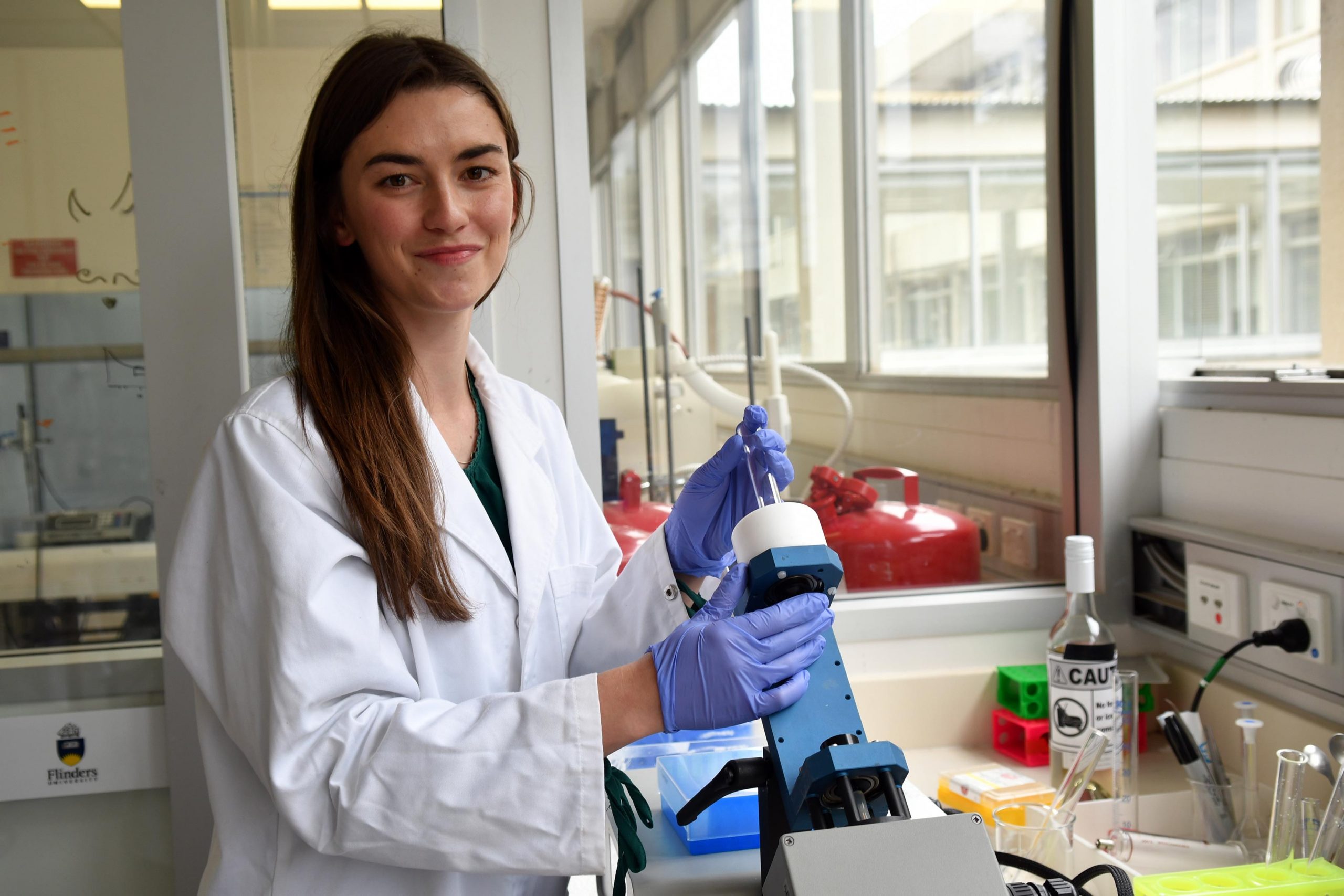
    Jessica Phillips
    Jessica Phillips with Vortex Fluidic Device at Flinders University. Credit: Flinders University

    “DNA extraction is achieved by processing the preserved tissue in an enzyme solution in the VFD. This enzyme breaks apart the proteins, releasing the DNA which can be analyzed. By using the VFD we are able to accelerate this process from days to hours,” says Ms. Phillips.

    “For 150 years these samples have been preserved in formaldehyde which can damage the DNA and also make DNA difficult to recover. We used mechanical energy in a vortex fluidic device (VFD) to accelerate the extraction by processing the preserved tissue in an enzyme solution in the VFD.”

    This work is a collaboration between University of California, Irvine (UCI), The Department of Organismic and Evolutionary Biology at Harvard University, and Flinders University.

    Researchers say the results provide a roadmap for exploring DNA from millions of historical and even extinct species in museums worldwide.

    Research Chair of Clean Technology Research Professor Colin Raston says the work builds on the body of about 80 papers that his research group has published about the vortex fluidic device.

    “Applications of the VFD are rapidly expanding, but this has only been possible by internal collaboration. The DNA extraction application involved collaboration with two other research laboratories headed by Professor Greg Weiss at UCI and Professor Peter Girguis at Harvard.”

    “We have only scratched the surface about what is possible for this device,” says Professor Raston.”

    Reference: “Vortex fluidics-mediated DNA rescue from formalin-fixed museum specimens” by Christian A. Totoiu, Jessica M. Phillips, Aspen T. Reese, Sudipta Majumdar, Peter R. Girguis, Colin L. Raston and Gregory A. Weiss, 30 January 2020, PLOS ONE.
    DOI: 10.1371/journal.pone.0225807

    Never miss a breakthrough: Join the SciTechDaily newsletter.
    Follow us on Google and Google News.

    DNA Flinders University Genetics
    Share. Facebook Twitter Pinterest LinkedIn Email Reddit

    Related Articles

    Using 23andMe African Ancestry Data to Reexamine the History of Slavery

    DNA Increases Our Understanding of Stone Age Cultures and Battle Axe Cultural Influences

    First Large-Scale Genetic Analysis of Ancient Andean Civilizations

    The Origin of Feces: Using AI & DNA to Reliably Predict Sources of Ancient Poop

    Victims of Mass Casualty Event Identified Quickly With Rapid DNA Identification Test

    Analyzing the Current Ethical Landscape of Ancient DNA Research

    Scientists Reveal the Complex Story Behind the Beaker Phenomenon

    Genome Data Shows Ancient Egyptian Mummies Closely Related to Ancient Populations from the Near East

    Inherent Complexity of the Wheat Genome

    Leave A Reply Cancel Reply

    • Facebook
    • Twitter
    • Pinterest
    • YouTube

    Don't Miss a Discovery

    Subscribe for the Latest in Science & Tech!

    Trending News

    Scientists Say This Simple Supplement May Actually Reverse Heart Disease

    Warming Oceans Could Trigger a Dangerous Methane Surge

    This Simple Movement Could Be Secretly Cleaning Your Brain

    Male Birth Control Breakthrough: Scientists Find Way To Turn Sperm Production Off and Back On

    A Common Vitamin Could Hold the Key to Treating Fatty Liver Disease

    New Research Shows Vitamin B12 May Hold the Key to Healthy Aging

    These Simple Daily Habits Can Quickly Improve Blood Pressure and Heart Risk Factors

    A Common Nutrient May Play a Surprising Role in Anxiety

    Follow SciTechDaily
    • Facebook
    • Twitter
    • YouTube
    • Pinterest
    • Newsletter
    • RSS
    SciTech News
    • Biology News
    • Chemistry News
    • Earth News
    • Health News
    • Physics News
    • Science News
    • Space News
    • Technology News
    Recent Posts
    • Scientists Just Exposed a 300 Million-Year-Old Fossil Mistake
    • Ravens Don’t Follow Wolves, They Predict Them
    • This Common Knee Surgery May Be Doing More Harm Than Good
    • Scientists Discover a New Way To Control Metals at the Atomic Scale
    • Scientists Create “Quantum Sound” Device That Works Near Absolute Zero
    Copyright © 1998 - 2026 SciTechDaily. All Rights Reserved.
    • Science News
    • About
    • Contact
    • Editorial Board
    • Privacy Policy
    • Terms of Use

    Type above and press Enter to search. Press Esc to cancel.