
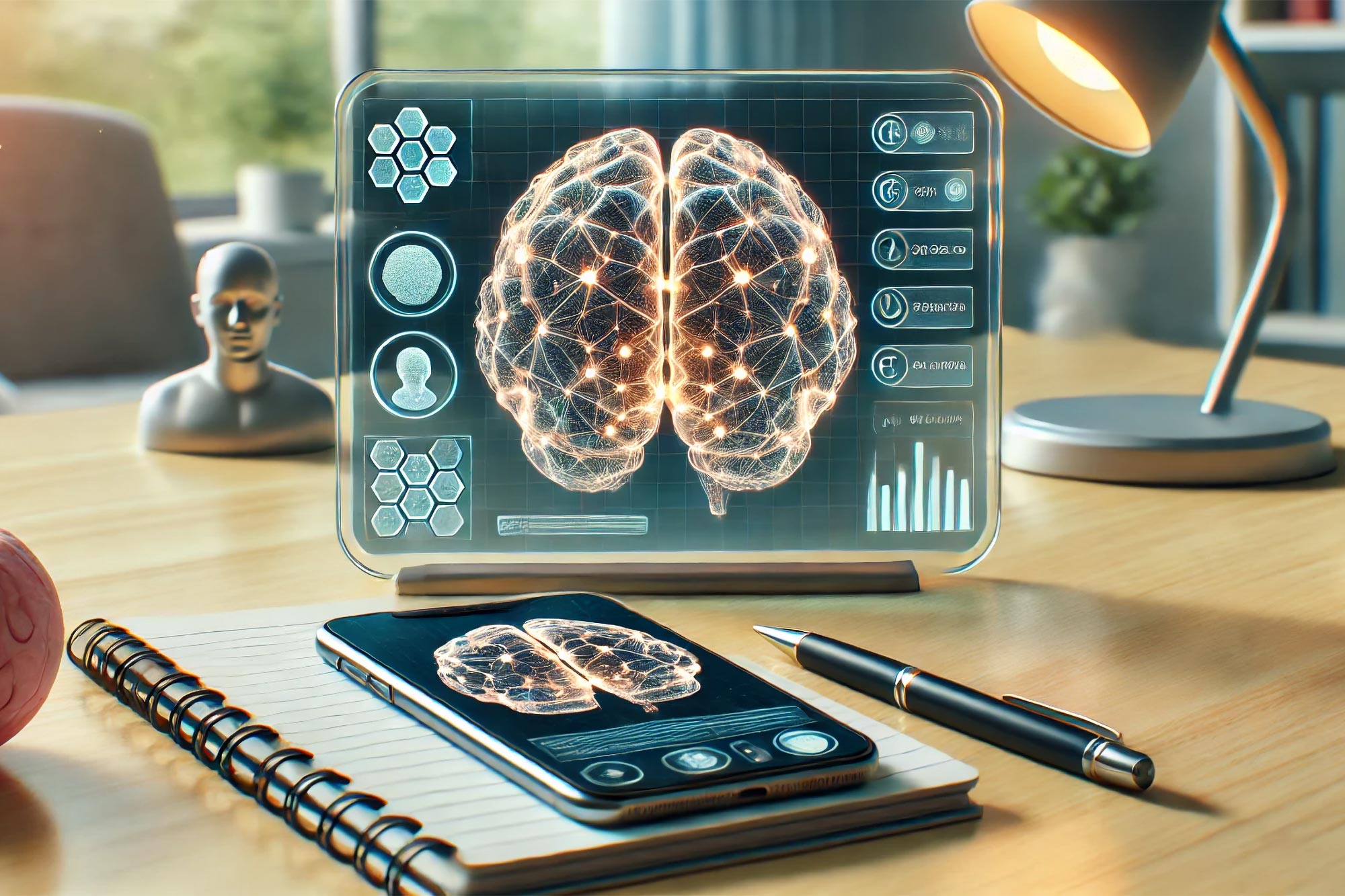
A new prediction model by Amsterdam UMC’s Alzheimer Centre uses patient data to forecast cognitive decline in Alzheimer’s patients, aiming for personalized care plans. The model, supported by an upcoming app, helps guide treatment discussions based on predicted disease progression.
Amsterdam University Medical Center’s Alzheimer Center has developed a prediction model that can predict cognitive decline in patients with mild cognitive impairment or mild dementia due to Alzheimer’s disease. The next step is developing an app that uses this prediction model, which would represent an important step toward personalized forecasts for patients. The study was published on July 10 in the journal Neurology.
Development and Application of a Prediction App
After people have been diagnosed with Alzheimer’s, their first question is often: “What can I expect now?”
This question is difficult for doctors to answer. To aid them, Pieter van der Veere, physician-researcher at Alzheimer Centre Amsterdam, has developed a model that can predict cognitive decline. Although the predictions do not provide absolute certainty, the model does give an indication of the course of the disease over a period of 5 years.
For practical use, a prototype of an app is available for scientific research. The next step is to develop a more user-friendly app with input from patients, family members, and professionals.
Alzheimer’s disease is a progressive neurological disorder that primarily causes memory loss and cognitive decline. It is the most common type of dementia, characterized by the buildup of amyloid plaques and tau tangles in the brain, which disrupts cell function and leads to neuron death. Symptoms typically develop slowly and worsen over time, significantly impairing daily functioning and independence. The exact cause of Alzheimer’s is still not fully understood, but it involves a combination of genetic, environmental, and lifestyle factors. There is currently no cure for Alzheimer’s, but there are treatments that can help manage symptoms and improve quality of life.
Enhancing Individualized Predictions
The prediction model is based on data from nearly 1000 patients with Alzheimer’s disease. It uses general information such as age, gender, and cognitive test scores, as well as data from MRI scans and biomarkers, gathered from cerebrospinal fluid. “As a result, it gives a prediction that is really tailored to each individual person,” says Van der Veere.
Nevertheless, the model shows how difficult it is to make a precise prediction for each individual patient, because there are always uncertainties. These are always discussed with the patient.
“Previous research shows that people still want information about their prognosis, even if this information is uncertain. An app with our prediction model can therefore meet an important need.”
The Future of Personal Prognosis in Alzheimer’s Care
The prediction model is an important first step towards personal forecasting.
“In the future, this will become even more important if we can treat Alzheimer’s disease,” says Wiesje van der Flier, Research Director at Alzheimer Centre Amsterdam. “Doctors can use the prediction model to explain what the possible effect of a treatment can be. For example, if patients start to live healthier lives or use medication.”
This can be a starting point for conversations between doctor, patient, and family about the pros and cons of treatments, so that they can come to an appropriate decision together.”
For more on this research, see New Algorithms Forecast How Fast Alzheimer’s Progresses.
Reference: “Predicting Cognitive Decline in Amyloid-Positive Patients With Mild Cognitive Impairment or Mild Dementia” by Pieter J. van der Veere, Jeroen Hoogland, Leonie N.C. Visser, Argonde C. Van Harten, Hanneke F. Rhodius-Meester, Sietske A.M. Sikkes, Vikram Venkatraghavan, Frederik Barkhof, Charlotte E. Teunissen, Elsmarieke van de Giessen, Johannes Berkhof and Wiesje M. Van Der Flier, 10 July 2024, Neurology.
DOI: 10.1212/WNL.0000000000209605
Never miss a breakthrough: Join the SciTechDaily newsletter.
Follow us on Google and Google News.
1 Comment
Uncertain prognoses create patient expectations that can become self-fulfilling. People should always be encouraged with positive expectations, not negative ones. We don’t need doctors telling patients when they will die, either. Doctors, and their tests, are not omniscient. This applies to genetic testing, too. None of these are determinative, only predictive. And since medicine is eager to get people into treatment for potential problems since they make money that way, there is a conflict of interest when doctors predict the need for treatment. Have faith in your body and its ability to heal, not in the medical industry which profits from disease.