
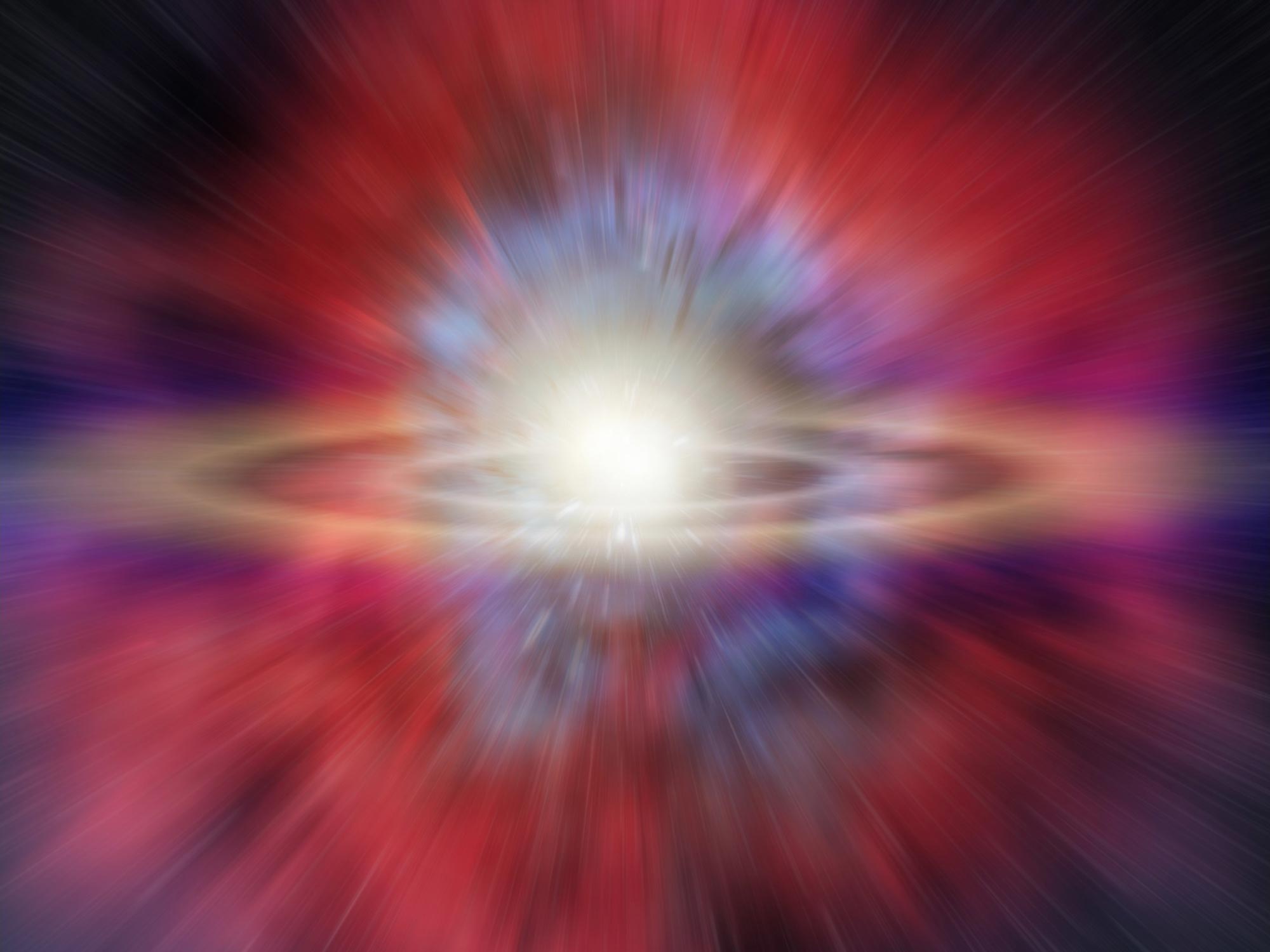
Astrophysical explosions, encompassing events like supernovae and black hole consumptions, are becoming increasingly detectable with modern astronomy’s advancements.
A physicist from Syracuse University has developed a groundbreaking model to simulate these cosmic events and their light emissions, allowing for a deeper understanding of their evolution.
Astrophysical explosions come in several dramatic forms: the collapse of a massive star’s iron core, creating a core-collapse supernova; the “spaghettification” and consumption of stellar remnants by a massive black hole, known as a tidal disruption event; and runaway nuclear fusion on a white dwarf’s surface, which leads to a type 1-A supernova. These explosions happen often, though mostly in far-off galaxies, and only recently have astronomers been able to look deep enough into space to detect them in substantial numbers — with many more discoveries expected.
Innovations in Modeling Cosmic Explosions
Eric Coughlin, assistant professor of physics at Syracuse University’s College of Arts and Sciences, has developed a groundbreaking model to quickly simulate these explosions and trace the origins of the light we observe from them. His findings are detailed in his paper, “From Coasting to Energy-conserving: New Self-similar Solutions to the Interaction Phase of Strong Explosions,” published on October 29 in The Astrophysical Journal Letters.
“With this new understanding, we can model the emission from an explosion’s interaction with its surroundings, allowing us to trace its evolution with time,” says Coughlin.
Advancements in Supernova Detection
For many years, astronomers have known when a giant star has died under its own gravitational collapse. This is because its collapse leads to the reversal of the implosion as a neutron star forms at its center, leading to an explosion that produces an extremely intense and luminous outburst – now known as a core-collapse supernova. Those that occur within our Galaxy (or in other and very nearby galaxies) can be viewed with the naked eye, but today many supernovae are detected by modern telescopes at a rate of tens per night.
Other kinds of explosions are less easy to identify, however, because they are too distant or dim too rapidly. Rapidly fading electromagnetic outbursts, for instance, are easy to miss unless we look in the correct place in the sky at the right time. Nonetheless, they can discharge a comparable amount of energy as a standard supernova explosion.
“These explosions can release billions upon billions upon billions of atomic bombs’ worth of energy each day,” says Coughlin. “Such transient, high-energy events are taking place all the time in the universe.”
Astronomers seek discoveries about core-collapse supernovae and other luminous, rapidly evolving phenomena in space, collectively known as “transients.” Coughlin’s new model will aid this search.

Dynamics of Supernova Ejecta
A core-collapse supernova happens when the newly formed neutron star “bounces” and reverses the stellar implosion, driving a shockwave through the star’s outermost layers. Vast amounts of supernova debris—or ejecta—are blown into the gas surrounding the dying star.
The ejecta is initially extremely hot and radiates tremendous amounts of light, and the radioactive decay of heavy atomic elements also contributes to the emission. The interaction between the ejecta and the surrounding gas can also supplement – and in some cases dominate over – this emission, as two additional shockwaves are generated that accelerate the surrounding gas and decelerate the outward-moving ejecta. This “shell” of shocked material expands outward with time, producing not just visible light, but also radio emission that signifies the presence of shock-heated gas. Coughlin’s model provides a new methodology for tracking the evolution of the shell that is generated through this interaction, which can be used alongside radio data to infer properties of the explosion, such as its energy.

The Role of the Rubin Observatory
Coughlin will apply his model to data from the Legacy Survey of Space and Time (LSST), to be carried out by the Vera C. Rubin Observatory, which is set to come online next year in the Andes Mountains of Chile. The Rubin Observatory will conduct a 10-year study of the sky that will deliver huge volumes of astronomical data that astronomers will analyze, leading to new discoveries about the time-dependent Universe.
The Rubin Observatory includes a world-class 8.4-meter telescope coupled to a 3.2-gigapixel camera, which is the largest digital camera ever made for astronomy.
The telescope will image the entire visible sky of the Southern Hemisphere every three to four nights, allowing it to detect farther or dimmer objects that change briefly in brightness or direction.
“We will be observing billions of galaxies over the next 10 years, and then correspondingly, millions of these transients that are caused by many different phenomena,” says Coughlin.
Potential of Cross-Disciplinary Research
The open-access dataset from the Rubin Observatory will be larger and more detailed than any that have come before it.
“As a theoretical astronomer, I try to piece together from these data a coherent picture of explosive phenomena out there,” says Coughlin. “And I will try to understand the physics at play, to recreate these explosive events.”
Cross-disciplinary research, however, is needed to ignite early discoveries.
Coughlin has received a “Scialog” fellowship, supported by the Research Corporation for Science Advancement, to develop early scientific projects from the LSST. The first Scialog session will meet in November in Tucson, Arizona, to forge connections among 50 early-career scientists: observational astronomers, cosmologists, theoretical physicists and astrophysicists, computational modelers, data scientists and software engineers.
Scialog participants plan to take advantage of the unprecedented dataset size by catalyzing collaborative projects.
“We’re talking like petabytes (one million gigabytes) of data to deal with and to sift through,” says Coughlin. “We will bring together people of different disciplines thinking about solutions to problems that involve enormous volumes of data or new methods to use these data to figure out something new. The Rubin Observatory will help us gain insight into the deaths of massive stars as they are happening and producing enormous amounts of energy. We could ultimately learn what’s powering some of these energetic events.”
Reference: “From Coasting to Energy-conserving: New Self-similar Solutions to the Interaction Phase of Strong Explosions” by and Eric R. Coughlin, 29 October 2024, The Astrophysical Journal Letters.
DOI: 10.3847/2041-8213/ad87cc
Never miss a breakthrough: Join the SciTechDaily newsletter.
Follow us on Google and Google News.