
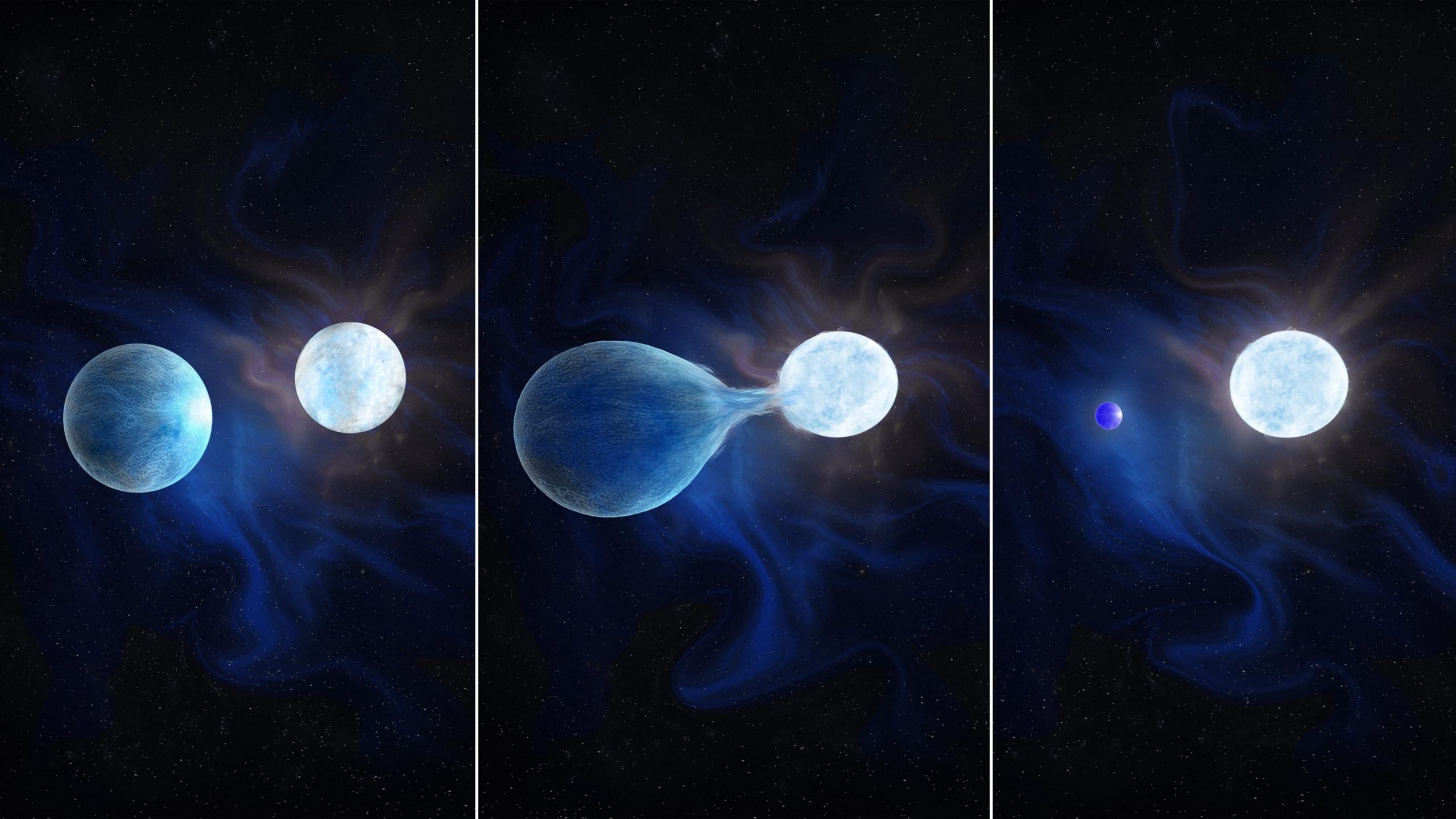
New findings confirm existence of hot helium stars long-thought to be at the heart of hydrogen-poor supernovae and neutron star mergers.
Astronomers at the University of Toronto have discovered a population of massive stars that have been stripped of their hydrogen envelopes by their companions in binary systems. The findings, published on December 14 in the journal Science, shed light on the hot helium stars that are believed to be the origins of hydrogen-poor core-collapse supernovae and neutron star mergers.
Theory vs. Reality in Stellar Evolution
For over a decade, scientists have theorized that approximately one in three massive stars are stripped of their hydrogen envelope in binary systems. Yet, until now, only one possible candidate had been identified.
“This was such a big, glaring hole,” says co-lead author Maria Drout, an Assistant Professor in the David A. Dunlap Department of Astronomy & Astrophysics and a Dunlap Institute for Astronomy & Astrophysics Associate at the University of Toronto.
Implications for Future Research
“If it turned out that these stars are rare, then our whole theoretical framework for all these different phenomena is wrong, with implications for supernovae, gravitational waves, and the light from distant galaxies,” Drout says. “This finding shows these stars really do exist.”
“Going forward, we are going to be able to do much more detailed physics with these stars,” Drout says. “For example, predictions for how many neutron star mergers we should see are dependent on the properties of these stars, such as how much material comes off of them in stellar winds. Now, for the first time, we’ll be able to measure that, whereas people have been extrapolating it before.”
Binary Stripped Stars and Cosmic Phenomena
Binary stripped stars have been previously evoked to explain why a third of core-collapse supernovae contain much less hydrogen than a typical explosion of a Red Supergiant star. Drout and her colleagues propose that these newly discovered stars will eventually explode as hydrogen-poor supernovae. These star systems are also thought to be necessary to form neutron star mergers, like those that emit gravitational waves detected from Earth by the LIGO experiment.
In fact, the researchers believe that a few objects in their current sample are stripped stars with neutron star or black hole companions. These objects are at the stage immediately before they become double neutron star or neutron star plus black hole systems that could eventually merge.
Stellar Partnerships and Evolution
“Many stars are part of a cosmic dance with a partner, orbiting each other in a binary system. They’re not solitary giants but part of dynamic duos, interacting and influencing each other throughout their lifetimes,” says Bethany Ludwig, a PhD student in in the David A. Dunlap Department of Astronomy & Astrophysics at the University Toronto and the third author on this paper. “Our work sheds light on these fascinating relationships, revealing a universe that is far more interconnected and active than we previously imagined.”
“Just as humans are social beings, stars too, especially the massive ones, are rarely alone,” Ludwig says.
As stars evolve and expand to become red giants, the hydrogen at the outer edges of one can be stripped by the gravitational pull of its companion—leaving a very hot helium core exposed. The process can take tens of thousands, or even hundreds of thousands, of years.
Challenges in Detecting Stripped Stars
Stripped stars are difficult to find because much of the light they emit is outside of the visible light spectrum and can be obstructed by dust in the universe or outshone by their companion stars.
Drout and her collaborators began their search in 2016. Having studied hydrogen-poor supernovae during her PhD, Drout set out to find the stripped stars thought to be at the heart of them during a NASA Hubble Postdoctoral Fellowship at the Observatories of the Carnegie Institution for Science. She met fellow co-author Ylva Götberg, now Assistant Professor at the Institute of Science and Technology Austria (ISTA), at a conference, who had recently built new theoretical models of what these stars should look like.
Drout, Götberg, and their collaborators designed a new survey to look in the ultraviolet part of the spectrum where extremely hot stars emit most of their light. While invisible to the naked eye, ultraviolet light can be detected by specialized instruments and telescopes.
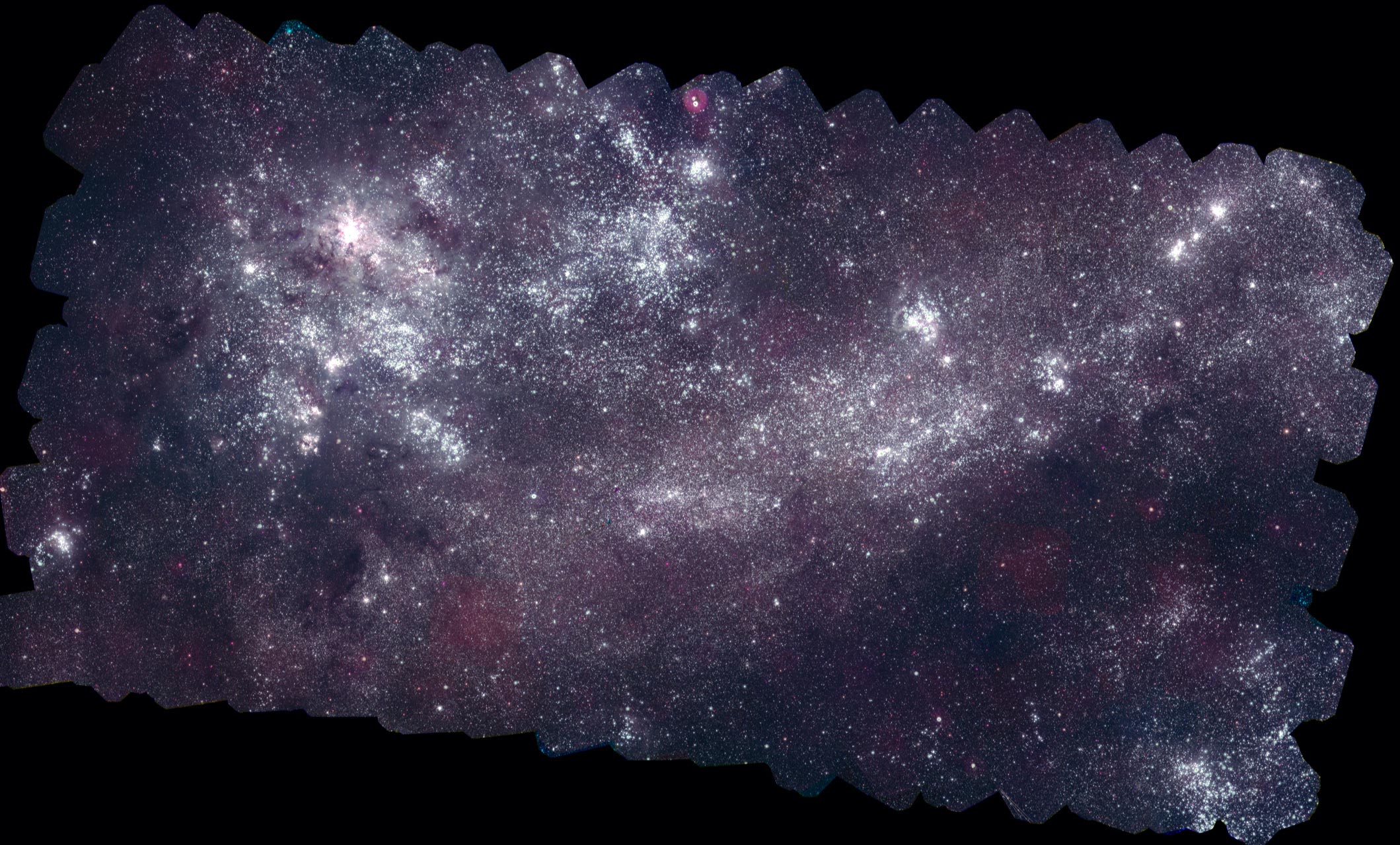
Using data from the Swift Ultra-Violet/Optical Telescope, the researchers collected brightnesses for millions of stars in the Large and Small Magellanic Clouds, two of the closest galaxies to Earth. Ludwig developed the first wide-field UV catalog of the Magellanic Clouds and used UV photometry to detect systems with unusual UV emissions, signaling the possible presence of a stripped star.
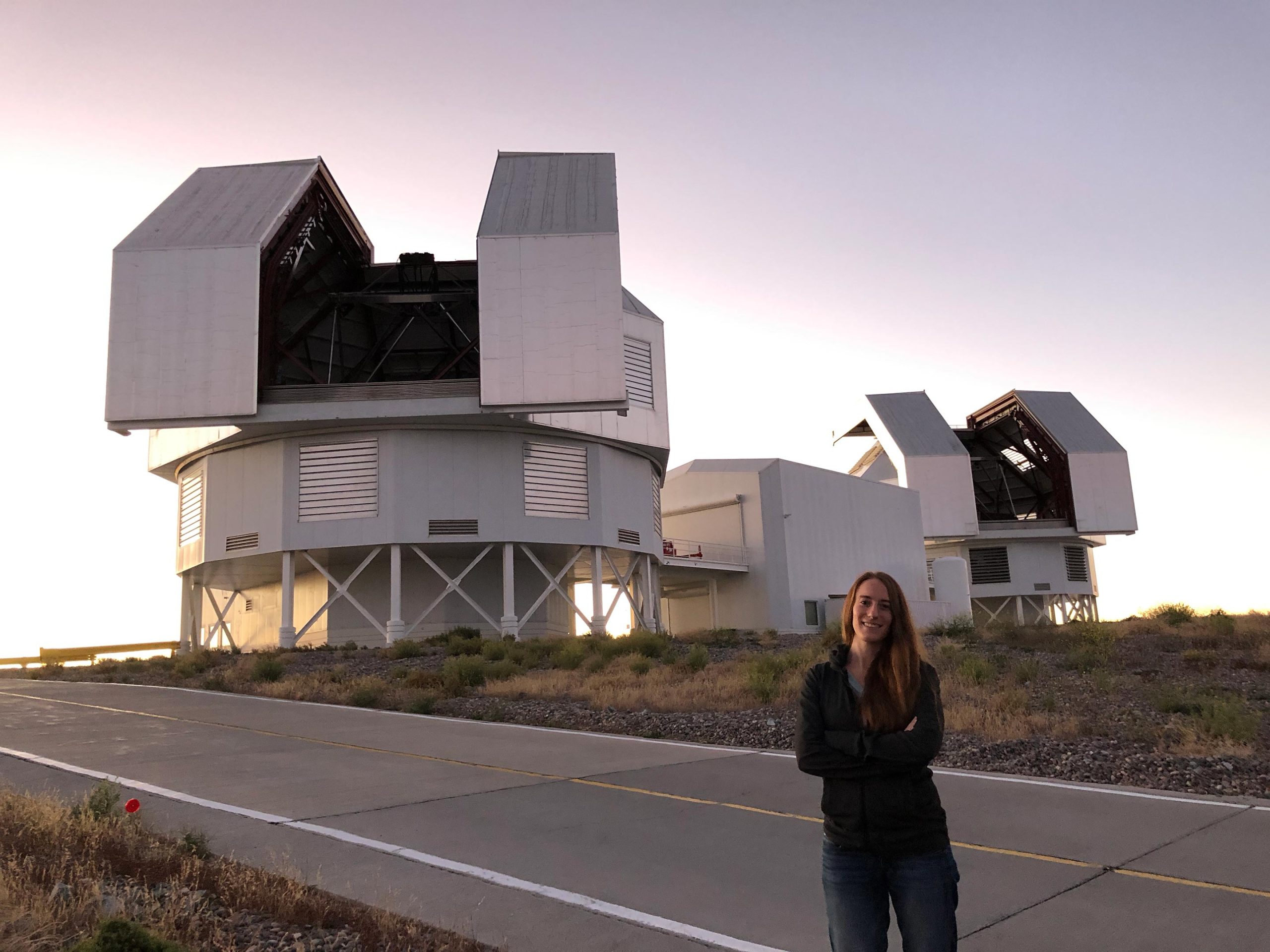
They carried out a pilot study of 25 objects, obtaining optical spectroscopy with the Magellan Telescopes at Las Campanas Observatory between 2018 and 2022. They used these observations to demonstrate that the stars were hot, small, hydrogen-poor, and in binary systems—all consistent with their model predictions.
Ongoing Research and Accessibility of Data
Currently, the researchers are continuing to study the stars identified in this paper and expanding their search to find more. They will be looking both within nearby galaxies and within our own Milky Way with approved programs on the Hubble Space Telescope, the Chandra X-Ray Telescope, the Magellan Telescopes, and the Anglo-Australian Telescope. As part of this publication, all theoretical models and data used to identify these stars have been made public and available to other scientists.
For more on this discovery, see Cracking the Case of Cosmic Ghost Stars.
Reference: “An observed population of intermediate-mass helium stars that have been stripped in binaries” by M. R. Drout, Y. Götberg, B. A. Ludwig, J. H. Groh, S. E. de Mink, A. J. G. O’Grady and N. Smith, 14 December 2023, Science.
DOI: 10.1126/science.ade4970
Collaborating institutions include the University of Toronto, the Observatories of the Carnegie Institution for Science, Max-Planck-Institut für Astrophysik, Anton Pannekoek Institute for Astronomy, Dunlap Institute for Astronomy & Astrophysics, and Steward Observatory.
Never miss a breakthrough: Join the SciTechDaily newsletter.
Follow us on Google and Google News.