
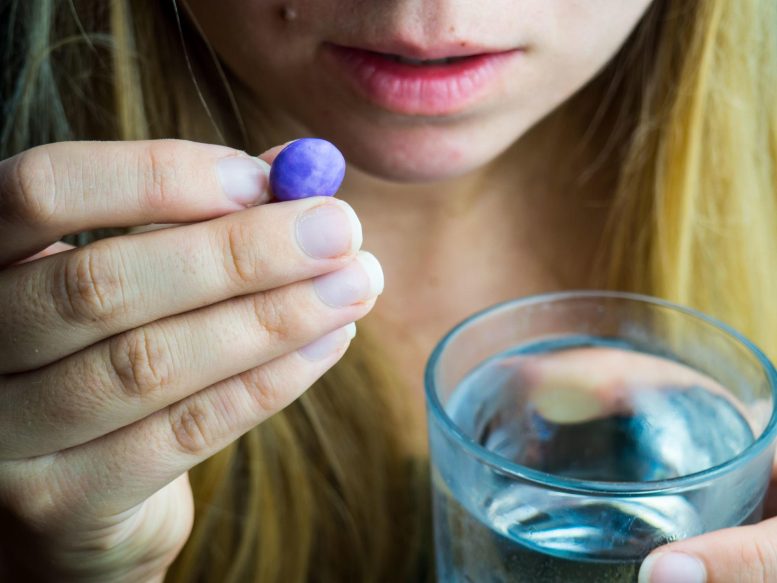
Brazilian scientists propose conducting experiments using lab-grown mini-brains to study the effects of drugs on fetal brain development.
Depression affects a significant portion of pregnant women worldwide, with estimates ranging from 10% to 16%. While most women can improve with the help of antidepressant medication, the effects of these drugs on fetal brain development are not fully understood.
Brazilian researchers have conducted a review of over 100 scientific articles on the topic and have concluded that advanced techniques such as genomics should be used to study the impact of antidepressants, particularly sertraline, the most commonly prescribed antidepressant worldwide. Although the safety of using these drugs during pregnancy is supported by scientific evidence, more research is needed to fully understand their effects on fetal neurodevelopment.
“Most of the publications we reviewed were reports of observational surveys and studies conducted in the laboratory using cell cultures and animals, whose brain development is very different from that of humans. They don’t offer sufficient data to justify conclusive results,” said neuroscientist Alexandre Kihara, a researcher at the Neurogenetics Laboratory of the Federal University of the ABC (UFABC) in São Bernardo do Campo, São Paulo state.
Human-Induced Pluripotent Stem Cells as a Research Model
“We propose an experimental trial model involving human-induced pluripotent stem cells [hiPSC] to investigate what happens to develop fetal nerve cells in pregnant women during treatment with antidepressants,” said Luciana Rafagnin Marinho, a researcher at UFABC with doctoral and postdoctoral qualifications in epigenetics, in vitro embryo production and animal reproduction.
Marinho and Kihara are the first and last authors respectively of the review article recently published in the journal Seminars in Cell & Developmental Biology. The study was supported by FAPESP.
Testing Antidepressants on Brain Organoids
Human-induced pluripotential stem cells can be differentiated into brain organoids (“mini-brains”), which scientists want to use in research on neurodegenerative diseases such as Parkinson’s and Alzheimer’s, and in the testing of drugs with neurological action.
“These structures can be used to test different dosages and track the development of brain cells up to the third trimester,” said Alysson Muotri, penultimate author of the article. Muotri is a neuroscientist at the University of California San Diego (UCSD) in the United States and heads a genetics laboratory that has pioneered the development of brain organoids to study autism and other neurological disorders. He is also a co-founder of Tismoo, a Brazilian biotech startup.
“We can study the organoids for up to a year, observing aspects of their development such as the morphology and electrophysiology of individual neurons or neural networks,” he explained.
To exemplify the possible advances, Marinho cited the only study that used brain organoids among the more than 100 covered by the review. “It investigated the effects of paroxetine and detected a reduction in the growth of neurites [projections from neurons that develop into axons and dendrites to form complex circuits] and the population of oligodendrocytes, which produce the myelin sheath around axons and are therefore important to enable information to travel through the nervous system,” she said.
The scientists note that whole-genome sequencing, transcriptome analysis, and single-cell RNA sequencing apply to research using organoids. “The technology enables us to investigate the effects of exposure to antidepressants on different cell types, such as progenitor cells, glial cells, and neurons. This is particularly important because alterations may not be confined to neurons. We need to know all these implications,” Kihara said.
Caution is required in interpreting the findings of this kind of research. “We’re not saying antidepressants shouldn’t be used in pregnancy. We’re proposing an experimental model and stressing the need to study their effects on neurodevelopment with the most advanced resources available so that potential alterations can be managed,” Kihara said.
Reference: “The impact of antidepressants on human neurodevelopment: Brain organoids as experimental tools” by Luciana Simões Rafagnin Marinho, Gabrielly Maria Denadai Chiarantin, Juliane Midori Ikebara, Débora Sterzeck Cardoso, Théo Henrique de Lima-Vasconcellos, Guilherme Shigueto Vilar Higa, Mariana Sacrini Ayres Ferraz, Roberto De Pasquale, Silvia Honda Takada, Fabio Papes, Alysson R. Muotri and Alexandre Hiroaki Kihara, 15 September 2022, Seminars in Cell & Developmental Biology.
DOI: 10.1016/j.semcdb.2022.09.007
Never miss a breakthrough: Join the SciTechDaily newsletter.
Follow us on Google and Google News.