
Close Menu
    Facebook X (Twitter) Instagram
    SciTechDaily
    • Biology
    • Chemistry
    • Earth
    • Health
    • Physics
    • Science
    • Space
    • Technology
    Facebook X (Twitter) Pinterest YouTube RSS
    SciTechDaily
    Home»Science»Unlocking the Secrets of the Gaze: What Our Eyes Reveal About Us
    Science

    Unlocking the Secrets of the Gaze: What Our Eyes Reveal About Us

    By TU DresdenJanuary 19, 2023No Comments3 Mins Read
    Facebook Twitter Pinterest Telegram LinkedIn WhatsApp Email Reddit
    Share
    Facebook Twitter LinkedIn Pinterest Telegram Email Reddit
    Human Eye Staring
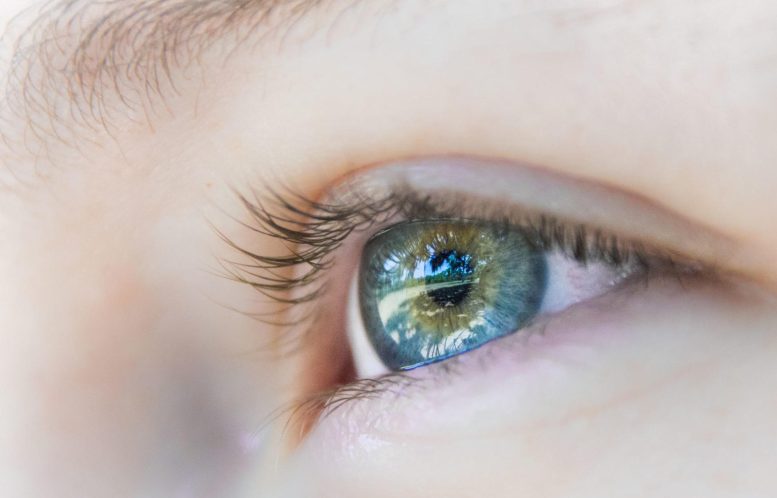
    The study’s findings indicate that the eyes not only serve as a metaphor for the soul but can also objectively provide insight into one’s current engagement and goals within a task.

    Eye movement patterns reveal attention shifts and task focus, suggesting potential applications in optimizing screen work and understanding cognitive engagement.

    We constantly move our eyes to gather important information from our surroundings. By measuring eye movements, we can gain insight into how this information is processed. Previous research has shown that the introduction of new visual information results in a specific pattern of eye movements. Specifically, two types of visual processing can be identified. In the so-called “ambient mode,” the eyes move quickly over large distances to quickly gain a rough idea of potential targets of interest.

    This mode is thus used for general spatial orientation. Once this process is finished, the eyes will focus on specific information for a longer period of time, and process it more deeply, based on the target and the level of interest. This is referred to as the “focus mode.” Up until now, these changes in gaze patterns have mainly been observed in response to changes in the environment or external stimuli.

    Internal Stimuli’s Influence

    In a recent study by the Chair of Engineering Psychology at TU Dresden, Sebastian Pannasch and his team have now investigated the extent to which such patterns also occur as a result of internal stimuli. For this purpose, the test subjects were asked to solve a task on a computer screen in which they had to assemble a Rubik’s cube according to a model so that all sides corresponded exactly to the model specifications. The external stimulus, i.e., the setting on the screen and the task, remained the same.

    Evaluation of the measured eye movements showed that the environmental mode for reorientation always occurred when information was taken in during different subtasks of the puzzle, e.g., when a puzzle piece was selected or checked to see if it matched the specification.

    For Sebastian Pannasch, professor of engineering psychology and applied cognitive research at Technische Universität Dresden, the new findings are promising: “Our results show that the eyes are not only a proverbial mirror of the soul, but actually and measurably provide information about what we are currently engaged in and what goals we are pursuing within a task. Eye movements could be an indicator of the state of attention during task processing. In further studies, we will therefore investigate whether these new findings can be used to organize screen work.”

    Reference: “Eye movement patterns in complex tasks: Characteristics of ambient and focal processing” by Yuxuan Guo, Jens R. Helmert, Sven-Thomas Graupner and Sebastian Pannasch, 9 November 2022, PLOS One.
    DOI: 10.1371/journal.pone.0277099

    Never miss a breakthrough: Join the SciTechDaily newsletter.
    Follow us on Google and Google News.

    Cognitive Science Eyes Psychology TU Dresden
    Share. Facebook Twitter Pinterest LinkedIn Email Reddit

    Related Articles

    Psychologists Find Past Actions Influence Decisions More Than Previously Thought

    The 100-Year-Old Teaching Method That’s Outperforming Modern Preschools (and Saving Money)

    Why Some People Feel Nothing From Music: Scientists Uncover Rare Brain Disconnect

    Scientists Unravel Secrets of How Gaslighting Really Works

    Scientists Identify 15 Key Motives Driving Human Behavior

    Science Reveals the Key Differences in How Men and Women Achieve Success

    The Power of a Negative Mood: How It Enhances Analytical Thinking

    Our Creativity Has Increased as a Result of the COVID-19 Lockdown

    Your Eyes Can Reveal if You’ve Suffered a Traumatic Experience in the Past

    Leave A Reply Cancel Reply

    • Facebook
    • Twitter
    • Pinterest
    • YouTube

    Don't Miss a Discovery

    Subscribe for the Latest in Science & Tech!

    Trending News

    The Universe Is Expanding Too Fast and Scientists Can’t Explain Why

    “Like Liquid Metal”: Scientists Create Strange Shape-Shifting Material

    Early Warning Signals of Esophageal Cancer May Be Hiding in Plain Sight

    Common Blood Pressure Drug Shows Surprising Power Against Deadly Antibiotic-Resistant Superbug

    Scientists Uncover Dangerous Connection Between Serotonin and Heart Valve Disease

    Scientists Discover a “Protector” Protein That Could Help Reverse Hair Loss

    Bone-Strengthening Discovery Could Reverse Osteoporosis

    Scientists Uncover Hidden Trigger Behind Stem Cell Aging

    Follow SciTechDaily
    • Facebook
    • Twitter
    • YouTube
    • Pinterest
    • Newsletter
    • RSS
    SciTech News
    • Biology News
    • Chemistry News
    • Earth News
    • Health News
    • Physics News
    • Science News
    • Space News
    • Technology News
    Recent Posts
    • Scientists Crack Alfalfa’s Chromosome Mystery After Decades of Debate
    • Ancient Ant-Plant Alliance Collapses As Predatory Wasps Move In
    • Scientists Discover Tiny New Spider That Hunts Prey 6x Its Size
    • Natural Component From Licorice Shows Promise for Treating Inflammatory Bowel Disease
    • New Research Finds Shocking Link Between Chili Peppers and Cancer
    Copyright © 1998 - 2026 SciTechDaily. All Rights Reserved.
    • Science News
    • About
    • Contact
    • Editorial Board
    • Privacy Policy
    • Terms of Use

    Type above and press Enter to search. Press Esc to cancel.