
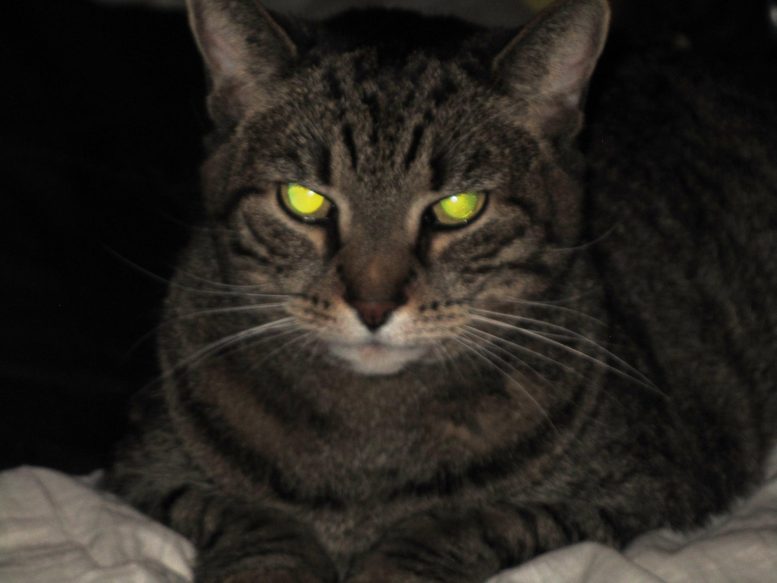
Cats’ glowing eyes are due to a reflective tapetum lucidum that boosts their night vision, though it sacrifices some visual clarity.
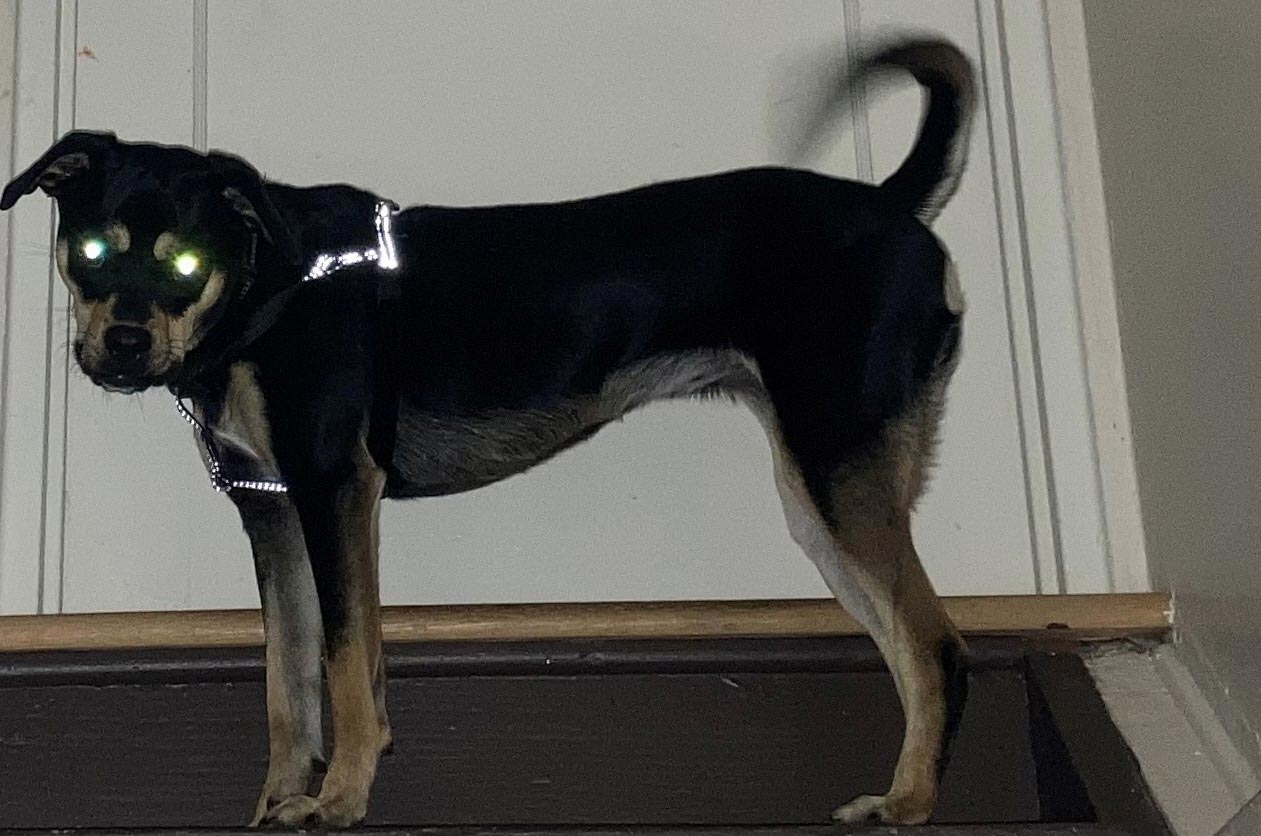
Cats and many other animals, including most dogs, can reflect light from their eyes. As a result, cats’ eyes usually shine brilliantly in photos taken in a dimly lit room or glow when illuminated in the dark by a flashlight or a car’s headlights.
Species with glowing eyes have evolved to see better in low light because they either forage or must keep a watch out for predators all night, or they hunt mostly at dawn and dusk. In fact, domesticated cats can see in conditions that are only 16% as bright as what humans require to see.
Cats are able to accomplish this because their pupils – the apertures that appear black in the middle of their eyes that widen and narrow in response to light conditions – are special. Pupils function like windows, with bigger ones letting more light into the eye. And in dim light, a cat’s pupils can become up to 50% larger than human pupils. They also have a higher number of a specific type of light-sensing cell in the rear of their eyes than we do. These cells, known as rods, capture low-level light.
The Tapetum Lucidum
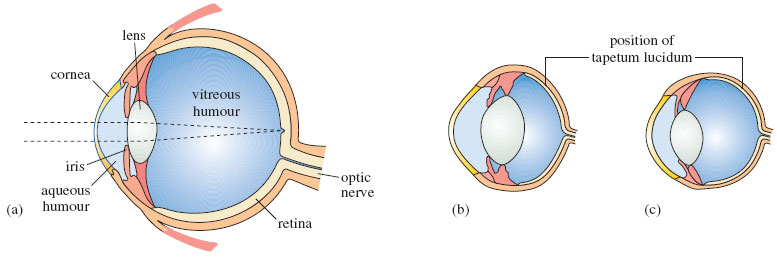
In addition to having large pupils and lots of rods, cats have something people don’t: a tapetum lucidum, a Latin medical term that translates to “bright or shining tapestry.” The tapetum lucidum is also known as “eyeshine.”
It’s located in the back of the eye behind the retina – a thin layer of tissue that receives light, converts the light to an electrical signal and sends this signal to the brain to interpret the image.
A cat’s tapetum lucidum is made up of cells with crystals that, like a mirror, reflect light back to the retina. This gives the retina a second chance to absorb more light.
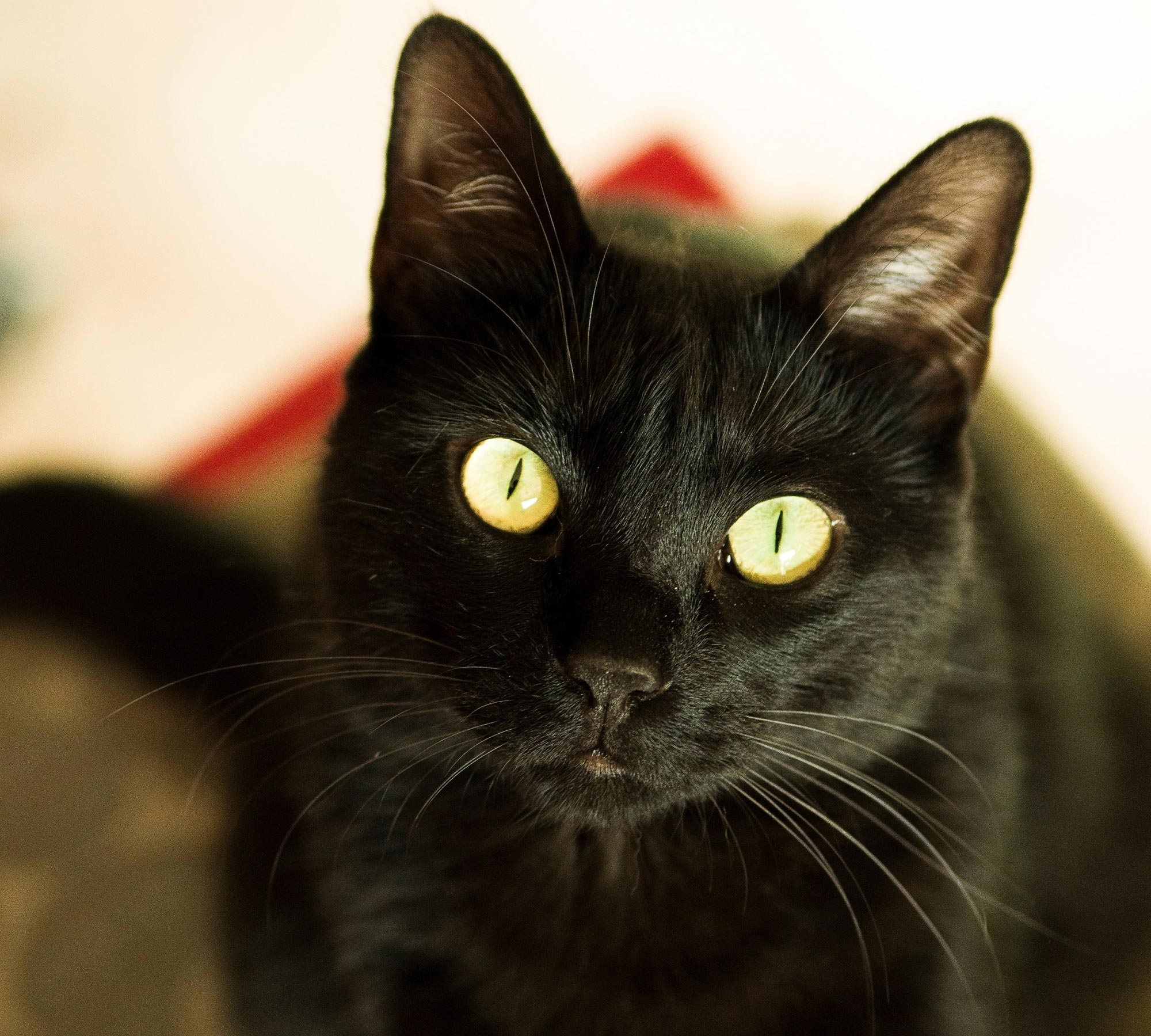
The feline tapetum lucidum is special because its reflective compound is riboflavin, a type of vitamin B. Riboflavin has unique properties that amplify light to a specific wavelength that cats can see well, which greatly increases the sensitivity of the retina to low light.
In cats, the tapetum most often glows yellow-green or yellow-orange, but the color varies, just like their irises – the colorful part of their eye, which can be green, yellow, blue or golden. Variation in tapetum color is not unique to cats and can be found in lots of species.
Other Animals’ Eyes Glow Too
Many other animals that need to see at night have a tapetum lucidum. That includes predators and prey alike, everything from wild foxes to farmed sheep and goats.
The tapetum lucidum is also useful to fish, dolphins and other aquatic animals, because it helps them see better in murky, dark water.
In land animals, the tapetum is found in the top half of the eye behind the retina, because they need to see what is on the ground best. But in aquatic animals the tapetum takes up most of the eye, because they need to see all around them in the dark.
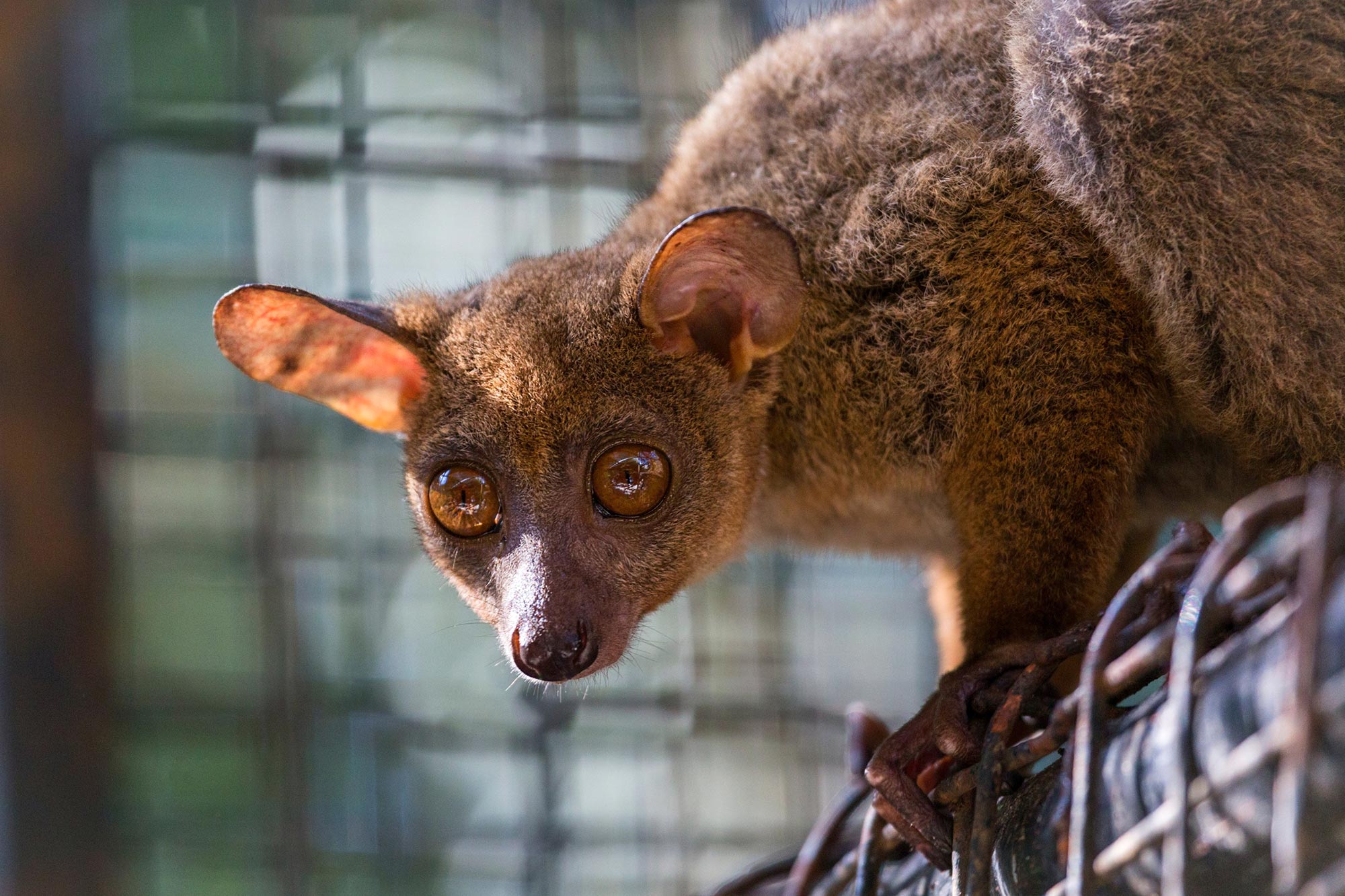
Like cats, the lemur, a small primate, and its close relative, the bush baby – also known as a “night monkey” – also have a superreflective tapetum made with riboflavin.
Even though a lot of animals have eyeshine, some small domesticated dogs lack this trait. Most animals with blue eyes and white or light-colored coats have also lost this trait.
So don’t be alarmed if your dog’s or cat’s eyes don’t glow. The list of other species without a tapetum lucidum includes pigs, birds, reptiles and most rodents and primates – including humans.
Is There a Downside?
Unfortunately, animals with a tapetum lucidum sacrifice some visual acuity for their ability to see in dim light.
That’s because all that light bouncing around as it reflects off the tapetum can make what they see a little fuzzier. So, a cat needs to be seven times closer to an object to see it as sharply as a person would in a brightly lit place.
But don’t worry, I’m sure your cat would rather see clearly at night than read a book.
Written by Braidee Foote, Clinical Assistant Professor of Veterinary Ophthalmology, University of Tennessee.
This article was first published in The Conversation.
Never miss a breakthrough: Join the SciTechDaily newsletter.
Follow us on Google and Google News.
3 Comments
This article reminds me of the Yorkshireman Percy Shaw who invented the Cat’s Eye road markings. Legend has it that the idea came to him when a cat was walking along the roadside and its eyes had reflected the light from his car headlights – of course, if the cat had’ve been pointing in the opposite direction, he’d have invented the pencil sharpener…
Cats’ night vision is far superior to that of its rodent prey, too. More than a century ago it was proposed that the light reflected from a cats’ tapetum could be beamed at a prey like small searchlights to illuminate the prey in extremely low-light conditions—a seriously amazing concept indeed—and one that should not be dismissed out of hand. The now-obsolete head mirror once typically worn by ENT doctors operated in a somewhat analogous way. I’d post the reference if you email me.
Crocodilian eyes glow too it’s a reptile they have cat eyes too because it’s the greatest dinosaur ever most crocodilian hunt at night they claim it’s cold blooded there is no evidense for that they open there mouth at night and the cold crocodilian system is to add more oxygen no reptile is like that and it’s very fast .only mean it’s warm blooded and there many video on YouTube gator eyes glow .story why some crocodilian open there mouth a lot is because of serrated teeth I have seen Nile crocodile bipedal in water under water open it’s mouth the river flow clean the teeth I think. that video is on YouTube. gator lack serrated teeth.it open it’s mouth for thermoregulation they claim .this mite be left over from dinosaur the alligator dwarf caiman does not open it’s mouth like that.dwarf caiman is a land crocodilian most of its ancestor were land crocodilian the dinosaur .monitor lizard takes a lot of oxygen it has air sac but it is not as advance like the warm blooded heart gator.on bipedal Nile crocodile I lost the video but interesting about the video it was struggling like dinosaur they have to raise the tail and it did .please explain why crocodilian eyes glow and the line eyes like a cat.wind help the teeth of the Nile crocodile or it’s that crazy bird cleaner