
Close Menu
    Facebook X (Twitter) Instagram
    SciTechDaily
    • Biology
    • Chemistry
    • Earth
    • Health
    • Physics
    • Science
    • Space
    • Technology
    Facebook X (Twitter) Pinterest YouTube RSS
    SciTechDaily
    Home»Biology»Scientists Build a World-First DNA Computer That Runs Without Continuous Power
    Biology

    Scientists Build a World-First DNA Computer That Runs Without Continuous Power

    By Maynooth UniversityOctober 13, 2026No Comments4 Mins Read
    Facebook Twitter Pinterest Telegram LinkedIn WhatsApp Email Reddit
    Share
    Facebook Twitter LinkedIn Pinterest Telegram Email Reddit
    Computational Biology DNA Genetics
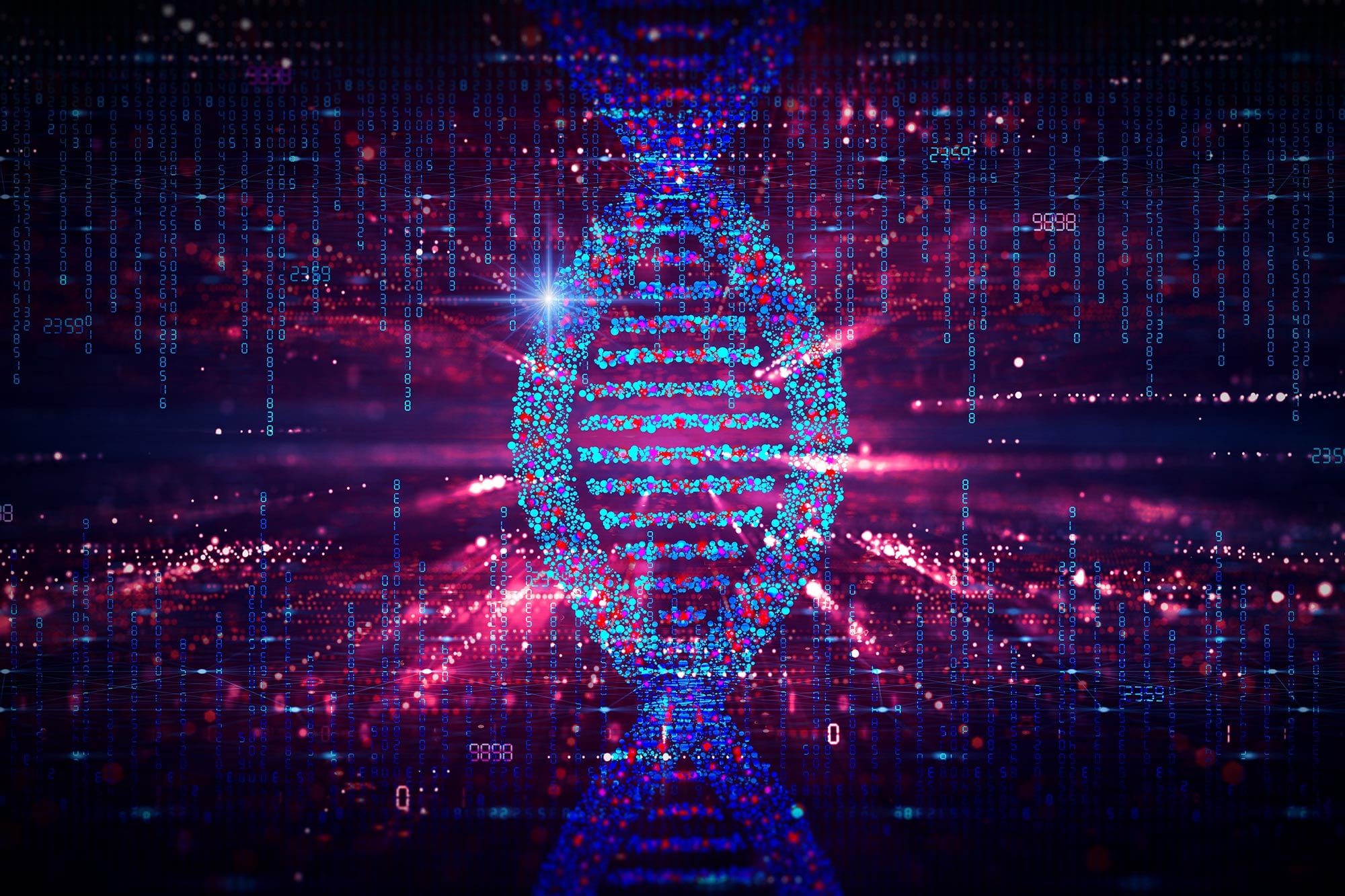
    Researchers have developed a DNA computer that performs mathematical calculations using molecular interactions rather than silicon chips. Credit: Shutterstock

    Reusable for up to 25 different calculations, a DNA computer points toward possible uses in energy-efficient computing and long-term data storage.

    A DNA computer has added 10 and 3 in 30 seconds, using interacting strands in water instead of a silicon chip. Developed by researchers at Maynooth University (MU), the system can also multiply and divide without a continuous electricity supply.

    The work, published in Nature, presents a first-of-its-kind system described as one of the most complex and fastest molecular computers yet reported.

    DNA strands assemble the answer

    Dr Abeer Eshra, an assistant professor and computer scientist at MU’s Hamilton Institute who conducted many of the experiments, described what is happening inside the liquid. “A small droplet of liquid contains billions, and sometimes trillions, of DNA strands. These strands interact with one another to produce a result.”

    To build the computer, the team combined a small drop of water and salt with short pieces of DNA and a longer DNA scaffold in a test tube. The mixture needs only a little heat to get started and is then cooled, allowing the computation to proceed.

    “The molecules interact, form a structure and that structure is the answer,” said Professor Damien Woods of MU’s Hamilton Institute. “One key innovation is that the system naturally finds that answer without needing continuous energy inputs,” he added.
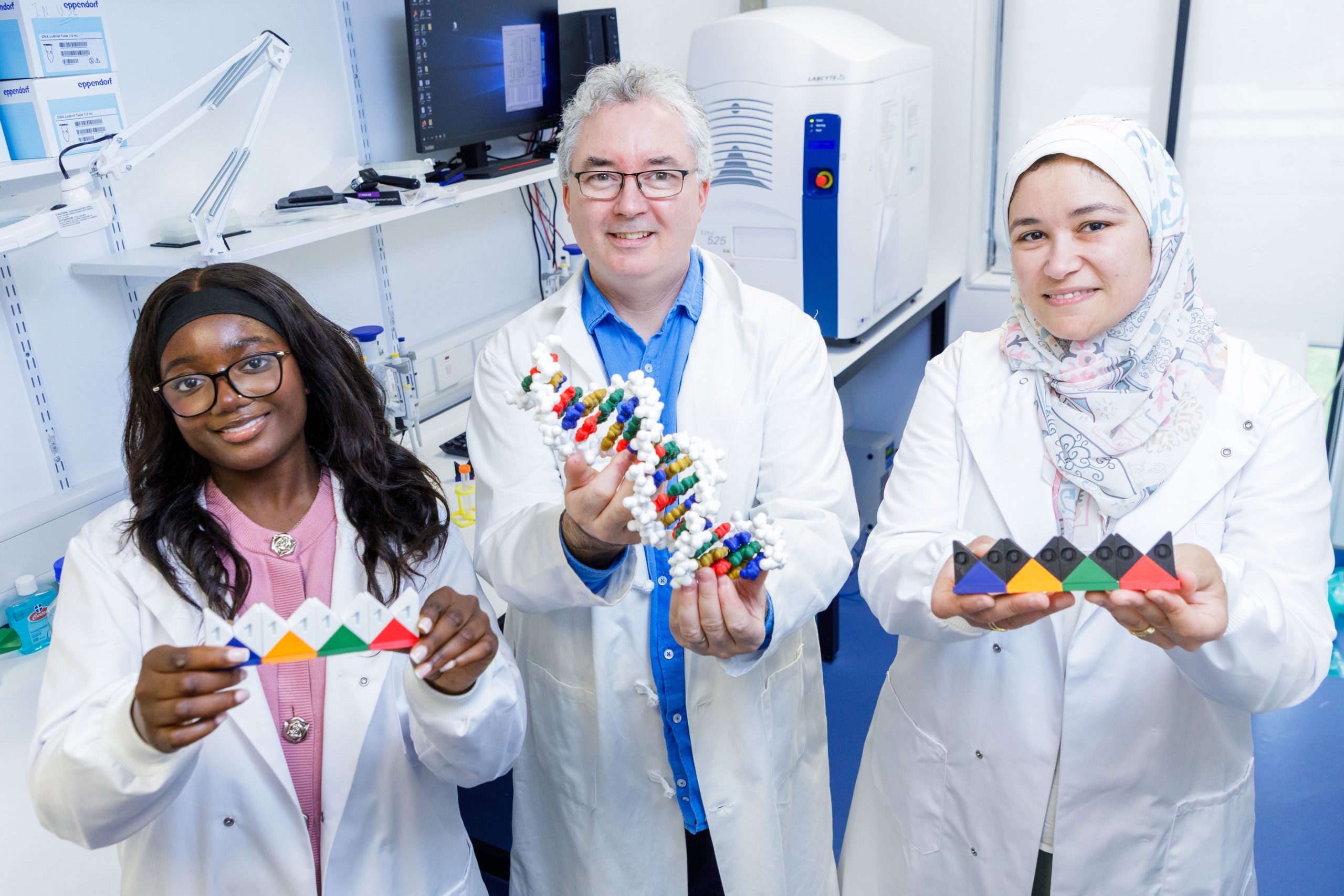
    Janet Adio, Damien Woods and Abeer Eshra Holding Props
    Pictured are three members of the five-person Maynooth University (MU) DNA computing research team: undergraduate researcher Janet Adio, alongside Prof Damien Woods and Dr Abeer Eshra of the Department of Computer Science’s Hamilton Institute at MU. Credit: Maynooth University

    Fast for DNA, slower than silicon

    The researchers ran ten programs, including 100-bit computations. In one experiment, the computer added numbers in the range of about 11 million to 34 million, taking up to 14 hours to reach a result. The system also demonstrated robustness and reusability, performing up to 25 different calculations in a row.

    “The reaction happens fast in the test tube, but not as fast as silicon, nor is it intended to be. But compared to other DNA computers, ours is the fastest,” said Eshra, joint first author of the Nature study alongside Dr Tristan Stérin. The paper’s coauthors also included Senior Research Fellow Dr Constantine Evans and undergraduate researcher Janet Adio.

    Molecular computers could work inside cells

    Beyond arithmetic in a test tube, the research points to possible applications in long-term data storage and energy-efficient computation. In time, molecular systems might also operate inside cells for tasks such as disease detection.
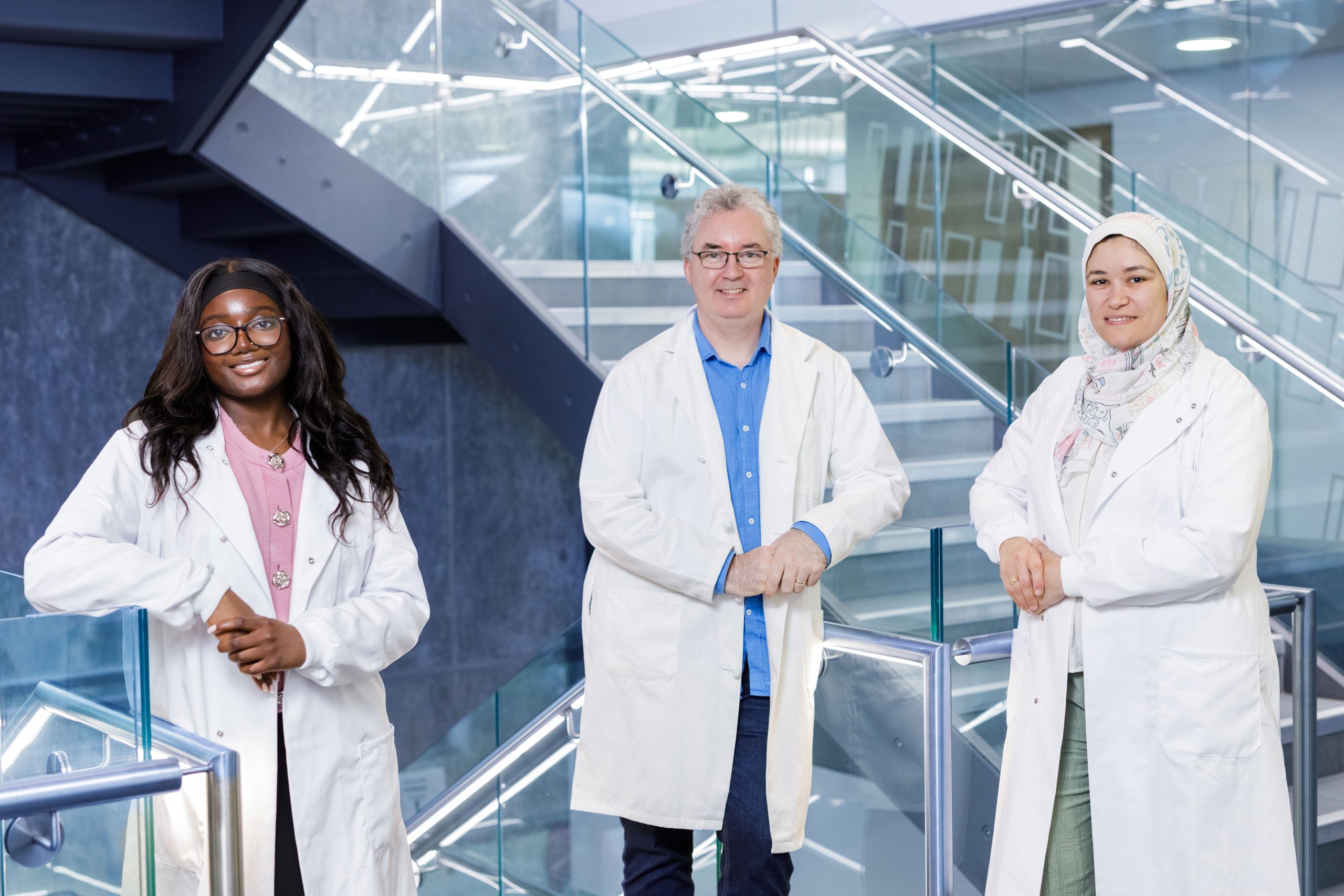
    Janet Adio, Damien Woods and Abeer Eshra
    Pictured are three members of the five-person Maynooth University (MU) DNA computing research team: undergraduate researcher Janet Adio, alongside Prof Damien Woods and Dr Abeer Eshra of the Department of Computer Science’s Hamilton Institute at MU. Credit: Maynooth University

    Woods explained the motivation for exploring other forms of computing. “Silicon-based computers use so much energy – 23% of Ireland’s electricity goes into computing and data storage. We’ve been blinkered by only seeing one type of computer, but there are other examples around us, including our brain.”

    Maynooth’s DNA computing research is supported by a €4 million European Innovation Council grant led by Woods. The DISCO project, DNA-based infrastructure for Storage and Computation, aims to develop new ways to compute and store data using DNA technology.

    “This is blue skies science. We don’t know where the future is going to take us.” Woods offered that perspective on the broader effort to explore alternative forms of computing.

    Reference: “A thermodynamically favoured molecular computer” by Tristan Stérin, Abeer Eshra, Constantine Glen Evans, Janet Adio and Damien Woods, 16 September 2026, Nature.
    DOI: 10.1038/s41586-026-10996-5

    This research work was supported by the European Research Council of the European Union (ERC, Active-DNA, no. 772766), the European Innovation Council (EIC, DISCO, no. 101115422), the Science Foundation Ireland under grant nos. 18/ERCS/5746 and 20/FFP-P/8843 and Research Ireland (24/PATH-S/12367).

    Never miss a breakthrough: Join the SciTechDaily newsletter.
    Follow us on Google and Google News.

    Computer Science DNA Mathematics Molecular Biology Synthetic Biology
    Share. Facebook Twitter Pinterest LinkedIn Email Reddit

    Related Articles

    Re-Cracking the Genetic Code – We May Have Only Begun to Scratch the Surface

    Dangerous Toxin Genetically Engineered Into a High-Resolution Biosensor

    Yale Researchers Track How Cells Repair Rips in DNA

    UCLA Study Shows DNA Patterns Can Unlock How Glucose Metabolism Drives Cancer

    Yale Researchers Create a 21st Amino Acid

    Key Differences in Seemingly Synonymous Parts of the Genetic Code

    Sequencing DNA From Individual Cells Yields Dramatic New Information

    Newly Designed Transcription Factors Can Bind to DNA and Turn on Specific Genes

    Using DNA and Bacteriophages as Rewritable Memory Storage

    Leave A Reply Cancel Reply

    • Facebook
    • Twitter
    • Pinterest
    • YouTube

    Don't Miss a Discovery

    Subscribe for the Latest in Science & Tech!

    Trending News

    Sleeping Less Than 5 Hours Was Linked to Higher Risk of 37 Diseases

    This 345-Million-Year-Old Fossil Fooled Scientists for Decades

    Scientists Restore Limited Vision in Blind Patients Using Gene Therapy and Special Goggles

    NASA Hubble Cold Case: A Dead Star May Have Given Birth to a New Planet

    A Giant Insect on the Brink of Extinction Is Making an Extraordinary Comeback

    Penguin Poop Is Turning Antarctica Green, and Scientists Are Concerned

    Why Too Much Cannabis Can Flip an Anxiety Switch in the Brain

    Scientists Discover That Chimpanzees Treat Friends by Different Rules

    Follow SciTechDaily
    • Facebook
    • Twitter
    • YouTube
    • Pinterest
    • Newsletter
    • RSS
    SciTech News
    • Biology News
    • Chemistry News
    • Earth News
    • Health News
    • Physics News
    • Science News
    • Space News
    • Technology News
    Recent Posts
    • Scientists Build a World-First DNA Computer That Runs Without Continuous Power
    • Scientists Just Discovered a Major Problem With Lab-Grown Human Embryo Models
    • The World’s Oldest Land Animal Has a Remarkable Anti-Aging Secret Hidden in Its DNA
    • Scientists Discover a Surprising Link Between Obesity and Dementia Survival
    • One-Third of Older Adults With Cognitive Disorders Take Drugs That Could Harm Them
    Copyright © 1998 - 2026 SciTechDaily. All Rights Reserved.
    • Science News
    • About
    • Contact
    • Editorial Board
    • Privacy Policy
    • Terms of Use

    Type above and press Enter to search. Press Esc to cancel.