
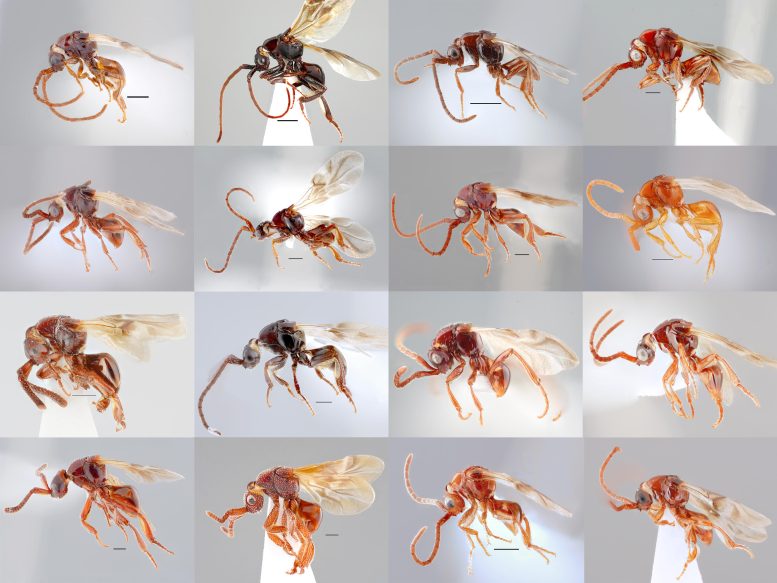
A recent exploration in Vietnam for the elusive Loboscelidia, a type of parasitoid wasp, has expanded the global count of known species by 30% and uncovered their unique egg-burying behavior.
Scientists from Kyushu University and Vietnam’s National Museum of Nature have identified 16 previously unknown species of Loboscelidia, a strange-looking and elusive group of parasitoid wasps. The scientists also reported for the first time the unique parasitic behavior of a captive female of one species, Loboscelidia squamosa, who was observed digging a hole in the soil to hide her host’s egg.
The findings were recently published in the European Journal of Taxonomy.
Parasitoid Wasps: Tiny but Crucial for Ecosystem Balance
While we are more familiar with hunting wasps like yellowjackets, with their dramatic black and yellow stripes and painful stings, parasitoid wasps make up the vast majority of wasp species. They are often tiny (Loboscelidia wasps are between 2-5 mm in body length, smaller than a pencil-top eraser) and while unnoticed by humans, they play a crucial role in regulating the ecosystem.
“Parasitoid wasps act as a parasite of other insects. They lay their eggs in or on the bodies or eggs of their host, ultimately killing them,” says Assistant Professor Toshiharu Mita of Kyushu University’s Faculty of Agriculture, who led the research.
Despite their ecological importance, very little is known about many groups of parasitoid wasps, including Loboscelidia. Prior research into the group has suggested that they parasitize the eggs of stick insects, also known as walking sticks.
“Loboscelidia was first discovered around 150 years ago, but we still lack important knowledge about their biology. This study was the first time we were able to observe their parasitic behavior,” says first author, Dr. Yu Hisasue, formerly a PhD student supervised by Mita.
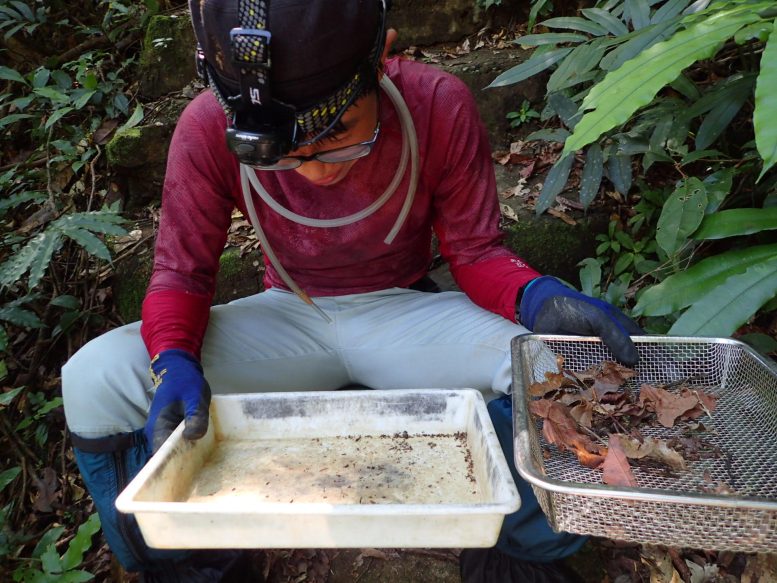
Mita and Hisasue, along with their colleague, Dr. Thai-Hong Pham of the National Museum of Nature, Vietnam, conducted field surveys at six sites across Vietnam, setting traps and using nets to capture the tiny parasitoid wasps.
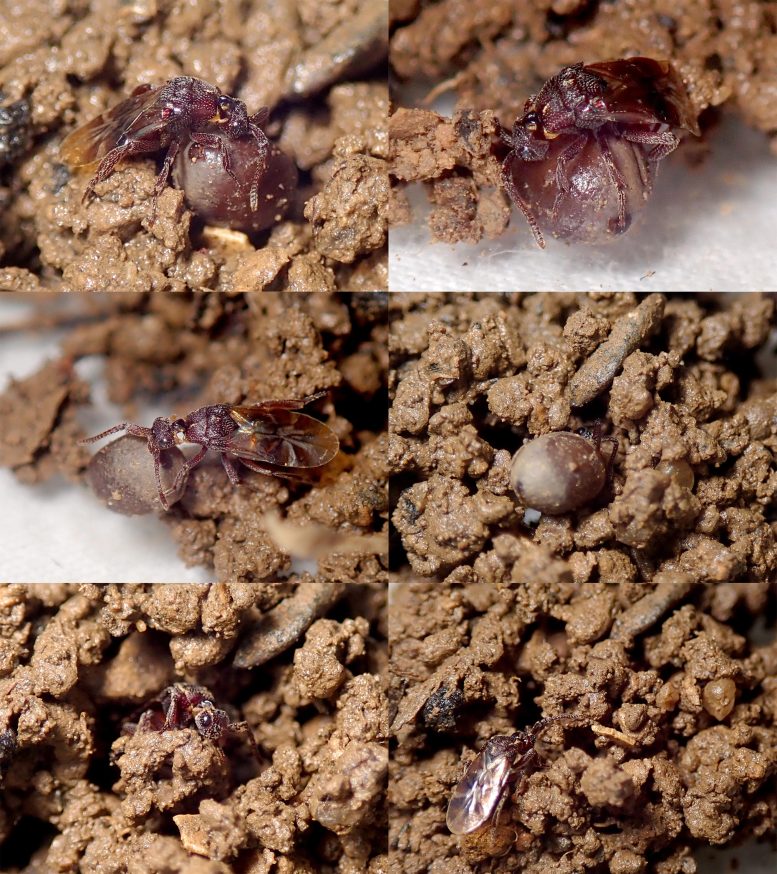
On one occasion, they trapped a living female from one of the newly described species, Loboscelidia squamosa. They released her into a plastic container containing soil and placed a stick insect egg inside. The female wasp punctured the egg, laid her own egg inside, and then searched for a location to bury the parasitized egg. She used her head to dig a hole, placed the host egg inside, and plugged the entrance with soil.
Unraveling the Evolutionary Adaptations of Loboscelidia
This parasitic behavior is very developed and similar to the nest-building behavior seen in solitary-hunting wasps. The researchers therefore believe that further research could help shed light on how these behaviors evolved in other wasps. It could also help explain the unique specialized head structure of Loboscelidia wasps, which could be useful for digging holes in the soil.
By the end of the field survey, the scientists had collected 70 individuals from the Loboscelidia group, taking high-resolution close-up photos of each wasp. One unusual feature of the wasps was the presence of hairs at the back of their head and on their body, with the arrangement and density of body hairs differing between each species.
In total, the scientists identified 16 new species, bringing the known number of species worldwide up to 67.
“The Loboscelidia wasps were thought to be a rare group with a small number of species, but with one stroke, we have increased the number of species by 30%,” says Mita.
Importantly, each species was typically found in a very limited area, usually only at one collection site. This makes it likely that the group has many more species that still could be discovered with further field surveys. However, it also highlights the vulnerability of each species.
“As each species is only found in a small area, any disruption to their habitat could result in the loss of that species forever,” concludes Hisasue.
Reference: “Taxonomic revision of the genus Loboscelidia Westwood, 1874 (Hymenoptera: Chrysididae: Loboscelidiinae) from Vietnam” by Yu Hisasue, Thai-Hong Pham and Toshiharu Mita, 4 August 2023, European Journal of Taxonomy.
DOI: 10.5852/ejt.2023.877.2203
The study was funded by the Japan Science and Technology Agency, the Japan Society for the Promotion of Science, and the Vietnam Academy of Science and Technology.
Never miss a breakthrough: Join the SciTechDaily newsletter.
Follow us on Google and Google News.