

Two new crayfish species have been discovered and named, but face immediate threats from invasive species and human impact.
For decades, the Signal Crayfish has been an ecological troublemaker. It is invasive and widespread across Europe, Asia, and parts of the United States. Recently, researchers at the University of Illinois Urbana-Champaign turned their attention back to the Signal Crayfish’s homeland and made a remarkable discovery.
Their study identified two new species of crayfish in the Pacific Northwest. Long mistaken for the Signal Crayfish, these two new species – the Okanagan Crayfish and Misfortunate Crayfish – have now been named.
“I think we underestimate how rich the biological world around us can be,” said study co-author Eric Larson, associate professor in the Department of Natural Resources and Environmental Sciences, part of the College of Agricultural, Consumer and Environmental Sciences at Illinois. “People are surprised to learn that there are over 600 described species of crayfish globally, and now, there are two more.”
Advanced genetics uncover the truth
This discovery took years to achieve, beginning with observations of unusual-looking crayfish that stood out from known species. Over time, researchers applied more advanced genetic techniques to investigate further. Larson and his team used a method called genome skimming to sequence both mitochondrial and nuclear DNA, allowing them to compare different crayfish lineages. With the help of this genetic analysis, along with extensive field sampling and detailed morphological studies, the Okanagan Crayfish and Misfortunate Crayfish were finally identified.
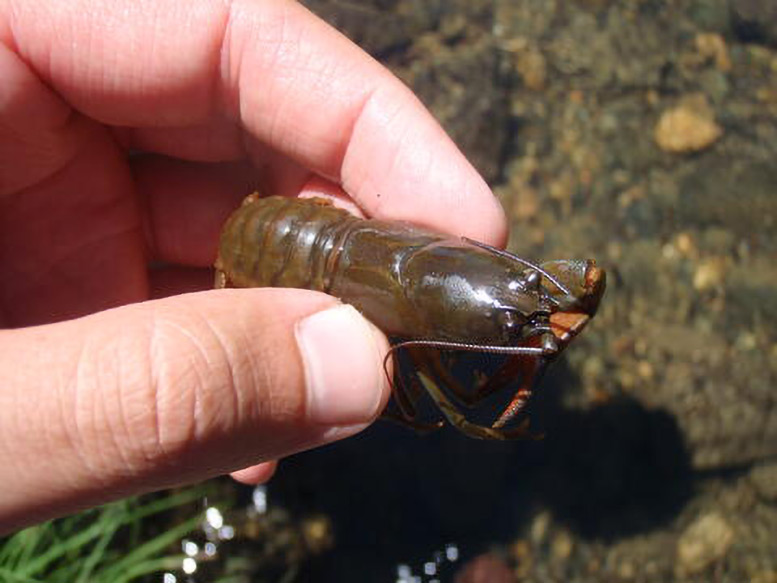
“Most research on the Signal Crayfish focuses on its role as an invasive species,” Larson said. “I think people would be surprised that within its native environment, we missed that this animal we thought was the Signal Crayfish was actually harboring multiple, undescribed species.”
Despite the excitement surrounding this discovery, it also comes with a serious conservation concern. Larson warns that the newly identified species may be highly vulnerable to extinction, especially due to the threat posed by invasive crayfish like the Rusty Crayfish and Virile Crayfish. These aggressive invaders can outcompete native species and cause significant harm to aquatic ecosystems.
Human activity and species risk
One of the greatest threats to native crayfish comes from people moving species between ecosystems and waterways. This can happen intentionally, such as through the use of crayfish as fishing bait or in aquaculture, or unintentionally, through classroom releases or dumping aquariums. Larson cautions that even a single introduction of an invasive species can lead to a chain reaction of ecological damage.
“There are unexpected consequences when we move crayfish from one place to another,” Larson said. “Invasive crayfish can’t easily be removed, and as they spread, they seem to be replacing these newly described crayfish species.”
Larson hopes that formally identifying these two new species will do more than add names to the scientific record. Hopefully, it will inspire conservation action, as recognition is often the first step toward protection. By identifying the Okanagan Crayfish and Misfortunate Crayfish, Larson and his team aim to raise awareness and create a case for protecting them.
The story behind the name
“By the time we discovered the Misfortunate Crayfish, it had already lost much of its native range to the invasive Rusty Crayfish,” Larson said. “That’s what gave us the idea for its name. This animal went unrecognized by science until a fairly unlucky event had happened, and that seemed like a little bit of a misfortune.”
This work represents Larson’s larger research mission to study invaders and the native species that suffer in their wake. Originally working as a fisheries biologist, he found his way to crayfish during a doctoral program at the University of Washington and never looked back.
“It’s funny, I didn’t intend to develop this interest,” Larson said. “But as it developed, studying crayfish gained momentum and took on a life of its own.”
Now, due to Larson and his team’s dedication, these two new animals finally have names – and a fighting chance.
Reference: “Genome skimming supports two new crayfish species from the genus Pacifastacus Bott, 1950 (Decapoda: Astacidae)” by Eric R. Larson, Cathryn L. Abbott, Scott R. Gilmore, Caren C. Helbing, Mark Louie D. Lopez, Hugh MacIntosh, Liane M. Stenhouse, Bronwyn W. Williams and Nisikawa Usio, 8 May 2025, Zootaxa.
DOI: 10.11646/zootaxa.5632.3.4
Never miss a breakthrough: Join the SciTechDaily newsletter.
Follow us on Google and Google News.