
A powerful earthquake that struck Calama in 2024 defied long-held assumptions about how deep earthquakes behave.
In July 2024, a 7.4-magnitude earthquake struck the city of Calama in northern Chile, damaging structures and cutting power across the area.
Chile is no stranger to major seismic events, including the largest earthquake ever measured: a 9.5-magnitude “megathrust” rupture that hit central Chile in 1960, triggered a tsunami, and resulted in between 1,000 and 6,000 deaths. The Calama earthquake, however, did not resemble the shallow megathrust events that typically cause the most severe destruction both in Chile and worldwide.
Megathrust quakes originate at comparatively shallow depths, but the Calama event began far below the surface, at a depth of 125 kilometers within the descending tectonic plate.
Earthquakes that occur this deep usually produce weaker surface shaking. In Calama, though, scientists from The University of Texas at Austin identified a series of geological processes that greatly amplified the shaking. Their study, published in Nature Communications, reveals a newly recognized sequence of events that contributed to the earthquake’s unexpected strength.
In addition to helping explain the tectonic forces behind the powerful quake, the findings have implications for future earthquake hazard assessments.
“These Chilean events are causing more shaking than is normally expected from intermediate-depth earthquakes, and can be quite destructive,” said the study’s lead author Zhe Jia, a research assistant professor at the UT Jackson School of Geosciences. “Our goal is to learn more about how these earthquakes occur, so our research could support emergency response and long-term planning.”
A Break from Traditional Earthquake Theory
Intermediate-depth earthquakes, such as the one in Calama, were long thought to occur due to pressure building up as the rock dried out – a phenomenon called “dehydration embrittlement.” This process happens when a subducting tectonic plate dives toward the Earth’s hot interior, and the increased heat and pressure forces water out of the minerals within the rock. The dehydrated rocks are weakened and fractured, which can lead them to rupture – triggering an earthquake in the slab.
This dehydration process is typically thought to stop where temperatures exceed 650 degrees Celsius. But according to the researchers, the Calama quake was so powerful because it breached this limit – going 50 kilometers deeper into hotter zones through a second mechanism called “thermal runway.” This involves immense friction from the initial slip generating a large amount of heat at the tip of the rupture, which helps weaken material around it and propels the rupture forward.
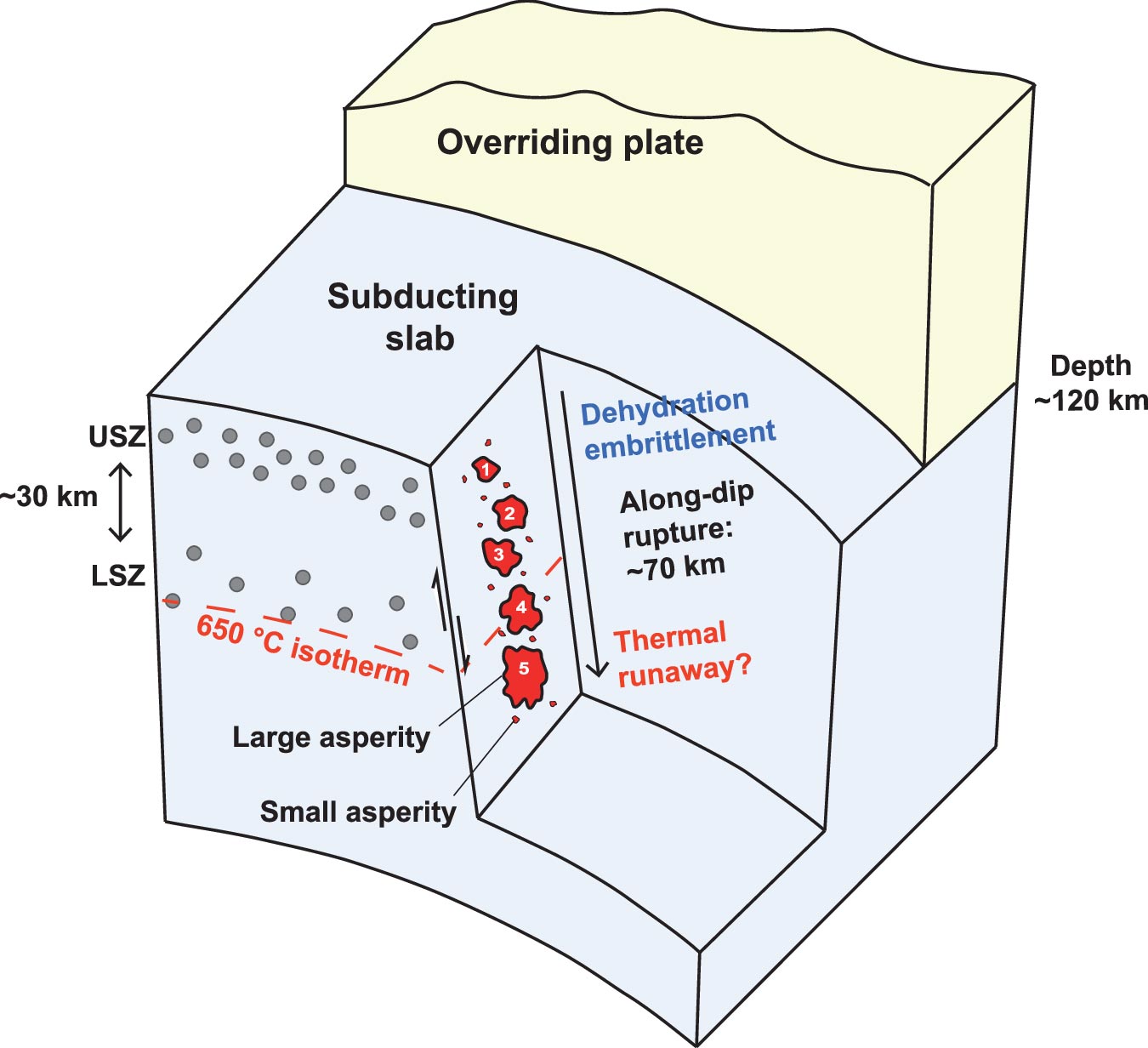
“It’s the first time we saw an intermediate-depth earthquake break assumptions, rupturing from a cold zone into a really hot one, and traveling at much faster speeds,” said Jia, who is part of the University of Texas Institute for Geophysics (UTIG), a research unit of the Jackson School. “That indicates the mechanism changed from dehydration embrittlement to thermal runaway.”
Piecing Together a Complex Rupture
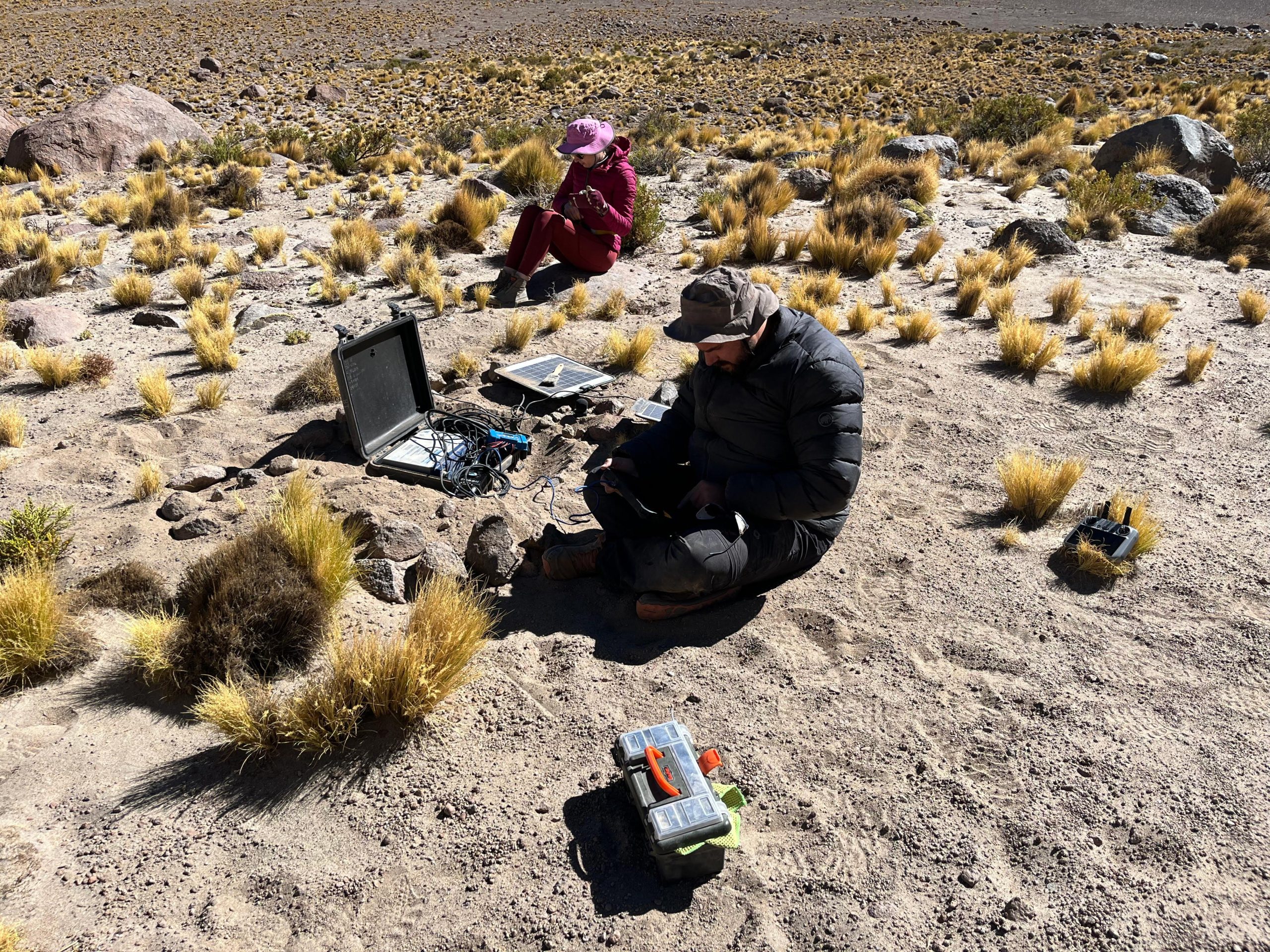
To determine how the earthquake deformed and the extent of the rupture, the University of Texas team collaborated with researchers in Chile and the United States to integrate multiple types of analyses. This included analyzing seismic data from Chile that captured the rupture’s propagation and speed, geopositioning data from the Global Navigation Satellite System to measure how the fault slipped, and computer simulations to estimate the temperature and composition where the earthquake ruptured.
“The fact that another large earthquake is overdue in Chile has motivated earthquake research and the deployment of multiple seismometers and geodetic stations to monitor earthquakes and how the crust is deforming in the region,” said Thorsten Becker, a co-author of the study and a professor at the Jackson School’s Department of Earth and Planetary Sciences and a senior research scientist at UTIG.
Becker and Jia said that learning more about how earthquakes occur at different depths could help with understanding what controls the size and nature of likely future events, which could help predict the degree of shaking and inform infrastructure planning, early warning systems, and rapid response systems.
Reference: “Deep intra-slab rupture and mechanism transition of the 2024 Mw 7.4 Calama earthquake” by Zhe Jia, Wei Mao, María Constanza Flores, Sebastián Barra, Sergio Ruiz, Bertrand Potin, Thorsten W. Becker, Marcos Moreno, Juan Carlos Baez, Daniel Ceroni and Leoncio Cabrera, 30 August 2025, Nature Communications.
DOI: 10.1038/s41467-025-63480-5
The research was funded by the National Science Foundation, Agencia Nacional de Investigación y Desarrollo (ANID), Chile, UC Open Seed Fund, Fundamental Research Funds for the Central Universities, and the University of Texas Institute for Geophysics.
Never miss a breakthrough: Join the SciTechDaily newsletter.
Follow us on Google and Google News.