
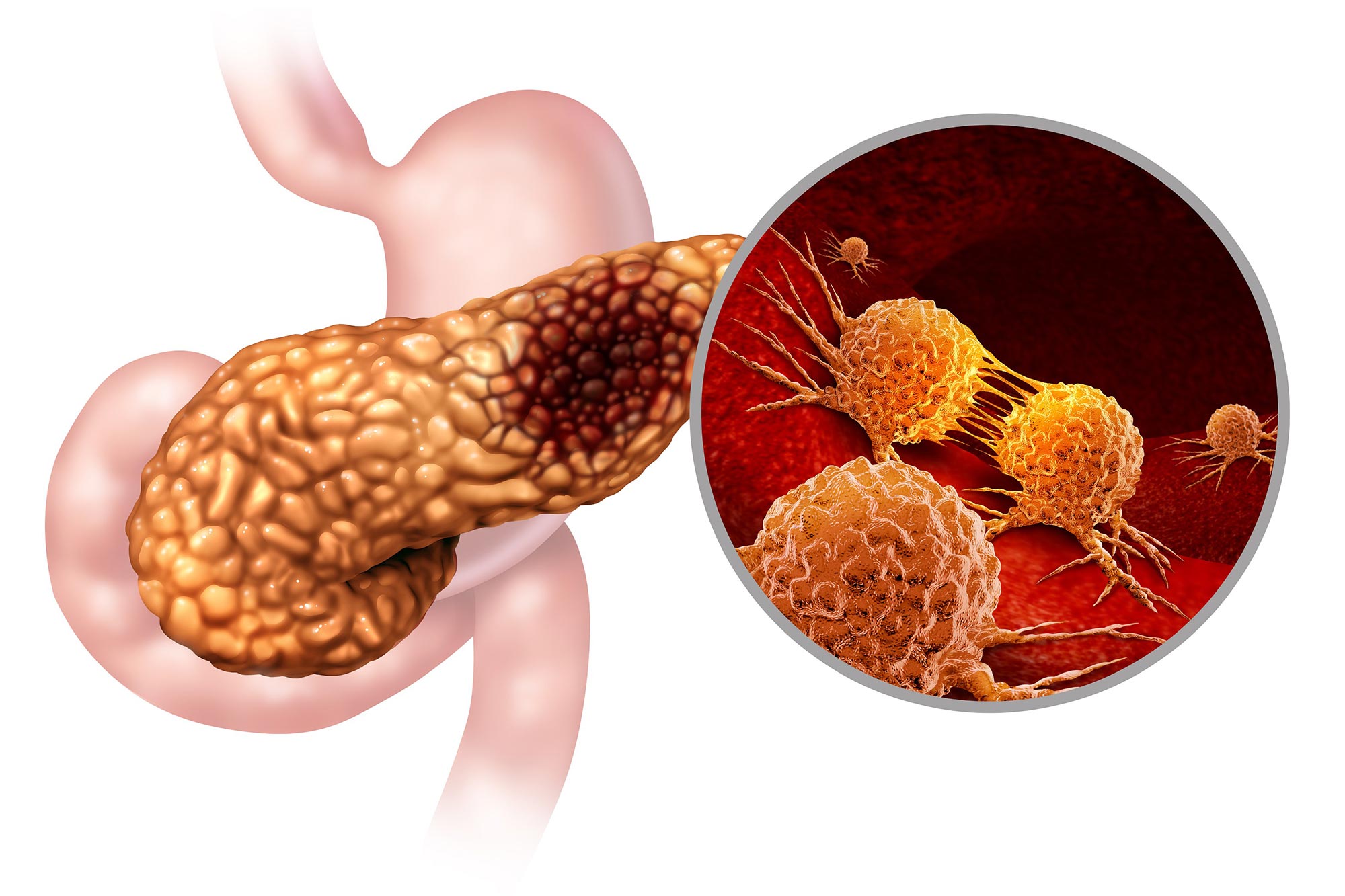
Researchers at UC San Diego have discovered that the enzyme MICAL2 accelerates tumor growth in pancreatic cancer by influencing key signaling pathways.
This finding points to MICAL2 as a potential target for novel treatments aimed at improving survival rates in patients suffering from this aggressive cancer.
Discovery of MICAL2’s Role in Cancer Progression
Pancreatic cancer claims approximately 50,000 lives each year in the United States, according to the National Cancer Institute, with limited effective treatment options currently available. In a recent breakthrough, researchers from the University of California San Diego School of Medicine have identified an enzyme called MICAL2 that plays a key role in the growth and spread of pancreatic ductal adenocarcinomas (PDAC), the most common type of pancreatic cancer. Their findings are set to be published today (January 2, 2025) in Cancer Research, a journal of the American Association for Cancer Research.
MICAL2 is typically involved in regulating cell migration and structure. However, the study revealed that PDAC tumor cells produce significantly higher levels of this enzyme compared to healthy cells. This marks the first time MICAL2 has been directly linked to pancreatic cancer, providing new insights into its potential role in the disease’s progression.
They also found that:
- Among patients undergoing surgery to remove their PDAC tumors, those with low MICAL2 expression in their tumor cells survived about twice as long as those whose tumor cells produced more of the enzyme, suggesting that MICAL2 may be involved in progressing the disease to an advanced stage.
- MICAL2 appears to supercharge the KRAS signaling pathway, which regulates cell growth, proliferation, and death and is known to be the primary driver of pancreatic tumor growth and the spread of the cancer to other tissues in the body. Silencing the MICAL2 gene in PDAC cells dramatically slowed the activity of the KRAS signaling pathway.
- When tumor cells are deficient in MICAL2, the KRAS signaling pathway is unable to harvest nutrients that lead to tumor growth.
- MICAL2 expression promotes tumor cell division, migration, and the invasion of healthy tissue.
Potential for MICAL2-Targeted Therapies
The findings suggest that MICAL2 could be a promising target for PDAC drug therapies, according to senior author Andrew Lowy, M.D., professor and division chief of surgical oncology at UC San Diego School of Medicine and associate clinical director for surgery at UC San Diego Moores Cancer Center.
“Pancreatic cancer has the highest mortality rate of any common cancer and thus current treatments are woefully inadequate,” said Lowy. “We believe it will be possible to target MICAL2 with drugs as it is an enzyme in a class of proteins against which inhibiting drugs have been successfully made to treat other human diseases. We are now working to identify candidate drugs to begin the journey toward blocking MICAL2 function in pancreatic cancer.”
Reference: “MICAL2 Promotes Pancreatic Cancer Growth and Metastasis” by Bharti Garg, Sohini Khan, Asimina S. Courelli, Ponmathi Panneerpandian, Deepa Sheik Pran Babu, Evangeline S. Mose, Kevin Christian Montecillo. Gulay, Shweta Sharma, Divya Sood, Alexander T. Wenzel, Alexei Martsinkovskiy, Nirakar Rajbhandari, Jay Patel, Dawn Jaquish, Edgar Esparza, Katelin Jaque, Neetu Aggarwal, Guillem Lambies, Anthony D’Ippolito, Kathryn Austgen, Brian Johnston, David A. Orlando, Gun Ho Jang, Steven Gallinger, Elliot Goodfellow, Pnina Brodt, Cosimo Commisso, Pablo Tamayo, Jill P. Mesirov, Hervé Tiriac and Andrew M. Lowy, 2 January 2025, Cancer Research.
DOI: 10.1158/0008-5472.CAN-24-0744
Never miss a breakthrough: Join the SciTechDaily newsletter.
Follow us on Google and Google News.