
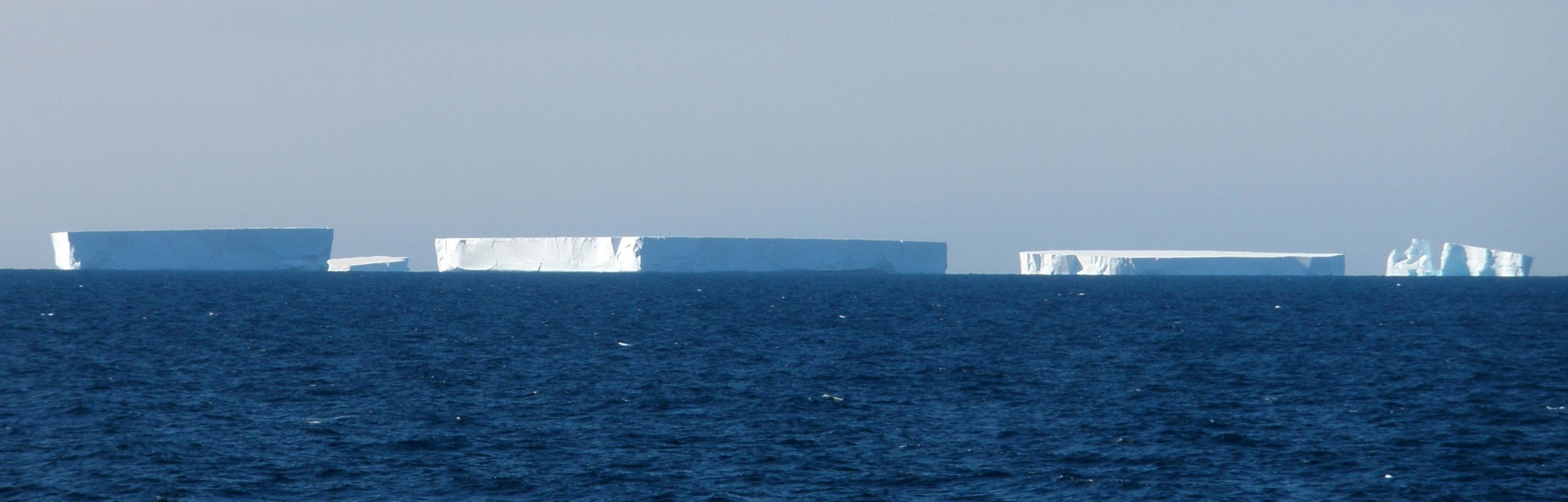
Antarctica’s ice caps have been shaping the ocean for millions of years, but recent discoveries reveal icebergs existed even before the continent’s major freeze.
It’s not unusual to see icebergs break away from Antarctica and drift across the ocean — just like the massive sheet of ice currently moving toward the island of South Georgia. However, due to climate change, this process is happening more often, and the icebergs themselves are getting larger.
Researchers from Utrecht University are studying the paths that icebergs took during past periods of rapid ice loss, such as the end of ice ages. Their work helps reveal how melting icebergs impact ocean conditions and what that means for the future. Along the way, they also uncovered a clue to a long-standing mystery: the presence of ancient Antarctic material near South Orkney, an island southwest of South Georgia. Their findings offer new insights into how icebergs have shaped the planet for millions of years.
Ice Caps: A Delicate Balance
Ice caps grow as layers of snow accumulate on top. Over time, gravity slowly pulls the ice toward the sea, where it loses mass through melting and the breaking off of icebergs, a process called calving. If the rate of new ice formation matches the rate of ice loss, the ice cap remains stable.
However, in recent decades, rising air and ocean temperatures around the South Pole have accelerated ice loss. Meltwater weakens the ice from above, while warmer ocean waters thin the ice shelves from below. This combination makes icebergs break off more frequently, and in some cases, massive chunks of ice can detach in a short period.

Iceberg Alley: A History of Drifting Giants
The waters surrounding South Georgia have long been a hotspot for iceberg research. This region, known as Iceberg Alley, is a narrow stretch of ocean filled with icebergs that break away from Antarctica and drift northward, carried by wind and ocean currents. As they reach warmer waters, they eventually melt and disappear.
For around 34 million years, Antarctica has been home to a massive ice cap, meaning Iceberg Alley has seen an endless procession of drifting ice. However, scientists studying South Orkney, an island in this region, uncovered a mystery: evidence of icebergs that existed 3 million years before Antarctica’s large ice cap even formed.
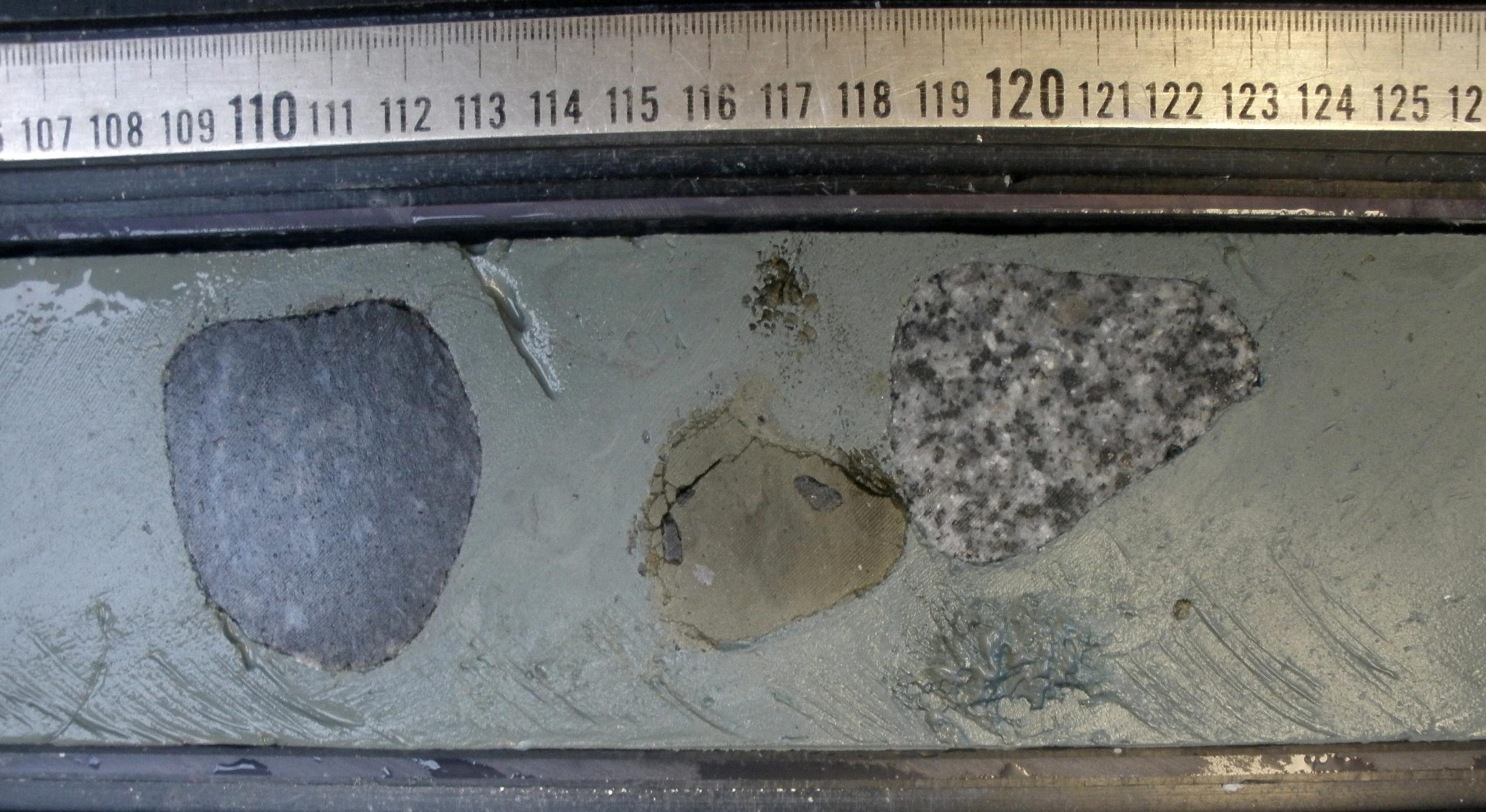
In 2017, researchers found fragments of Antarctic rock debris on the seafloor around South Orkney. The only way for this material to travel such a long distance is by iceberg transport. Glaciers scrape up rock from the Antarctic continent, and when icebergs break off and drift, they carry the rock with them. Once an iceberg melts, the debris sinks to the ocean floor. But how did these icebergs exist before Antarctica was thought to be frozen? The discovery left scientists searching for answers.
The scientists were not surprised to find Antarctic debris near South Orkney, considering its location in Iceberg Alley. But they were astonished at the age of the sediments: 37 million years, 3 million years older than Antarctica’s large ice cap. Could Antarctica have already had an ice cap in the warm period of the late Eocene? And how could these icebergs survive in the warm ocean conditions prevalent around Antarctica at that time?
Cold Enough: Solving the Ice Age Mystery
Utrecht University student Mark Elbertsen offered an answer to these questions in a recently published Master’s thesis project. Under the supervision of Peter Bijl from the Department of Earth Sciences and Erik van Sebille from the Institute for Marine and Atmospheric Research, he seized this geological puzzle by the horns.
Using computer models, Mark calculated the origins of the icebergs that reached South Orkney during the late Eocene, and how large the icebergs must have been to survive the journey. He found that the Weddell Sea was cold enough at the time to transport medium-sized icebergs all the way to South Orkney. But that’s not all: the most logical starting point for the icebergs is also home to bedrock that corresponds to the types of rock found in the debris at South Orkney.
Apparently, during the late Eocene Antarctica had an ice cap that was large enough to reach the coastline, and it moved fast enough to produce enough large icebergs that could survive the warm Weddell Sea and reach South Orkney. The study thus demonstrated that sufficient snow fell on Antarctica in the late Eocene to facilitate the required growth of ice caps and icebergs, 3 million years prior to the large freeze-over of Antarctica.

Fresh Water and Future Climate Impact
Bijl and van Sebille are once again joining forces in research. Recent geological history has known repeated phases of high rates of iceberg calving during rapid transitions from ice ages to interglacial periods. The EMBRACER climate research program offers a job position for a PhD student to investigate these so-called ‘deglaciation’ phases. By following icebergs in computer simulations, the new study will identify how much meltwater the icebergs lost in the Southern Ocean during the melting phases, and how that changed conditions in the ocean.
Scientists would also like to better understand the consequences of the large volumes of meltwater that will reach the Southern Ocean in the near future. More fresh water in the Southern Ocean could affect the deep ocean currents and the ocean’s ability to absorb carbon. If climate change continues at its current pace, the Southern Ocean will soon face more and larger icebergs than in the past. The new study will use geologic reconstructions to provide more clarity about the potential consequences for the region.
Adrift: The Journey of Iceberg A23a
In 1986, iceberg A23a broke off of the Filchner ice sheet deep in the Weddell Sea. This super-iceberg remained stuck on the bottom of the shallow Weddell Sea for decades, until it began to drift away in 2020. It rode the waves for several years, until it recently set a course for the southern coast of South Georgia. Scientists are closely monitoring the iceberg’s progress, because South Georgia is an important breeding ground for colonies of penguins, seals and albatrosses.
If iceberg A23a were to collide with the island, it would block countless animals’ access to breeding grounds and foraging waters. That is unlikely to happen, however, because the island is surrounded by a broad strip of shallow waters, against which A23a would most likely run aground. If that happens, the iceberg’s presence may even have a positive effect on the colonies, as there would be more food to find in the currents moving around the iceberg. The ocean’s currents may also guide the iceberg around the island, where it will gradually melt away in the open ocean.
Reference: “Possible provenance of IRD by tracing late Eocene Antarctic iceberg melting using a high-resolution ocean model” by Mark V. Elbertsen, Erik van Sebille and Peter K. Bijl, 13 February 2025, Climate of the Past.
DOI: 10.5194/cp-21-441-2025
Never miss a breakthrough: Join the SciTechDaily newsletter.
Follow us on Google and Google News.
3 Comments
“However, in recent decades, rising air and ocean temperatures around the South Pole have accelerated ice loss.”
Actually, the accelerated ice loss is only true for West Antarctica. And interestingly, the air swirls around the South Pole in what is called the “Circumpolar Vortex” and only West Antarctica is showing melting. Thus, East Antarctica is exposed to the same air and is NOT melting. This suggests that either warmer water in West Antarctica, or high geothermal gradients under the West Antarctic land is responsible for the melting. Details can be important.
The icebergs are older than Antarctica, because they were here before Antarctica. There, explained.
Can I get a government grant now?
Am curious to know what dating was used to date the sediments containing the dropstones. It would be interesting to learn the ages of the dropstones as that would help understand their provenance. Any zircons, apatites and monazites in the sediments; a nice project for additional studies of provenance.
I wonder if any of the tillite material originated in deep-south Patagonia?