
Close Menu
    Facebook X (Twitter) Instagram
    SciTechDaily
    • Biology
    • Chemistry
    • Earth
    • Health
    • Physics
    • Science
    • Space
    • Technology
    Facebook X (Twitter) Pinterest YouTube RSS
    SciTechDaily
    Home»Earth»Massive Iceberg – 10 Times the Size of San Francisco – Breaks Off Brunt Ice Shelf in Antarctica
    Earth

    Massive Iceberg – 10 Times the Size of San Francisco – Breaks Off Brunt Ice Shelf in Antarctica

    By European Space Agency (ESA)March 2, 20211 Comment3 Mins Read
    Facebook Twitter Pinterest Telegram LinkedIn WhatsApp Email Reddit
    Share
    Facebook Twitter LinkedIn Pinterest Telegram Email Reddit
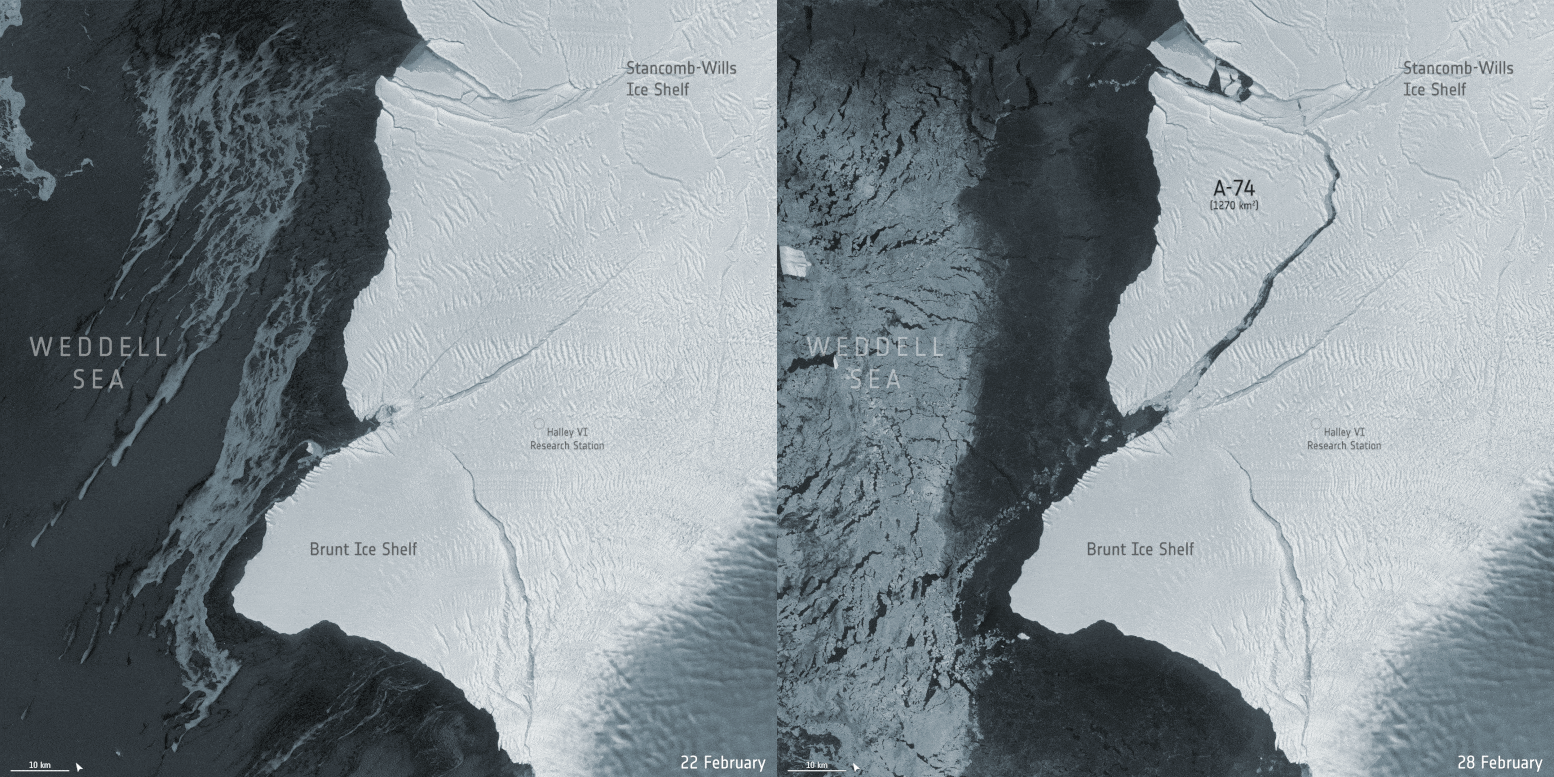
    A74 Iceberg
    New radar images, captured by the Copernicus Sentinel-1 mission, show a 1270 sq km iceberg breaking free and moving away rapidly from the floating ice shelf. Credit: Contains modified Copernicus Sentinel data (2021), processed by ESA, CC BY-SA 3.0 IGO

    Massive Iceberg Breaks Off from Antarctica’s Brunt Ice Shelf

    A giant iceberg, approximately 1.5 times the size of Greater Paris [or about 10 times the size of San Francisco], broke off from the northern section of Antarctica’s Brunt Ice Shelf on Friday, February 26th. New radar images, captured by the Copernicus Sentinel-1 mission, show the 1270 sq km (490 sq mi) iceberg breaking free and moving away rapidly from the floating ice shelf.

    Glaciologists have been closely monitoring the many cracks and chasms that have formed in the 150 m (490 ft) thick Brunt Ice Shelf over the past years. In late-2019, a new crack was spotted in the portion of the ice shelf north of the McDonald Ice Rumples, heading towards another large crack near the Stancomb-Wills Glacier Tongue.

    This latest rift was closely monitored by satellite imagery, as it was seen quickly cutting across the ice shelf. Recent ice surface velocity data derived from Sentinel-1 data indicated the region north of the new crack to be the most unstable – moving around 5 m (16 ft) per day. Then, in the early hours of Friday 26th, the newer crack widened rapidly before finally breaking free from the rest of the floating ice shelf.

    ESA’s Mark Drinkwater said, “Although the calving of the new berg was expected and forecasted some weeks ago, watching such remote events unfold is still captivating. Over the following weeks and months, the iceberg could be entrained in the swift south-westerly flowing coastal current, run aground or cause further damage by bumping into the southern Brunt Ice Shelf. So we will be carefully monitoring the situation using data provided by the Copernicus Sentinel-1 mission.”

    Iceberg ‘A-74’: What’s in a Name?

    Although currently unnamed, the iceberg has been informally dubbed ‘A-74’. Antarctic icebergs are named from the Antarctic quadrant in which they were originally sighted, then a sequential number, then, if the iceberg breaks, a sequential letter.

    The calving does not pose a threat to the presently unmanned British Antarctic Survey’s Halley VI Research Station, which was re-positioned in 2017 to a more secure location after the ice shelf was deemed unsafe.

    Routine monitoring by satellites offer unprecedented views of events happening in remote regions like Antarctica, and how ice shelves manage to retain their structural integrity in response to changes in ice dynamics, air and ocean temperatures. The Copernicus Sentinel-1 mission carries radar, which can return images regardless of day or night and this allows us year-round viewing, which is especially important through the long, dark, austral winter months.

    Never miss a breakthrough: Join the SciTechDaily newsletter.
    Follow us on Google and Google News.

    Antarctica European Space Agency Iceberg Popular
    Share. Facebook Twitter Pinterest LinkedIn Email Reddit

    Related Articles

    Meet the World’s Largest Iceberg: A-76 Is Over 100 Miles Long

    “Missing Link” Found in Process That Leads to an Ice Age on Earth

    Ozone Hole Over the Antarctic Is One of the Largest and Deepest in Recent Years

    Disintegration Fears Grow As Worsening Rifts and Fractures Spotted at Two of Antarctica’s Most Important Glaciers

    “Worst-Case Climate Scenario” – Ice Sheets in Greenland and Antarctica Loss Rates Rapidly Increasing

    Tracking Colossal Iceberg – Larger Than Delaware – During a 3-Year, 650-Mile Journey

    Worst-Case Climate Change Scenario: Greenland and Antarctica Losing Ice 6x Faster Than Expected

    Massive Iceberg 5 Times Larger Than Manhattan Shatters Into Pieces – Satellite Video

    GOCE Gravity Mapper Reveals What’s Going on Deep Below Antarctica

    1 Comment

    1. carlos miranda on March 4, 2021 11:59 am

      I think my mango tree is growing.
      You all do not have to say “thank you”.

      Reply
    Leave A Reply Cancel Reply

    • Facebook
    • Twitter
    • Pinterest
    • YouTube

    Don't Miss a Discovery

    Subscribe for the Latest in Science & Tech!

    Trending News

    Scientists Warn That This Common Pet Fish Can Wreck Entire Ecosystems

    Scientists Make Breakthrough in Turning Plastic Trash Into Clean Fuel Using Sunlight

    This Popular Supplement May Interfere With Cancer Treatment, Scientists Warn

    Scientists Finally Solved One of Water’s Biggest Mysteries

    Could This New Weight-Loss Pill Disrupt the Entire Market? Here’s What You Should Know About Orforglipron

    Earth’s Crust Is Tearing Open in Africa, and It Could Form a New Ocean

    Breakthrough Bowel Cancer Trial Leaves Patients Cancer-Free for Nearly 3 Years

    Natural Compound Shows Powerful Potential Against Rheumatoid Arthritis

    Follow SciTechDaily
    • Facebook
    • Twitter
    • YouTube
    • Pinterest
    • Newsletter
    • RSS
    SciTech News
    • Biology News
    • Chemistry News
    • Earth News
    • Health News
    • Physics News
    • Science News
    • Space News
    • Technology News
    Recent Posts
    • The Most Effective Knee Arthritis Treatments Aren’t What You Expect
    • Scientists Develop Bioengineered Chewing Gum That Could Help Fight Oral Cancer
    • Popular Weight-Loss Drugs Found To Cut Heart Attack and Stroke Risk
    • After 37 Years, the World’s Longest-Running Soil Warming Experiment Uncovers a Startling Climate Secret
    • NASA Satellite Captures First-Ever High-Res View of Massive Pacific Tsunami
    Copyright © 1998 - 2026 SciTechDaily. All Rights Reserved.
    • Science News
    • About
    • Contact
    • Editorial Board
    • Privacy Policy
    • Terms of Use

    Type above and press Enter to search. Press Esc to cancel.