
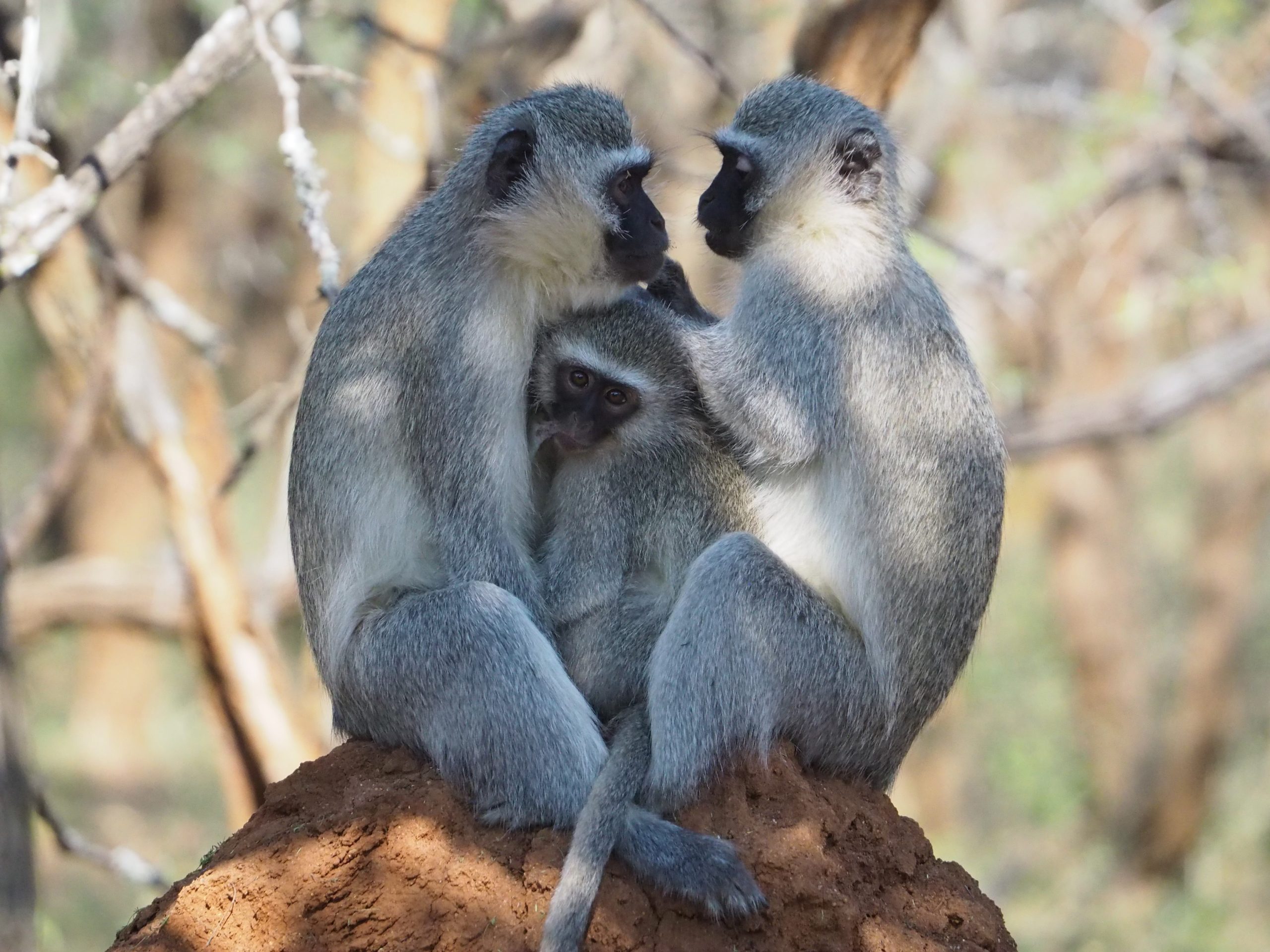
individuals residing in different communities adhere to distinct social traditions or norms. For example, in certain areas, it’s customary to greet everyone you encounter on the street, whereas in other regions, this behavior is not observed. Sometimes, these variations can even be seen between different neighborhoods. Recent research published in the journal iScience has revealed that neighboring groups of vervet monkeys exhibit similarly varied social behaviors and customs.
“We report the existence of behavioral traditions of social customs in vervet monkeys that are stable across 9 years,” says Elena Kerjean of the University of Lausanne in Switzerland and Paul Sabatier University in Toulouse, France.
The researchers found that such differences in social traditions set up differences in “social atmosphere” that could be passed on from one generation to the next through social learning. Intriguingly, they also found that dispersing males quickly adapted their social style to that of their new group, suggesting that they may experience a phenomenon akin to social conformity driven by peer pressure.
Study on Social Behavior and Conformity
Kerjean and colleagues including Erica van de Waal and Charlotte Canteloup knew that other animals, like people, follow traditions. But most studies had focused primarily on the presence or absence of traditions such as tool use. They hadn’t explored more subtle, quantitative differences in social behavior that can lead to important differences in a group’s social atmosphere.
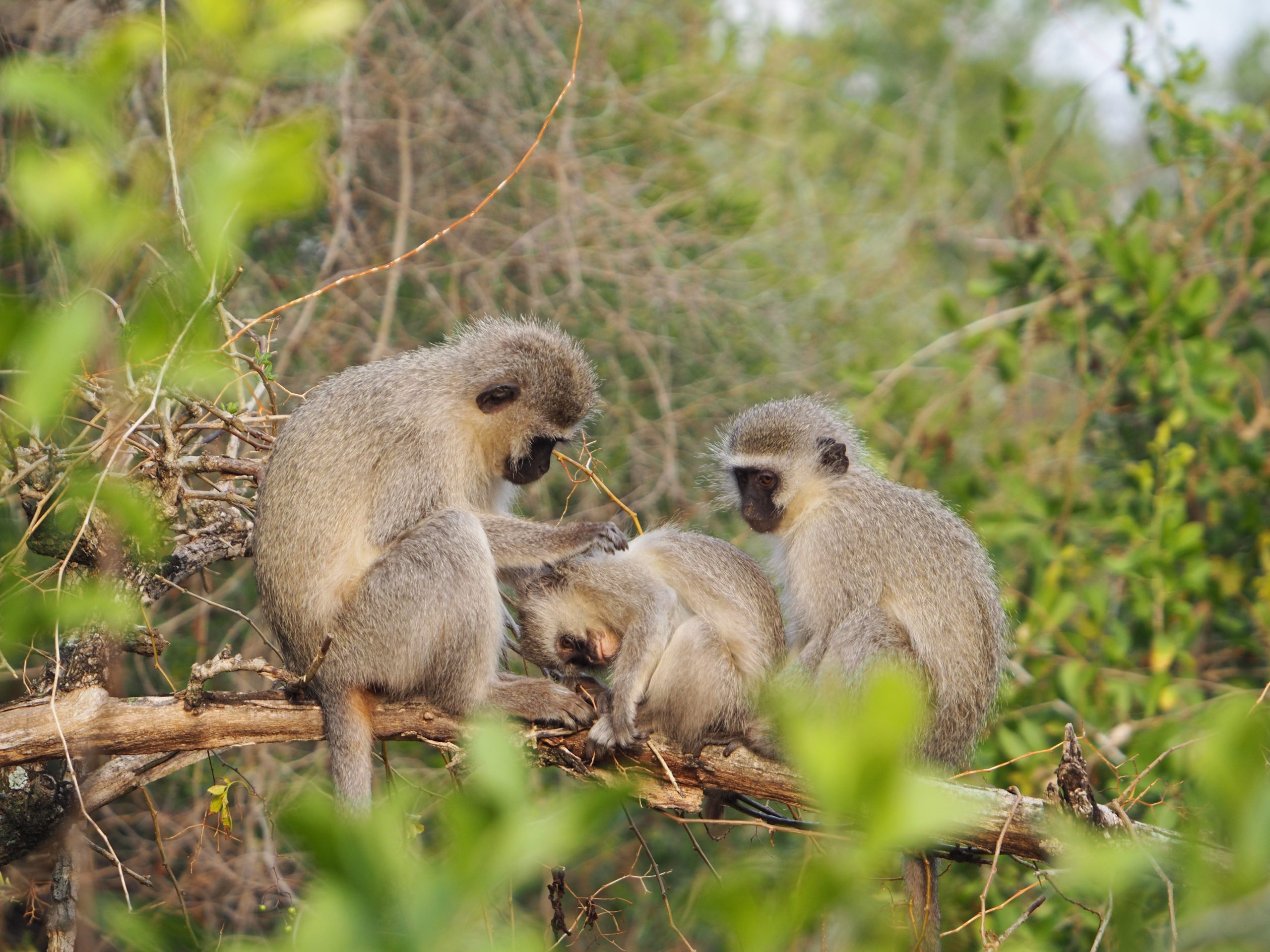
To explore further in the new study, the researchers analyzed more than 84,000 social interactions between almost 250 vervet monkey individuals collected over nine years in three neighboring groups. Their analyses revealed an unexpected difference: in one of the groups, dubbed Ankhase (AK), the monkeys were more likely than in the other two groups to trade off when grooming each other.
Unique Social Dynamics within Groups
“We found that individuals in one group—AK—display significantly more affiliative behaviors than in the two other groups, and this difference was stable over 9 years of study,” Kerjean says.
The AK group was not only more social than the other two, but they also exchanged grooming more reciprocally. When a monkey groomed another monkey, that monkey would usually repay the favor. As a result, grooming was exchanged more fairly in AK compared to the other two groups.
“You can think about it like massage exchanges between individuals,” Kerjean explained. “If I give you a massage 100 times a year but you only did it two times, I may feel that our relation is quite unfair. That’s the kind of differences we observed between our groups.”
Adaptation and Social Conformity
The researchers also found that six males who moved from one group to another adapted their social interactions to better match their new groups. Those changes were also seen in both directions. Upon moving out of the AK group, males became less social and less likely to groom a partner fairly. Males leaving one of the less social groups for AK showed exactly the opposite trend.
“Males adapted their sociality to the group they integrated with, which we believe is a good example of social conformity,” Kerjean says. “This normative rule—act like others—probably helps them to get better integrated in a new group. This conformity effect had been previously shown through a novel food experiment, but this is the first time that we observed that with social behavior.”
The findings show that groups not only have different social traditions but that those traditions also can be stable over time in ways that are likely mediated socially. The researchers suggest that these differences are passed on through social learning, although they can’t rule out that there may be other differences in the environment at work, too.
Now that they know about the existence of these social traditions, they say they’d like to learn more about how they are introduced and passed on. They note that they’re especially curious to explore the role of key individuals or leaders in pressuring newcomers to follow along.
Reference: “Social dynamics of vervet monkeys are dependent upon group identity” by Elena Kerjean, Erica van de Waal and Charlotte Canteloup, 19 December 2023, iScience.
DOI: 10.1016/j.isci.2023.108591
Never miss a breakthrough: Join the SciTechDaily newsletter.
Follow us on Google and Google News.