
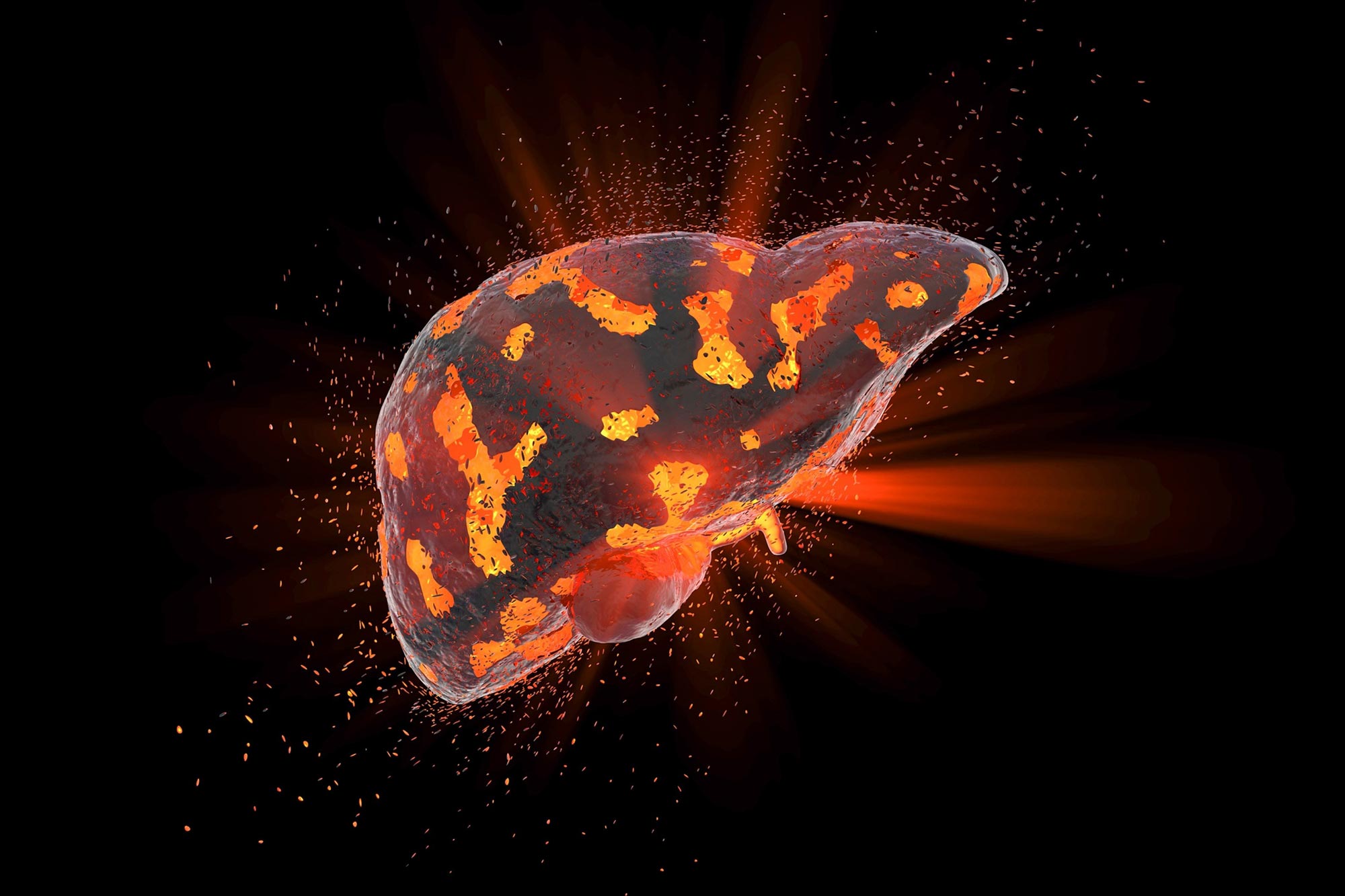
Two types of fatty liver disease discovered, enhancing diagnosis and treatment.
Researchers at Karolinska Institutet and the University of Gothenburg have identified two distinct types of metabolic-associated fatty liver disease: a liver-specific type and a systemic type that impacts other organs and tissues. This breakthrough could pave the way for more accurate diagnosis and effective treatments for the increasing number of people affected. Their findings are detailed in two complementary studies published in Nature Medicine.
Metabolic dysfunction-associated steatotic liver disease (MASLD) is marked by an abnormal buildup of fat in the liver, which can progress to severe complications like cirrhosis and liver cancer. MASLD primarily results from obesity and overweight, representing a significant and growing global health challenge. Alarmingly, an estimated one in four adults worldwide has MASLD, yet most remain unaware of the condition until it reaches advanced and symptomatic stages.
Comprehensive analyses
Researchers at Karolinska Institutet and the University of Gothenburg in Sweden have now identified two different types of MASLD by analyzing data from over 36,000 participants from the UK Biobank and from other studies.
“We discovered that there are at least two types of steatotic liver disease with different clinical trajectories,” says Stefano Romeo, Professor at the Department of Medicine, Huddinge, Karolinska Institutet, who led the research. “One is more aggressive and mainly affects the liver, while the other is entwined in the cardio-renal-metabolic syndrome.”
Predicting disease progression
The researchers used genetic tests to identify 27 new genetic variants linked to MASLD. By analyzing these genes, they were able to determine two different risk scores related to the two types of MASLD. The liver-specific type is more aggressive and can lead to severe liver damage but protects against cardiovascular disease, while the systemic type is associated with a higher risk of diabetes, cardiovascular disease, heart, and kidney failure.
“This discovery is important because it helps us understand why some individuals develop more severe liver diseases while others suffer from cardio-renal diseases,” explains Stefano Romeo. “This will allow us to better predict the progression of these disease and tailor the treatment to the specific needs of the patient.”
Two parallel studies
The back-to-back publication that professor Stefano Romeo co-led with researchers at Lille University, France, showed similar results by using another method, so-called unsupervised clustering.
“This work on clustering using simple clinical variables is of utmost importance because it allows us to differentiate at an individual level who has MASLD and will develop cardiovascular disease and who will not,” says Stefano Romeo.
The cluster prediction can be obtained by using a simple calculator.
Advances in precision medicine
The study also highlights the importance of genetic research in understanding complex diseases like MASLD and the mechanisms causing the cardio-renal-metabolic syndrome.
“This research is a step forward towards precision medicine, where treatments are tailored to suit individual needs based on genetic and clinical information,” says Stefano Romeo. “It can also raise awareness of how genetic and environmental factors affect our health and underlines the importance of continued research in this area.”
References: “Partitioned polygenic risk scores identify distinct types of metabolic dysfunction-associated steatotic liver disease” by Oveis Jamialahmadi, Antonio De Vincentis, Federica Tavaglione, Francesco Malvestiti, Ruifang Li-Gao, Rosellina M. Mancina, Marcus Alvarez, Kyla Gelev, Samantha Maurotti, Umberto Vespasiani-Gentilucci, Frits Richard Rosendaal, Julia Kozlitina, Päivi Pajukanta, François Pattou, Luca Valenti and Stefano Romeo, 9 December 2024, Nature Medicine.
DOI: 10.1038/s41591-024-03284-0
“Data-driven cluster analysis identifies distinct types of metabolic dysfunction-associated steatotic liver disease” by Violeta Raverdy, Federica Tavaglione, Estelle Chatelain, Guillaume Lassailly, Antonio De Vincentis, Umberto Vespasiani-Gentilucci, Sami F. Qadri, Robert Caiazzo, Helene Verkindt, Chiara Saponaro, Julie Kerr-Conte, Gregory Baud, Camille Marciniak, Mikael Chetboun, Naima Oukhouya-Daoud, Samuel Blanck, Jimmy Vandel, Lisa Olsson, Rima Chakaroun, Viviane Gnemmi, Emmanuelle Leteurtre, Philippe Lefebvre, Joel T. Haas, Hannele Yki-Järvinen, Sven Francque, Bart Staels, Carel W. Le Roux, Valentina Tremaroli, Philippe Mathurin, Guillemette Marot, Stefano Romeo and François Pattou, 9 December 2024, Nature Medicine.
DOI: 10.1038/s41591-024-03283-1
The research was mainly funded by the Swedish Cancer Society, the Swedish Research Council, ALF funds, the Swedish Heart-Lung Foundation, the Knut and Alice Wallenberg Foundation, and Novo Nordisk Foundation. Several potential conflicts of interest are listed in the article. Stefano Romeo has consulting for AstraZeneca, GSK, Celgene Corporation, Ribo-cure AB and Pfizer over the past five years and has received a research grant from AstraZeneca.
Never miss a breakthrough: Join the SciTechDaily newsletter.
Follow us on Google and Google News.