
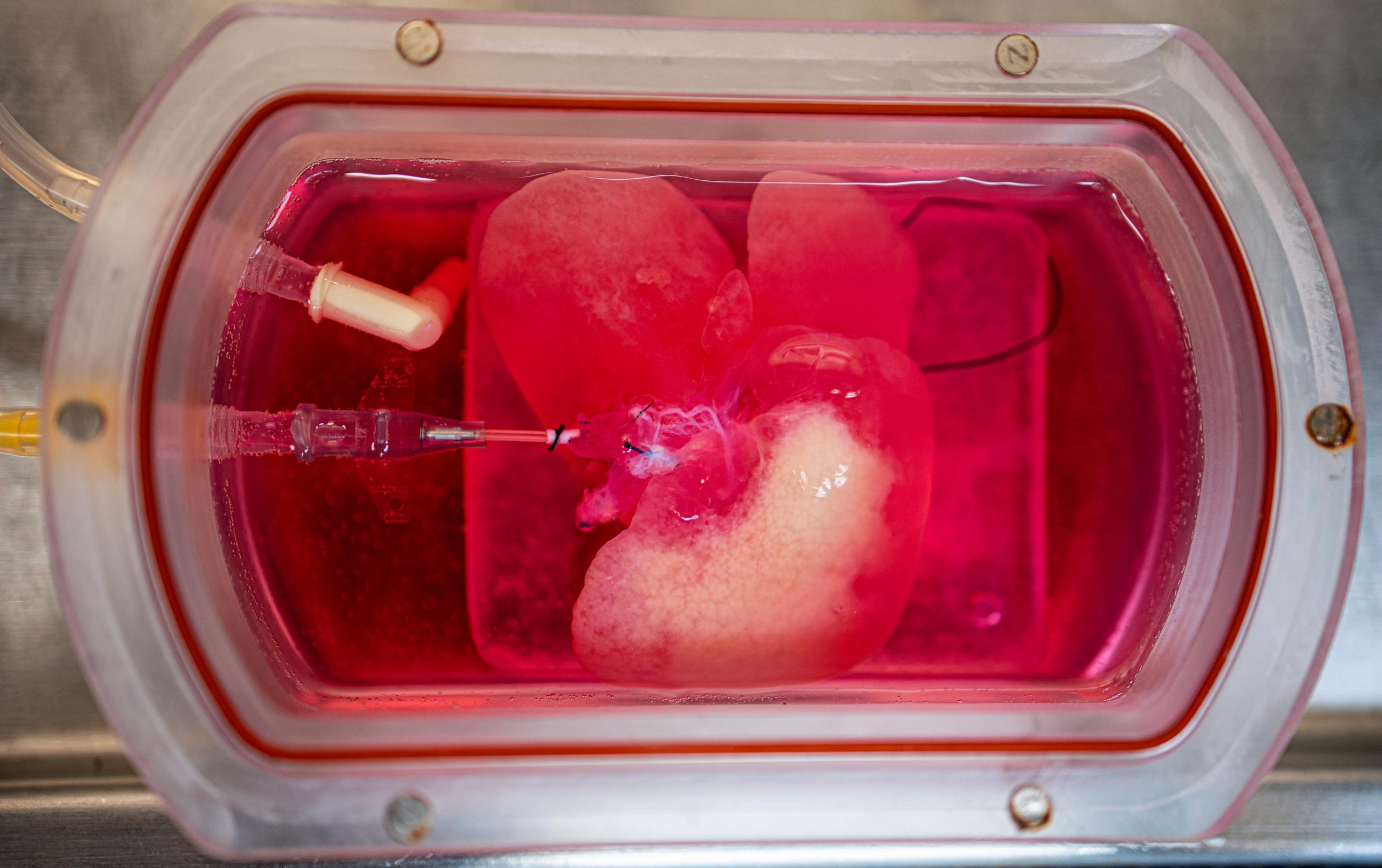
Using skin cells from human volunteers, researchers at the University of Pittsburgh School of Medicine have created fully functional mini livers, which they then transplanted into rats.
In this proof-of-concept experiment, the lab-made organs survived for four days inside their animal hosts. These results were published today (June 2, 2020) in Cell Reports.
“Seeing that little human organ there inside the animal – brown, looking like a liver – that was pretty cool. This thing that looks like a liver and functions like a liver came from somebody’s skin cells,” said senior author Alejandro Soto-Gutierrez, M.D., Ph.D., associate professor of pathology at Pitt and faculty member of both the McGowan Institute for Regenerative Medicine and the Pittsburgh Liver Research Center.
These mini livers secrete bile acids and urea, just like a normal liver, except they’re made-to-order in the lab using patient cells. And, although liver maturation takes up to two years in a natural environment, Soto-Gutierrez and colleagues did it in under a month.
The researchers created their mini livers by reprogramming human skin cells into stem cells, coaxing those stem cells to become various types of liver cells and, then, seeding those human liver cells into a rat liver with all of its own cells stripped out.
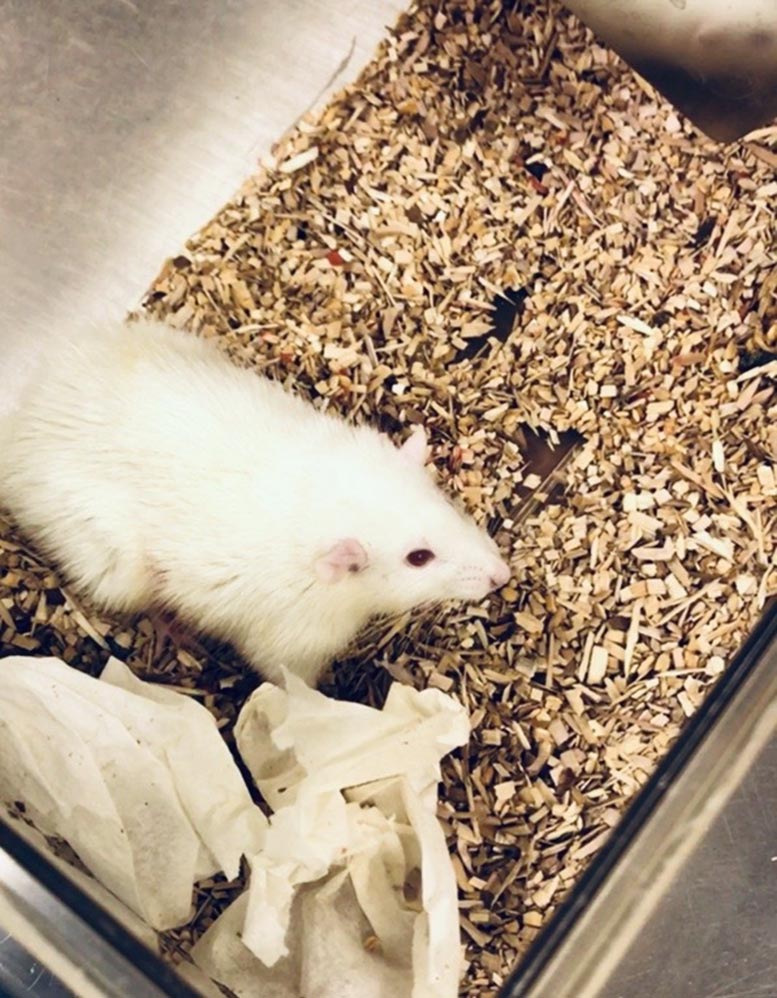
As an ultimate test, the researchers transplanted their lab-grown mini livers into five rats, who were bred to resist organ rejection. Four days after the transplant, researchers investigated how well the implanted organs were faring.
In all cases, blood flow problems had developed within and around the graft, but the transplanted mini livers worked – the rats had human liver proteins in their blood serum.
Soto-Gutierrez is optimistic that this research is not merely a stepping-stone on the path toward growing replacement organs in a lab, but also a useful tool in its own right.
“The long-term goal is to create organs that can replace organ donation, but in the near future, I see this as a bridge to transplant,” Soto-Gutierrez said. “For instance, in acute liver failure, you might just need a hepatic boost for a while instead of a whole new liver.”
But there are significant challenges to overcome, he noted, including long-term survival and safety issues.
Reference: “Assembly and Function of a Bioengineered Human Liver for Transplantation Generated Solely from Induced Pluripotent Stem Cells” by Kazuki Takeishi, Alexandra Collin de l’Hortet, Yang Wang, Kan Handa, Jorge Guzman-Lepe, Kentaro Matsubara, Kazutoyo Morita, Sae Jang, Nils Haep, Rodrigo M. Florentino, Fangchao Yuan, Ken Fukumitsu, Kimimasa Tobita, Wendell Sun, Jonathan Franks, Evan R. Delgado, Erik M. Shapiro, Nicolas A. Fraunhoffer, Andrew W. Duncan, Hiroshi Yagi, Tomoji Mashimo, Ira J. Fox and Alejandro Soto-Gutierrez, 2 June 2020, Cell Reports.
DOI: 10.1016/j.celrep.2020.107711
Several of the authors have patents on technology used in this paper (WO/2011/002926, WO/2015/168254 and PCT/US2018/018032) as well as financial interests in Von Baer Wolff Inc., a company that aims to produce iPS-derived human liver cells and treat liver failure using regenerative medicine. The current study is not associated with Von Baer Wolff Inc.
First authors on the study are Kazuki Takeishi, M.D., Ph.D., Alexandra Collin de l’Hortet, Ph.D., and Yang Wang, M.D., Ph.D., all of Pitt. Additional authors include Kan Handa, M.D., Ph.D., Jorge Guzman-Lepe, M.D., Kentaro Matsubara, M.D., Ph.D., Kazutoyo Morita, Sae Jang, M.D., Nils Haep, Ph.D., Rodrigo Florentino, Gangchao Yuan, Ken Fukumitsu, M.D., Ph.D., Kimimasa Tobita, Ph.D., Jonathan Franks, Evan Delgado, Nicolas Fraunhoffer, Ph.D., Andrew Duncan, Ph.D., and Ira Fox, M.D., all of Pitt; Wendell Sun, of LifeCell Corp.; Erik Shapiro, Ph.D., of Michigan State University; Hiroshi Yagi, M.D., of Keio University; and Tomoji Mashimoto, Ph.D., of the University of Tokyo.
This study was supported by National Institute of Diabetes and Digestive and Kidney Diseases grants DK099257, DK117881, DK119973, DK096990, DK103645 and P30DK120531; National Center for Advancing Translational Sciences grant TR002383; National Cancer Institute grant P30CA047904; and the American Liver Foundation.
Never miss a breakthrough: Join the SciTechDaily newsletter.
Follow us on Google and Google News.