
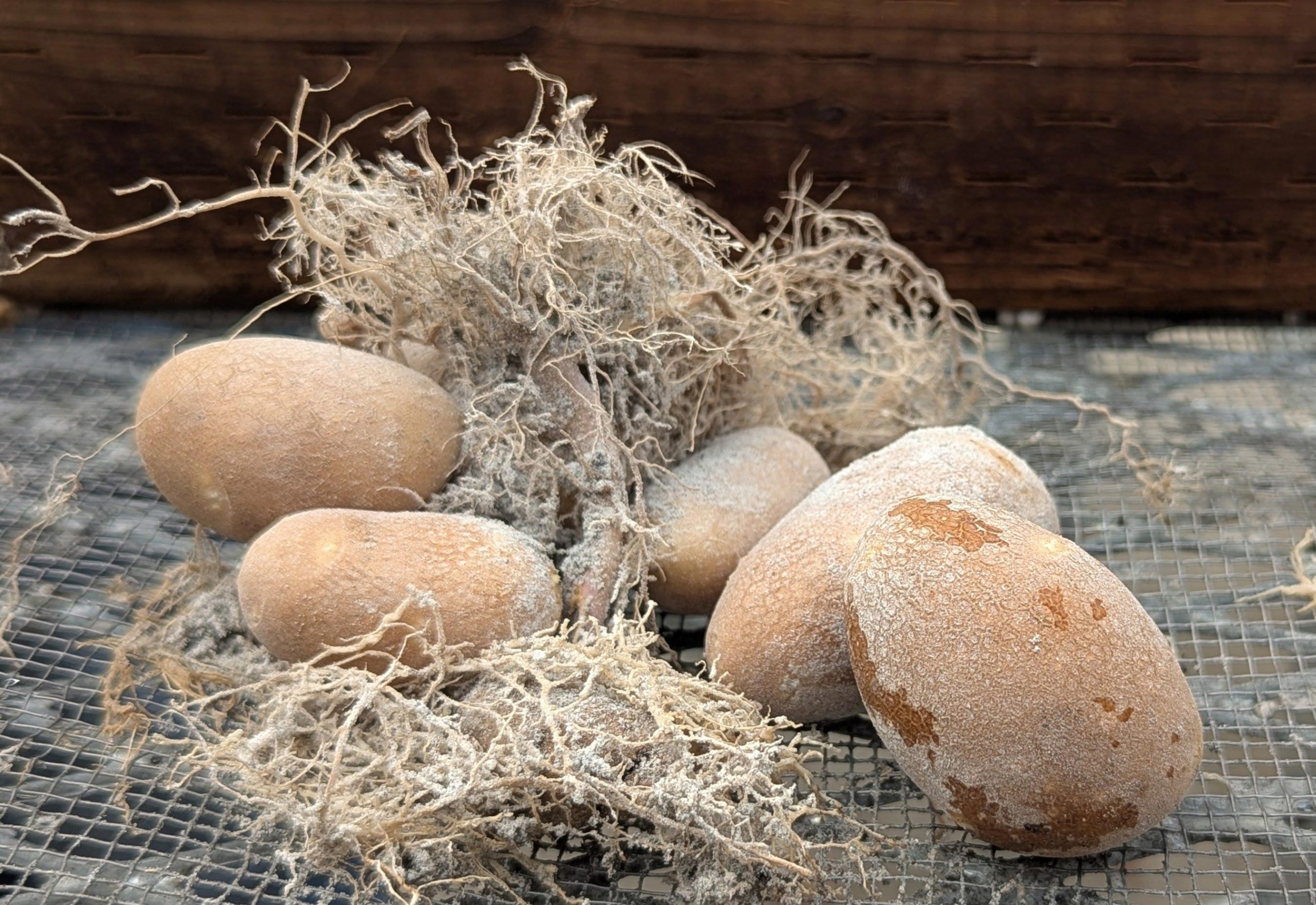
Successful potato harvests in simulated lunar soil suggest that future astronauts could recycle their food scraps to help grow their next meal.
A future in which humans live on the Moon and grow their own food may be a little closer to reality thanks to one of Earth’s most familiar crops. Researchers at Oregon State University have successfully grown edible potatoes in simulated lunar soil, achieving growth and yields comparable to those produced on Earth by adding compost made with the help of earthworms.
The findings support NASA’s Artemis program, which aims to establish a sustained human presence on the Moon. Producing food locally would reduce dependence on costly resupply missions from Earth and help make long-term lunar exploration more sustainable. Potatoes are particularly appealing because they provide substantial nutritional value and produce more calories per unit of land than many other crops.
“We found that potatoes can complete their entire life cycle in simulated lunar soil when supplemented with organic matter,” said Aymeric Goyer of Oregon State University’s Department of Botany and Plant Pathology. “That’s an important step toward developing reliable food production systems that could support long-term human exploration of the Moon.”
Making Moon dust suitable for crops
One of the biggest agricultural challenges on the Moon lies directly beneath astronauts’ feet. Most of the lunar surface is covered in regolith, a layer of loose rock and dust containing very little organic matter.
In a study published in npj Microgravity, Goyer and his colleagues tested whether adding different amounts of vermicompost, a nutrient-rich material produced when earthworms break down organic matter, could make simulated lunar soil suitable for growing potatoes.
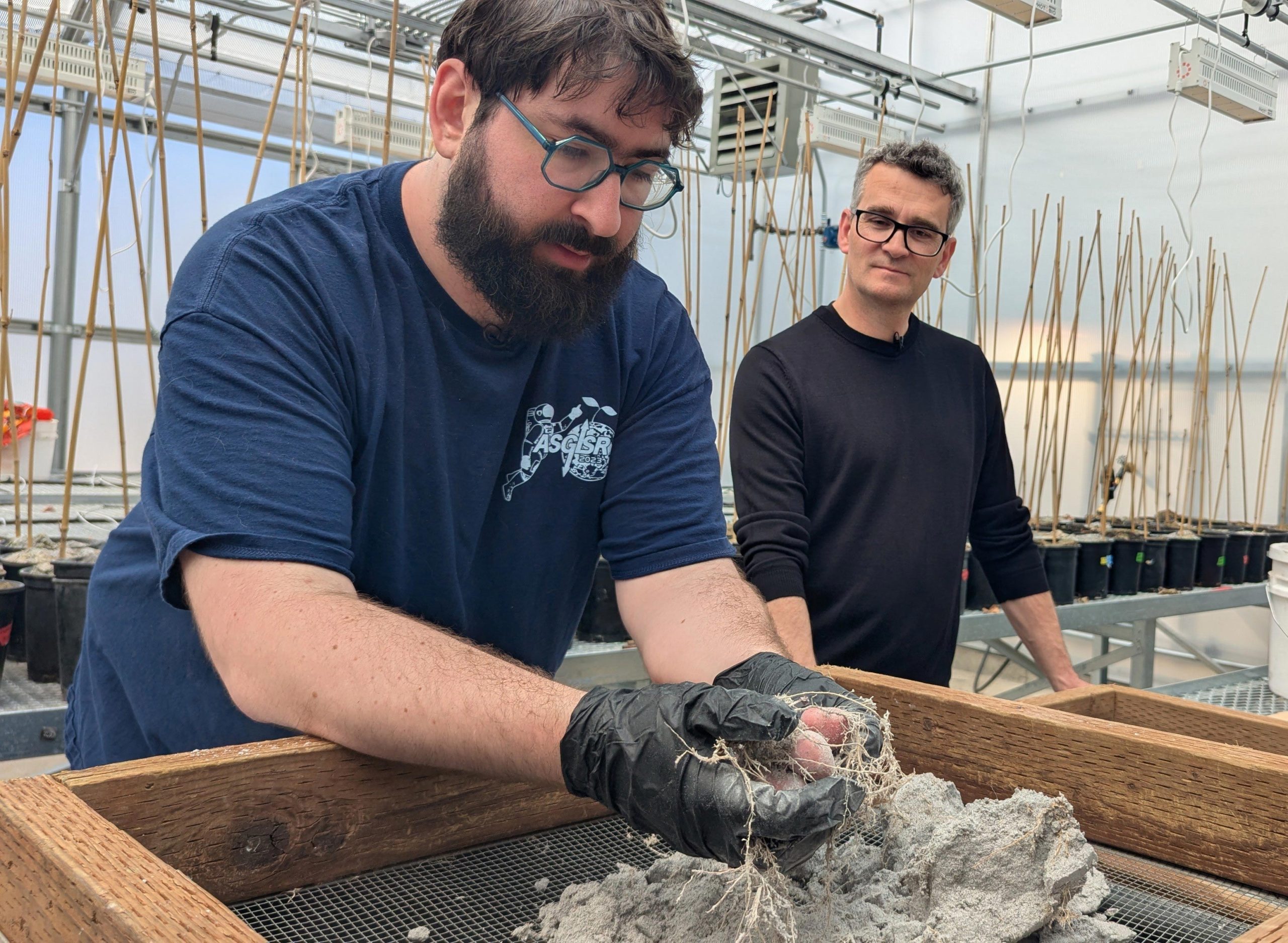
Because the composition of lunar regolith varies across the Moon, the team tested five simulants representing both the Moon’s darker plains, known as lunar maria, and its highland regions. For comparison, they included soil from Hermiston, Oregon, a region known for producing some of the highest potato yields in the world.
Potato plants grown in simulated lunar soil without compost were severely stunted and developed poorly formed roots. Adding between 5% and 15% vermicompost led to only partial recovery. However, plants grown with 30% vermicompost matched the growth and development of those cultivated in Earth soils.
Compost may shield roots from metals
Lunar regolith also contains elevated levels of heavy metals that can damage plant roots and interfere with growth.
“We believe the compost helps balance some of the toxicity we see in lunar regolith by reducing plant exposure to harmful compounds,” said David Handy, a postdoctoral researcher in Goyer’s lab.
The researchers suspect that organic matter binds to heavy metals, making them less available to plants and limiting their harmful effects.
Growing potatoes successfully would mean little if astronauts could not safely eat them. Encouragingly, potatoes produced in the lunar soil simulants maintained their nutritional quality and showed no statistically significant increase in glycoalkaloids, naturally occurring potato toxins often associated with green discoloration beneath the skin. The findings indicate that the potatoes were safe to eat under the conditions tested.
Turning astronaut waste into growing material
Future lunar explorers could potentially bring a small supply of organic matter from Earth and gradually produce more by recycling food scraps and plant waste. Such a system could turn everyday waste into valuable growing material while reducing the supplies astronauts would need to transport from Earth.
The research team is now investigating which potatoes might be best suited for lunar agriculture. A forthcoming paper will report results from experiments involving 10 potato varieties grown in simulated lunar soil.
Reference: “Growth and molecular responses of potato to lunar regolith simulants” by David Handy, Anika Loeffler, Medora Knudson, Sydney Campbell, Pankaj Jaiswal, Jeffrey C. Anderson and Aymeric Goyer, 19 November 2026, npj Microgravity.
DOI: 10.1038/s41526-026-00668-z
Supported by NASA funding
Never miss a breakthrough: Join the SciTechDaily newsletter.
Follow us on Google and Google News.