
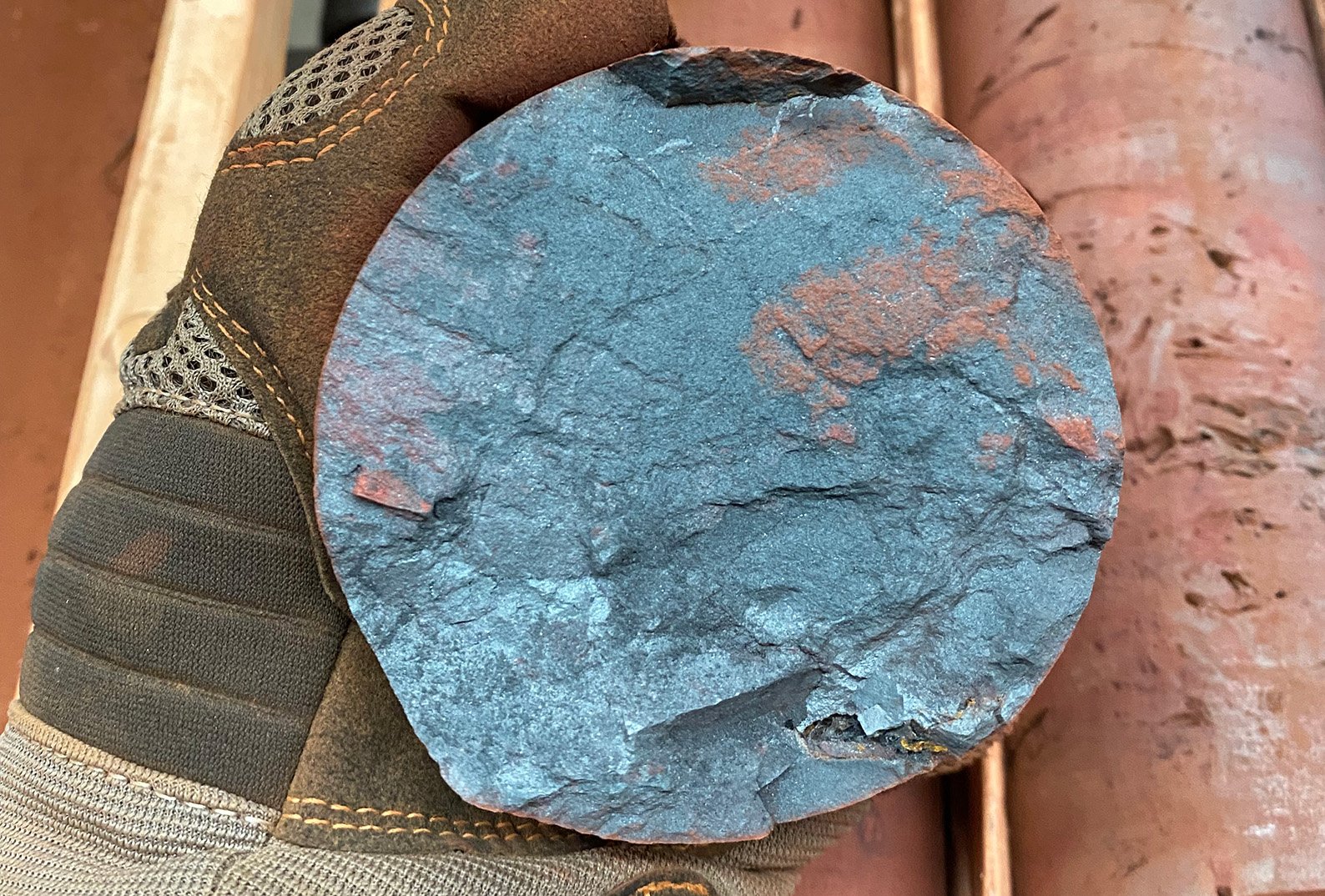
Curtin University researchers found that Western Australia’s Hamersley iron ore deposits are one billion years younger than previously believed, formed during significant geological events 1.4 to 1.1 billion years ago.
Research conducted by Curtin University has uncovered that the vast iron ore deposits in Western Australia’s Hamersley Province are approximately one billion years younger than previously estimated. This finding could significantly boost the search for more of the resource.
Using a new geochronology technique to accurately measure the age of iron oxide minerals, researchers found the Hamersley deposits formed between 1.4 and 1.1 billion years ago, rather than 2.2 billion years ago as previously estimated.
Geological Activity and Iron Ore Formation
Lead author Dr Liam Courtney-Davies, who was a Postdoctoral Research Associate at Curtin University’s John de Laeter Centre at the time of the research and is now at the University of Colorado, Boulder, said the findings showed iron deposits formed during a period of major geological activity when ancient supercontinents were breaking apart and new ones were forming.
“The energy from this epic geological activity likely triggered the production of billions of tonnes of iron-rich rock across the Pilbara,” Dr Courtney-Davies said.
“The discovery of a link between these giant iron ore deposits and changes in supercontinent cycles enhances our understanding of ancient geological processes and improves our ability to predict where we should explore in the future.
Dating of Banded Iron Formations (BIFs)
Study co-author Associate Professor Martin Danišík, from the John de Laeter Centre, said the research precisely dated minerals from banded iron formations (BIFs), which are ancient underwater layers of iron-rich rock that can provide significant insights into the Earth’s deep geologic past.
“Until now, the exact timeline of these formations changing from 30 percent iron as they originally were, to more than 60 percent iron as they are today, was unclear, which has hindered our understanding of the processes that led to the formation of the world’s largest ore deposits,” Associate Professor Danišík said.
“By using an emerging technique to date iron oxide minerals through uranium and lead isotope analysis within the mineral grains, we directly dated all the major giant BIF-hosted iron ore deposits in the Hamersley Province.
“Our research indicates these deposits formed in conjunction with major tectonic events, highlighting the dynamic nature of our planet’s history and the complexity of iron ore mineralization.”
Reference: “A billion-year shift in the formation of Earth’s largest ore deposits” by Liam Courtney-Davies, Marco Fiorentini, Hilke Dalstra, Steffen Hagemann, Erick Ramanaidou, Martin Danišik, Noreen J. Evans, Kai Rankenburg and Brent I. A. McInnes, 23 July 2024, Proceedings of the National Academy of Sciences.
DOI: 10.1073/pnas.2405741121
Never miss a breakthrough: Join the SciTechDaily newsletter.
Follow us on Google and Google News.
12 Comments
Are these new dates consistent with other non-iron containing rocks in the region?
As far as I can tell these are revised dates.
Possibly due to improved dating techniques.
The abstract notes that earlier dating is uncertain:
“Utilizing in situ iron oxide U–Pb geochronology, we provide a direct timeline of events tracing development of all the giant BIF-hosted hematite deposits of the Hamersley Province (Pilbara Craton, Western Australia). Direct dating demonstrates that the major iron ore deposits in the region formed during 1.4 to 1.1 Ga. This is one billion to hundreds of millions of years later than previous age constraints based upon 1) the presence of hematite ore clasts in conglomerate beds deposited before ~1.84 Ga, and 2) phosphate mineral dating, which placed the onset of iron mineralization in the Province at ~2.2 to 2.0 Ga during the great oxidation event. Dating of the hematite clasts verified the occurrence of a ~2.2 to 2.0 Ga event, reflecting widespread, but now largely eroded iron mineralization occurring when the Pilbara and Kaapvaal cratons were proximal. No existing phosphate mineral dates overlap with obtained hematite dates and therefore cannot be related to hematite crystallization and ore formation.”
are you the guy from overwatch
Hello stringfellowhawk,that’s a scientific idea mainstreaming with iron ore,of billions of years, now look at mars story put some of that discovery on what was found in California water shed microbial that they say formed life and send some to mars
Iron is sedimentation and oxidation not found in basement rock…if laid down rapidly as seen world wide, prove your “billions”
Of years and recall catastrophism
Is real, not a singular billion year event.
IT IS WONDER OF WORLD BEFORE SUPER NOVE I MEAN CREATION OF MAGNIFICENT MAGNITUDE MAGNIT POWDER THERE WILL BE A GRATE POWER OF CREATION EXCEPT ,GOD CREATION . NOW WE ARE ALL INVESTORS. THANKS.
“Catastrophism” is not a geological process, and the dating is precise – read the paper.
See Mineville and Tahawus, in Upstate New York and the Grenville Orogeny!!!!
Is Hammersley Iron ore province similare to Tiris iron ore province in Mauritania ?
No comments today
It seems the original iron ore formation is still correlated with the atmosphere oxygenation, but were later redeposited. “Dating of the hematite clasts verified the occurrence of a ~2.2 to 2.0 Ga event, reflecting widespread, but now largely eroded iron mineralization occurring when the Pilbara and Kaapvaal cratons were proximal.”