

Turning 100 is unusually common in one Sardinian village, and centuries of records help show that its residents’ remarkable ages are real.
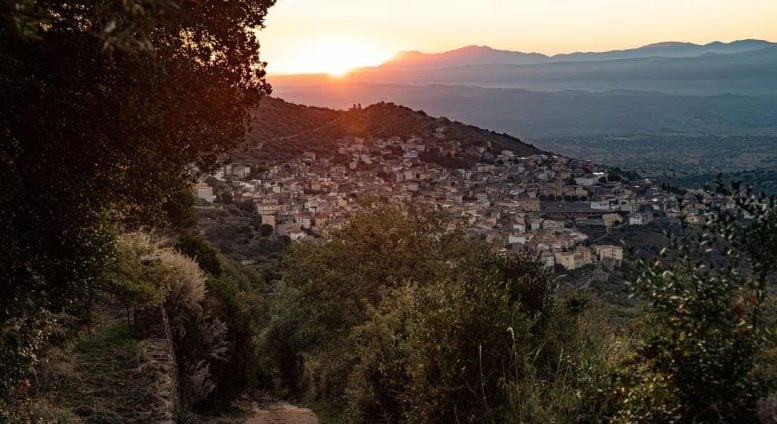
Women in Bolotana, a mountain community of about 2,300 people on the Italian island of Sardinia, have an exceptional pattern of survival after age 70. An international study suggests the village could qualify as a new “blue zone,” a community known for unusually long lives, although more observation is needed to establish that status.
Researchers estimated that women who reach 70 have a 13.8% chance of living to 100, compared with approximately 3.5% in Italy and 3.6% in the United States. That puts Bolotana’s estimate at nearly four times the U.S. figure.
The National Geographic-supported study was published in Frontiers in Aging and co-authored by S. Jay Olshansky, professor emeritus of epidemiology at the University of Illinois Chicago School of Public Health.
Checking the Centenarians
Bolotana first drew attention because six residents were at least 100 years old in 2024. Relative to the village’s population, the researchers estimated that centenarians were roughly 11 times as common as in the United States. But a high count alone cannot establish exceptional longevity, making reliable age records essential.
“What makes Bolotana extraordinary is that it has an incredible historical record that allows us to definitively evaluate ages at birth and death,” Olshansky said. “The municipal and baptismal records date back centuries and allowed us to independently verify ages.”
The team reconstructed residents’ life histories across more than a century, matching birth, baptismal and death records. Among 3,060 people born in Bolotana between 1900 and 1925, researchers documented 38 who reached 100.
“Every single person that has made it past 100, we can validate,” Olshansky said. “There is no ambiguity.”
Women Lead Bolotana’s Longevity
Sardinia’s original blue zone, identified more than two decades ago, became famous for exceptional male longevity. Bolotana presents a different pattern: women showed the strongest survival advantage, with nearly 21 years of estimated remaining life expectancy at age 70.
The researchers examined both remaining life expectancy at 70 and the likelihood of reaching 100. Among the international benchmarks included, Bolotana’s women ranked second only to Hong Kong on both measures.
“Females almost always live longer than males anywhere in the world, but in Sardinia that wasn’t the case. It’s one of the things that made it so unusual,” Olshansky said. “We think this is the longest-lived female population in the world, or close to it.”
Blue zones, including Okinawa in Japan and Costa Rica’s Nicoya Peninsula, offer opportunities to investigate why some communities outlive surrounding populations. Bolotana may provide another setting, particularly for studying women’s survival in later life.
Strong Records, Open Questions
The village’s archives address a recurring criticism of longevity research: that extraordinary ages sometimes reflect inaccurate documentation. Researchers could check Bolotana’s centenarians against multiple independent sources rather than relying on a single record.
However, verified ages do not settle whether the village has a lasting survival advantage. Bolotana’s estimates varied with the calendar period analyzed, and earlier years showed a less pronounced advantage, particularly for survival to 100. Longer observation and continued demographic validation are needed before researchers can consider it an established blue zone.
The study also did not determine what causes the longevity pattern. Walking, food, family relationships, and genetics are possible contributors, but the demographic findings cannot establish how much each factor matters.
Everyday Clues To Longer Lives
Bolotana’s steep streets and hills make physical activity part of ordinary routines. Much of the food is grown locally, including olives used to produce oil rich in healthy fats. Families often live near one another, and social isolation appears uncommon.
“You’ve got this close-knit community where people take care of each other,” Olshansky said. “Movement is largely done by walking, not by driving.”
These features give researchers several connected possibilities to investigate. Daily movement, diet, and social support may work alongside inherited traits, making the village’s longevity difficult to trace to any single habit.
“If we can identify the characteristics behind this longevity and help people adopt them, the rest of the world can benefit from understanding the values practiced by these communities.”
Reference: “A new blue zone? exceptional late-life survival in Bolotana, Sardinia” by Giovanni Mario Pes, Steven N. Austad, Dan Buettner, Salvatore Pedde, Vittorio Romerio, Hiram Beltrán-Sánchez and S. Jay Olshansky, 8 September 2026, Frontiers in Aging.
DOI: 10.3389/fragi.2026.1951042
Never miss a breakthrough: Join the SciTechDaily newsletter.
Follow us on Google and Google News.