
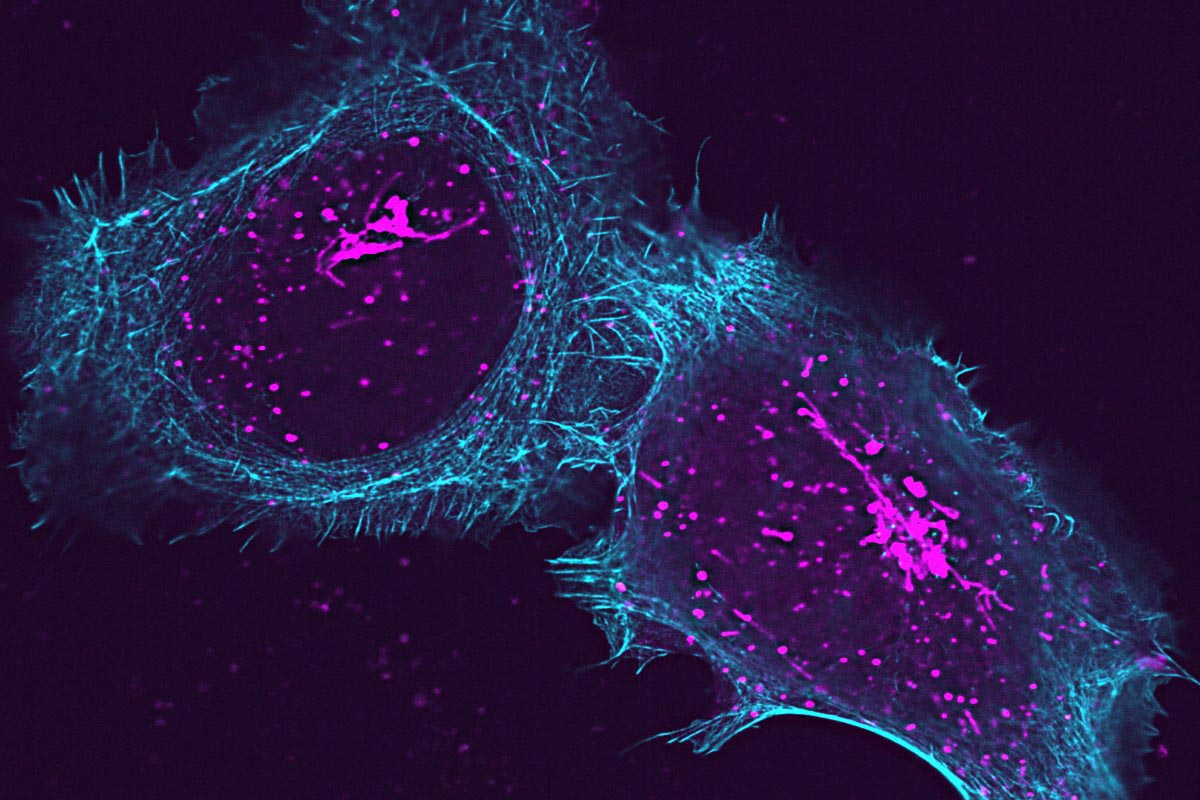
Scientists have uncovered a critical piece of the puzzle in autoimmune diseases: a protein that helps release immune response molecules.
By studying an ultra-rare condition, researchers identified ArfGAP2 as a key player in immune overactivity. Blocking it in mice prevented severe tissue damage, opening the door to potential treatments for a range of immune-related diseases, including COVID-19 and Alzheimer’s.
Unraveling the Mystery of Autoimmune Triggers
Autoimmune diseases affect over 15 million people in the U.S. They occur when the body mistakes its own healthy tissues for threats, triggering immune “false alarms.” This leads to immune cells attacking the body instead of harmful invaders. While scientists have long understood how these false alarms begin, the next step, how the immune system mobilizes its attack, has remained unclear.
Now, researchers at Washington University School of Medicine in St. Louis and the Perelman School of Medicine at the University of Pennsylvania have discovered a crucial piece of that puzzle. They’ve identified a previously unknown protein that helps trigger the release of infection-fighting molecules from cells. This protein appears to play a key role in both normal immune responses and harmful overreactions.
Because of its central role, the protein could be a promising target for developing therapies to treat autoimmune diseases and other conditions linked to immune system overactivity. The findings were published online on February 12 in Cell, and appeared in print on March 20.
A Breakthrough in Rare Disease Research
The team of researchers, co-led by Jonathan Miner, MD, PhD, an associate professor of Rheumatology and Microbiology and a member of Penn’s Colter Center for Autoimmunity, and David Kast, PhD, an assistant professor in the Department of Cell Biology & Physiology at WashU Medicine, made the discovery by studying a rare autoimmune disease called STING-associated vasculopathy with onset in infancy (SAVI). The condition is extremely rare, occurring in one of every 1 million births. It leads to the immune response attacking tissues in the lungs and limbs of patients, often resulting in death before adulthood.
Studying rare diseases where the root cause of the disease is caused by a single mutation can not only reveal the biological role of the affected gene and the disease-causing disruptions it incites, but also provide insight into more-common conditions.
The Role of STING in Autoimmune Attacks
SAVI is caused by changes to a protein in cells called STING, which ordinarily acts as a molecular watchdog that responds to the presence of viral DNA by activating the component of the cell that generates immune proteins. These immune proteins are then released from the cell to signal to the body’s immune system of the need to attack the viral invaders, and where in the body the immune cells need to go. In SAVI, STING is overactive, triggering constant immune activity that ultimately damages healthy tissue.
In addition to signaling the cell to make the immune-response proteins, called cytokines, the researchers discovered that STING also has a novel role in releasing those proteins from where they are made in the cell. How that release process worked was unknown, but finding a way to control it could be a promising avenue for treating SAVI as well as other autoimmune disorders.
Discovering ArfGAP2: The Missing Piece
Using immune cells that were sensitive to the disease-causing mutations in STING, the team performed a screen to identify proteins that prevented this sensitivity. One protein, ArfGAP2, stood out, as it seemed to be strongly connected to the final step when the immune response proteins get released.
The team further validated this finding in SAVI cells that did not produce ArfGAP2. Without it, STING could not drive the release the immune proteins.
“It’s like a train station and ArfGAP2 is acting as the conductor, directing which molecules are to be shipped out,” said Kast. “If STING and ArfGAP2 are not working together, the trains are stopped.”
The team reasoned that stopping the never-ending “trains” in SAVI’s constant immune response could be a means of treating the rare disease.
A Path Toward New Treatments
The team tested that idea in a mouse that was genetically modified to have SAVI, but did not produce the ArfGAP2 protein. They found that the lung- and limb-destroying immune response typical of the disease did not occur, which confirmed that if the protein could be neutralized, the overactive immune response could be turned off.
Miner, who initiated the project when he was at WashU Medicine, said that it is a promising target for other conditions that similarly lead to excess immune proteins of the same type. This could include the “cytokine storms” characteristic of COVID-19 or the brain inflammation linked to immune responses in Alzheimer’s disease.
Rare Diseases Unlocking Broader Medical Insights
“Diseases like SAVI that are super rare can provide valuable insights,” said Miner, “because if you can figure out how a rare disease mutation is working, you learn something about the normal proteins that all of us have. Then suddenly you’ve opened the doors to all these new avenues of potential therapies for many, many different classes of diseases.”
Reference: “ArfGAP2 promotes STING proton channel activity, cytokine transit, and autoinflammation” by Subhajit Poddar, Samuel D. Chauvin, Christopher H. Archer, Wei Qian, Jean A. Castillo-Badillo, Xin Yin, W. Miguel Disbennett, Cathrine A. Miner, Joe A. Holley, Teresa V. Naismith, W. Alexander Stinson, Xiaochao Wei, Yue Ning, Jiayuan Fu, Trini A. Ochoa, Nehalee Surve, Shivam A. Zaver, Kimberly A. Wodzanowski, Katherine R. Balka, Rajan Venkatraman, Canyu Liu, Kelly Rome, Will Bailis, Yoko Shiba, Sara Cherry, Sunny Shin, Clay F. Semenkovich, Dominic De Nardo, Sunnie Yoh, Elisha D.O. Roberson, Sumit K. Chanda, David J. Kast and Jonathan J. Miner, 12 February 2025, Cell.
DOI: 10.1016/j.cell.2025.01.027
This work was supported by NIH grant numbers R01 AI143982, R01 436 NS131480, R01 GM136925, as well as funding from the Colton Center for Autoimmunity and the Clayco Foundation to J.J.M. The content is solely the responsibility of the authors and does not necessarily represent the official views of the National Institutes of Health (NIH).
Never miss a breakthrough: Join the SciTechDaily newsletter.
Follow us on Google and Google News.