
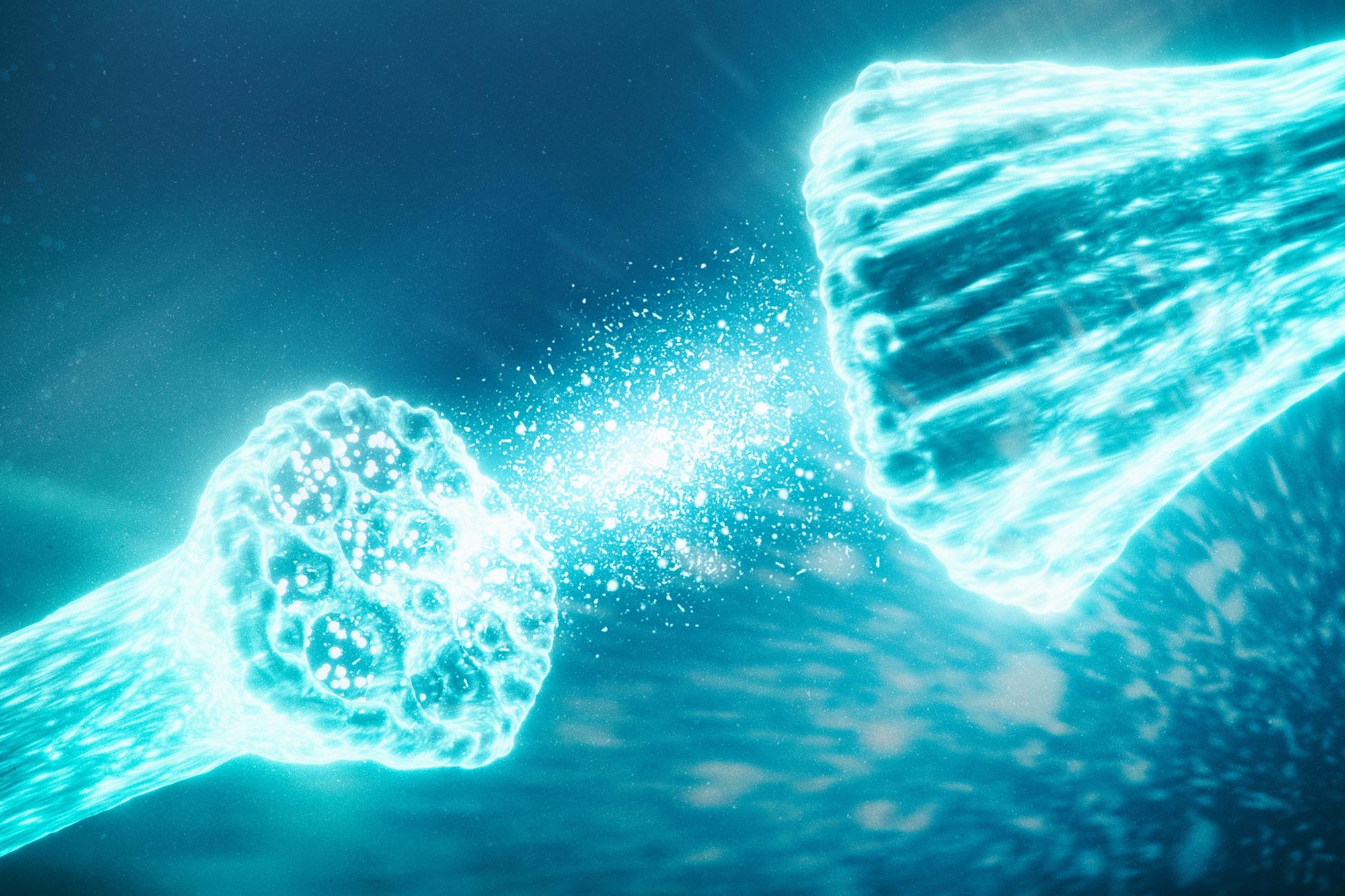
Scientists can finally hear the brain’s quietest messages—unlocking the hidden code behind how neurons think, decide, and remember.
Scientists have created a new protein that can capture the incoming chemical signals received by brain cells, not just the signals they send out. These incoming messages are carried by glutamate, a neurotransmitter that plays a central role in brain communication. Although glutamate activity is essential for how the brain functions, its signals are extremely subtle and fast, making them nearly impossible to observe until now.
This breakthrough allows researchers to record these faint chemical messages as they arrive at individual neurons, opening a new window into how the brain processes information.
Why this breakthrough matters
By detecting incoming signals, scientists can now explore how neurons actually compute information. Each neuron integrates thousands of inputs before producing an output, a process that underlies thinking, decision making, and memory. Being able to observe this process directly could help explain long-standing questions about how the brain works.
The discovery also has important implications for disease research. Abnormal glutamate signaling has been linked to conditions such as Alzheimer’s disease, schizophrenia, autism, and epilepsy. Having tools that can track these signals more precisely may help researchers identify what goes wrong in these disorders.
Drug development could benefit as well. Pharmaceutical researchers can use these sensors to see how experimental treatments affect real synaptic activity, potentially speeding up the development of more effective therapies.

A new protein that listens to neurons
The protein, developed by scientists at the Allen Institute and HHMI’s Janelia Research Campus, is a molecular “glutamate indicator” known as iGluSnFR4 (pronounced ‘glue sniffer’). It is sensitive enough to detect the weakest incoming chemical signals exchanged between neurons.
By revealing when and where glutamate is released, iGluSnFR4 offers a new way to interpret the complex patterns of activity that support learning, memory, and emotion. Researchers can now observe neurons communicating inside the brain in real time, rather than inferring activity indirectly. The findings were recently published in Nature Methods and could significantly change how neural activity is measured and analyzed in neuroscience research.
High-speed video of cultured neurons expressing iGluSnFR3 (100 Hz, measured on a simple widefield microscope). Neurons have been silenced with TTX, blocking evoked glutamate release. The flashes are iGluSnFR3 responding to spontaneous release of individual vesicles, on average containing just 500 molecules of glutamate. Credit: Allen Institute
How neurons communicate inside the brain
To appreciate the importance of this advance, it helps to understand how brain cells interact. Billions of neurons communicate by sending electrical pulses down long, branch-like structures called axons. When an electrical signal reaches the end of an axon, it cannot cross the tiny gap to the next cell, known as a synapse.
Instead, the signal triggers the release of chemical messengers called neurotransmitters into the synapse. Glutamate, the most common neurotransmitter in the brain, is especially important for memory, learning, and emotion. When glutamate reaches the next neuron, it can cause that cell to fire and pass the signal along.
This process resembles a chain reaction, but it is far more intricate. Each neuron receives input from thousands of others, and only specific combinations and patterns of those inputs determine whether the receiving neuron activates. With this new protein sensor, scientists can now identify which patterns of incoming signals lead to neuronal firing.

Capturing signals that were once invisible
Until now, observing these incoming signals in living brain tissue was nearly impossible. Earlier technologies were either too slow or not sensitive enough to measure activity at individual synapses. As a result, researchers could only see fragments of neural communication rather than the full exchange.
“It’s like reading a book with all the words scrambled and not understanding the order of the words or how they’re arranged,” said Kaspar Podgorski, Ph.D., a lead author of the study and senior scientist at the Allen Institute. “I feel like what we’re doing here is adding the connections between those neurons, and by doing that, we now understand the order of the words on the pages, and what they mean.”
Before protein sensors like iGluSnFR4 existed, scientists were limited to recording outgoing signals from neurons. The incoming messages were too weak and brief to detect, leaving a major gap in understanding how brain cells communicate.
Filling a critical gap in neuroscience
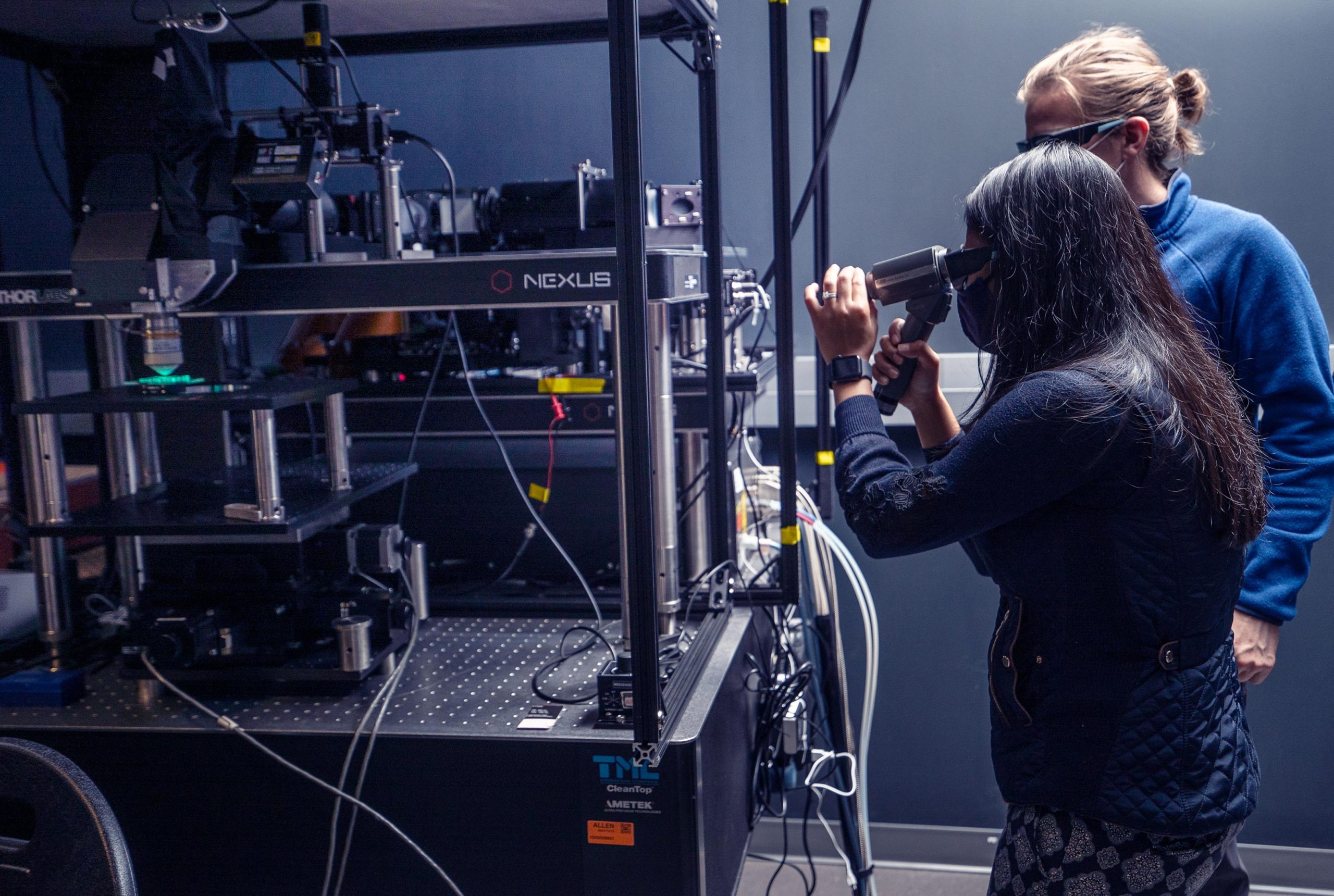
“Neuroscientists have pretty good ways of measuring structural connections between neurons, and in separate experiments, we can measure what some of the neurons in the brain are saying, but we haven’t been good at combining these two kinds of information. It’s hard to measure what neurons are saying to which other neurons,” Podgorski said. “What we have invented here is a way of measuring information that comes into neurons from different sources, and that’s been a critical part missing from neuroscience research.”
Jeremy Hasseman, Ph.D., a scientist at HHMI’s Janelia Research Campus, emphasized the collaborative effort behind the discovery. “The success of iGluSnFR4 stems from our close collaboration started at HHMI’s Janelia Research Campus between the GENIE Project team and Kaspar’s lab. That research has extended to the phenomenal in vivo characterization work done by the Allen Institute’s Neural Dynamics group,” he said. “This was a great example of collaboration across labs and institutes to enable new discoveries in neuroscience.”
Opening the door to new discoveries
This advance removes a major obstacle in modern neuroscience by making it possible to directly observe how brain cells receive information. With iGluSnFR4 now available to researchers through Addgene, scientists have a powerful new tool to explore how the brain functions at its most fundamental level. As this technology is adopted more widely, it may help uncover answers to some of the brain’s most enduring mysteries.
Reference: “Glutamate indicators with increased sensitivity and tailored deactivation rates” by Abhi Aggarwal, Adrian Negrean, Yang Chen, Rishyashring Iyer, Daniel Reep, Anyi Liu, Anirudh Palutla, Michael E. Xie, Bryan J. MacLennan, Kenta M. Hagihara, Lucas W. Kinsey, Julianna L. Sun, Pantong Yao, Jihong Zheng, Arthur Tsang, Getahun Tsegaye, Yonghai Zhang, Ronak H. Patel, Benjamin J. Arthur, Julien Hiblot, Philipp Leippe, Miroslaw Tarnawski, Jonathan S. Marvin, Jason D. Vevea, Srinivas C. Turaga, Alison G. Tebo, Matteo Carandini, L. Federico Rossi, David Kleinfeld, Arthur Konnerth, Karel Svoboda, Glenn C. Turner, Jeremy P. Hasseman and Kaspar Podgorski, 23 December 2025, Nature Methods.
DOI: 10.1038/s41592-025-02965-z
Never miss a breakthrough: Join the SciTechDaily newsletter.
Follow us on Google and Google News.
1 Comment
It would be interesting to know how Glutamate is formed in the brain and what precursors in the diet might generate that formation; not to mention what might interfere with that process.