
Close Menu
    Facebook X (Twitter) Instagram
    SciTechDaily
    • Biology
    • Chemistry
    • Earth
    • Health
    • Physics
    • Science
    • Space
    • Technology
    Facebook X (Twitter) Pinterest YouTube RSS
    SciTechDaily
    Home»Science»Scientists Warn of Insects Damaging Plants at Unprecedented Levels
    Science

    Scientists Warn of Insects Damaging Plants at Unprecedented Levels

    By University of WyomingDecember 11, 2022No Comments3 Mins Read
    Facebook Twitter Pinterest Telegram LinkedIn WhatsApp Email Reddit
    Share
    Facebook Twitter LinkedIn Pinterest Telegram Email Reddit
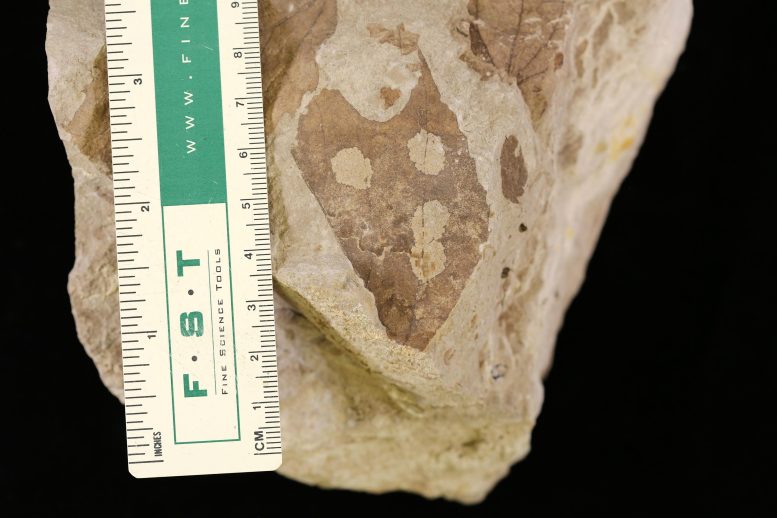
    Insect-Damaged Leaf Fossil
    This fossil leaf from Wyoming’s Hanna Basin, about 54 million years old, shows damage by insects. Credit: Lauren Azevedo-Schmidt

    Insect damage to plants is at an all-time high, driven by human influence.

    Insects today are causing unprecedented levels of damage to plants, even as insect numbers decline, according to new research led by scientists from the University of Wyoming.

    In the first-of-its-kind study, insect herbivore damage of modern-era plants was compared with that of fossilized leaves from as far back as the Late Cretaceous period, nearly 67 million years ago. The findings were recently published in the prestigious journal Proceedings of the National Academy of Sciences.

    “Our work bridges the gap between those who use fossils to study plant-insect interactions over deep time and those who study such interactions in a modern context with fresh leaf material,” says the lead researcher, University of Wyoming Ph.D. graduate Lauren Azevedo-Schmidt, now a postdoctoral research associate at the University of Maine. “The difference in insect damage between the modern era and the fossilized record is striking.”

    Azevedo-Schmidt conducted the research along with the University of Wyoming Department of Botany and Department of Geology and Geophysics Professor Ellen Currano, and Assistant Professor Emily Meineke of the University of California-Davis.
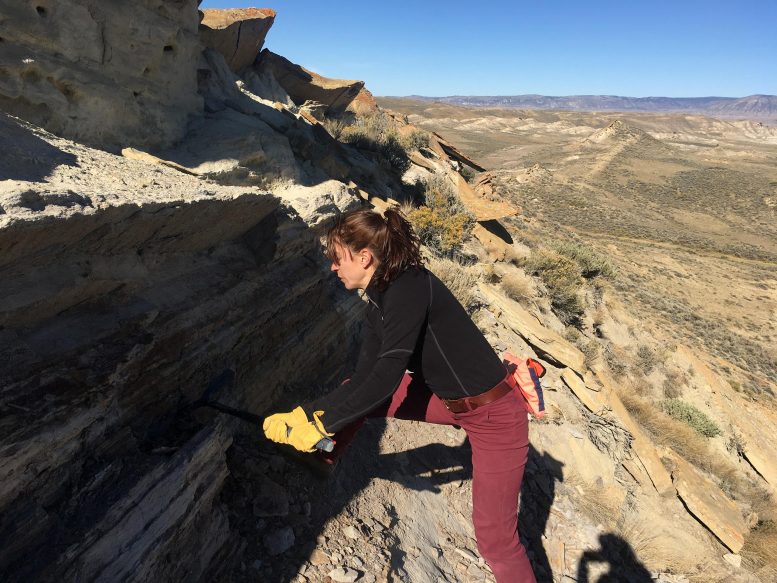
    Lauren Azevedo-Schmidt Fossilized Plant Search
    Lauren Azevedo-Schmidt searches for fossilized plants in Wyoming’s Hanna Basin in a deposit that is about 60 million years old. She and other researchers compared fossil leaves with modern samples and found higher rates of insect damage today. Credit: Lauren Azevedo-Schmidt

    In the study, fossilized leaves with insect feeding damage from the Late Cretaceous through the Pleistocene era, a little over 2 million years ago, were examined. They were then compared with leaves collected from three modern forests by Azevedo-Schmidt. The detailed research looked at different types of damage caused by insects, finding marked increases in all recent damage compared to the fossil record.

    The Role of Human Activity in Plant-Insect Dynamics

    “Our results demonstrate that plants in the modern era are experiencing unprecedented levels of insect damage, despite widespread insect declines,” wrote the scientists, who suggest that the disparity can be explained by human activity.

    Although more research is necessary to determine the precise causes of increased insect damage to plants, the scientists say a warming climate, urbanization, and the introduction of invasive species likely have had a major impact.

    “We hypothesize that humans have influenced (insect) damage frequencies and diversities within modern forests, with the most human impact occurring after the Industrial Revolution,” the researchers wrote. “Consistent with this hypothesis, herbarium specimens from the early 2000s were 23 percent more likely to have insect damage than specimens collected in the early 1900s, a pattern that has been linked to climate warming.”

    But climate change doesn’t fully explain the increase in insect damage, they say.

    “This research suggests that the strength of human influence on plant-insect interactions is not controlled by climate change alone but, rather, the way in which humans interact with the terrestrial landscape,” the researchers concluded.

    Reference: “Insect herbivory within modern forests is greater than fossil localities” by Lauren Azevedo-Schmidt, Emily K. Meineke and Ellen D. Curran, 10 October 2022, Proceedings of the National Academy of Sciences.
    DOI: 10.1073/pnas.2202852119

    Never miss a breakthrough: Join the SciTechDaily newsletter.
    Follow us on Google and Google News.

    Fossils Insect Paleontology University of Wyoming
    Share. Facebook Twitter Pinterest LinkedIn Email Reddit

    Related Articles

    Scientists Discover Ancient Bees Built Nests Inside Animal Bones

    Fossils Inside Fossils: The Bizarre Discovery Hidden in a Caribbean Cave

    Real-Life Monster: Scientists Discover Strange Wasp From 99 Million Years Ago

    The Preservation of Colors in Fossil Insects

    Cretaceous Period Sankofa Pyrenaica Fossilized Eggs Are Unusually Shaped

    Burtele Foot Points to Other Past Hominins

    Microraptor Feathers Were Black With Iridescent Sheen

    Jurassic Period Super-Sized Fleas Had Armored Mouthparts to Attack the Thick Hide of Dinosaurs

    Hundreds of Lost Fossils From the Darwin Collection Rediscovered by the British Geological Survey

    Leave A Reply Cancel Reply

    • Facebook
    • Twitter
    • Pinterest
    • YouTube

    Don't Miss a Discovery

    Subscribe for the Latest in Science & Tech!

    Trending News

    One of the Universe’s Largest Stars May Be Getting Ready To Explode

    Scientists Discover Enzyme That Could Supercharge Ozempic-Like Weight Loss Drugs

    Popular Sweetener Linked to DNA Damage – “It’s Something You Should Not Be Eating”

    Ancient “Rock” Microbes May Reveal How Complex Life Began

    Researchers Capture Quantum Interference in One of Nature’s Rarest Atoms

    “A Plague Is Upon Us”: The Mass Death That Changed an Ancient City Forever

    Scientists Discover Game-Changing New Way To Treat High Cholesterol

    This Small Change to Your Exercise Routine Could Be the Secret to Living Longer

    Follow SciTechDaily
    • Facebook
    • Twitter
    • YouTube
    • Pinterest
    • Newsletter
    • RSS
    SciTech News
    • Biology News
    • Chemistry News
    • Earth News
    • Health News
    • Physics News
    • Science News
    • Space News
    • Technology News
    Recent Posts
    • Scientists Discover a Surprising Way To Make Bread Healthier and More Nutritious
    • Natural Compounds Boost Bone Implant Success While Killing Bacteria and Cancer Cells
    • After 60 Years, Scientists Uncover Unexpected Brain Effects of Popular Diabetes Drug Metformin
    • New Research Uncovers Hidden Side Effects of Popular Weight-Loss Drugs
    • Scientists Rethink Extreme Warming After Surprising Ocean Discovery
    Copyright © 1998 - 2026 SciTechDaily. All Rights Reserved.
    • Science News
    • About
    • Contact
    • Editorial Board
    • Privacy Policy
    • Terms of Use

    Type above and press Enter to search. Press Esc to cancel.