
Close Menu
    Facebook X (Twitter) Instagram
    SciTechDaily
    • Biology
    • Chemistry
    • Earth
    • Health
    • Physics
    • Science
    • Space
    • Technology
    Facebook X (Twitter) Pinterest YouTube RSS
    SciTechDaily
    Home»Space»See the Final Stages of a Star’s Life via the Hubble Space Telescope
    Space

    See the Final Stages of a Star’s Life via the Hubble Space Telescope

    By European Space Agency (ESA)August 30, 2019No Comments2 Mins Read
    Facebook Twitter Pinterest Telegram LinkedIn WhatsApp Email Reddit
    Share
    Facebook Twitter LinkedIn Pinterest Telegram Email Reddit
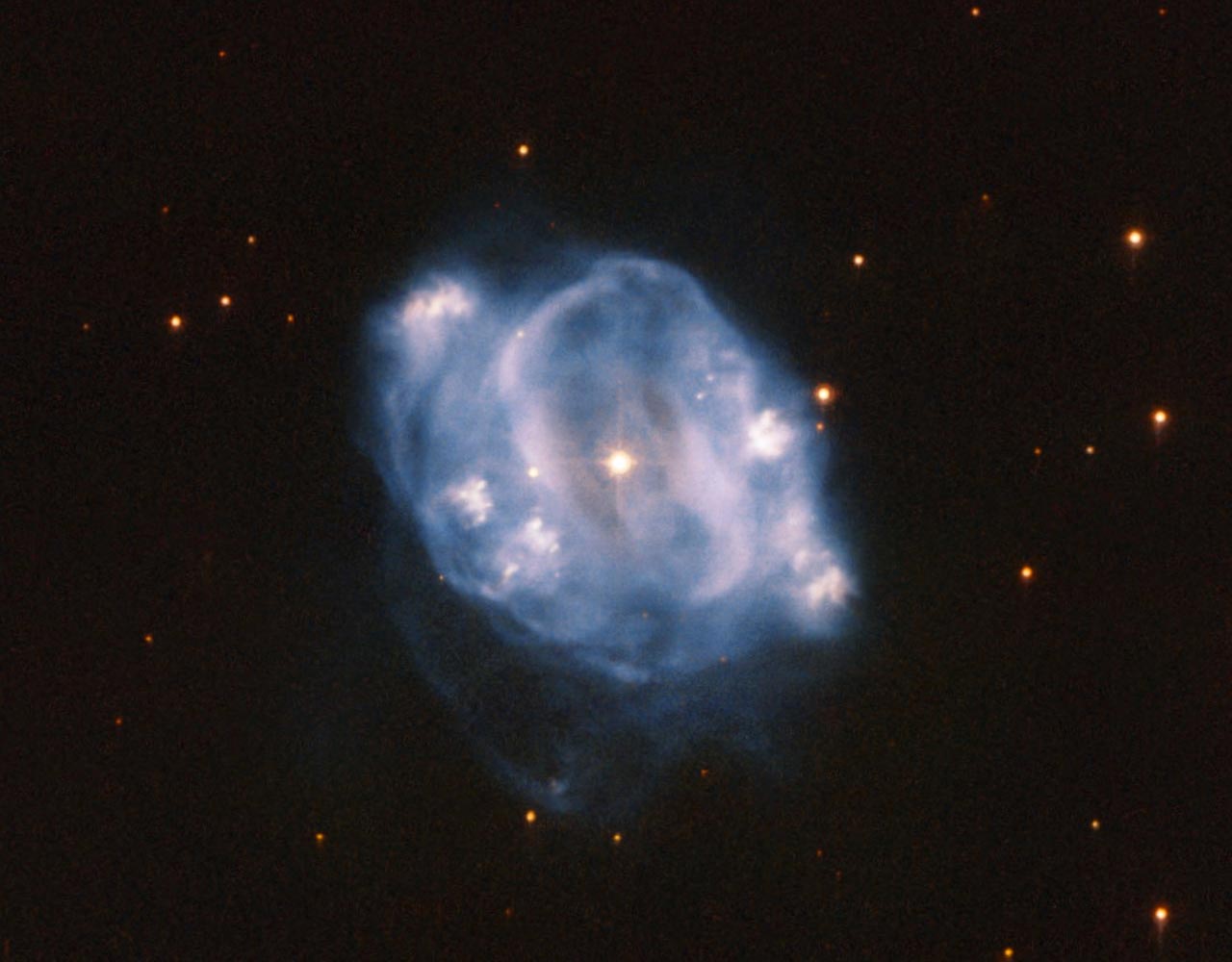
    NGC 5307
    NGC 5307, a planetary nebula that lies about 10,000 light-years from Earth. Credit: ESA/Hubble & NASA, R. Wade et al.

    This image from the NASA/ESA Hubble Space Telescope shows NGC 5307, a planetary nebula that lies about 10,000 light-years from Earth. It can be seen in the constellation Centaurus (the Centaur), which can be seen primarily in the southern hemisphere. A planetary nebula is the final stage of a Sun-like star. As such, planetary nebulas allow us a glimpse into the future of our own solar system. A star like our Sun will, at the end of its life, transform into a red giant. Stars are sustained by the nuclear fusion that occurs in their core, which creates energy. The nuclear fusion processes constantly try to rip the star apart. Only the gravity of the star prevents this from happening.

    At the end of the red giant phase of a star, these forces become unbalanced. Without enough energy created by fusion, the core of the star collapses in on itself, while the surface layers are ejected outward. After that, all that remains of the star is what we see here: glowing outer layers surrounding a white dwarf star, the remnants of the red giant star’s core.

    This isn’t the end of this star’s evolution though — those outer layers are still moving and cooling. In just a few thousand years they will have dissipated, and all that will be left to see is the dimly glowing white dwarf.

    Never miss a breakthrough: Join the SciTechDaily newsletter.
    Follow us on Google and Google News.

    European Space Agency Hubble Space Telescope NASA Nebula
    Share. Facebook Twitter Pinterest LinkedIn Email Reddit

    Related Articles

    Astronomers Build Incredible 3D Visualization of Exploded Star Using NASA’s Great Observatories [Video]

    Hubble’s “Jellyfish” Portrait of Star’s Gaseous Glow

    Astronomers Find Bizarre Alignment of Planetary Nebulae in the Milky Way

    Panoramic View of 30 Doradus – The Brightest Star-Forming Region in Our Galactic Neighborhood

    Hubble Captures New Image of Messier 9

    New Images of Orion Nebula Show Young Stars Hidden in Gas and Dust Clouds

    Researchers Discover First Intermediate-Mass Black Hole

    ESA’s Hershel Space Telescope Captures Incredible Views of Eagle Nebula

    Hubble Reaches New Milestone: 10,000th Scientific Paper Published

    Leave A Reply Cancel Reply

    • Facebook
    • Twitter
    • Pinterest
    • YouTube

    Don't Miss a Discovery

    Subscribe for the Latest in Science & Tech!

    Trending News

    New Study Reveals Why Ozempic Works Better for Some People Than Others

    Climate Change Is Altering a Key Greenhouse Gas in a Way Scientists Didn’t Expect

    New Study Suggests Gravitational Waves May Have Created Dark Matter

    Scientists Discover Why the Brain Gets Stuck in Schizophrenia

    Scientists Engineer “Tumor-Eating” Bacteria That Devour Cancer From Within

    Even “Failed” Diets May Deliver Long-Term Health Gains, Study Finds

    NIH Scientists Discover Powerful New Opioid That Relieves Pain Without Dangerous Side Effects

    Collapsing Plasma May Hold the Key to Cosmic Magnetism

    Follow SciTechDaily
    • Facebook
    • Twitter
    • YouTube
    • Pinterest
    • Newsletter
    • RSS
    SciTech News
    • Biology News
    • Chemistry News
    • Earth News
    • Health News
    • Physics News
    • Science News
    • Space News
    • Technology News
    Recent Posts
    • “Pretty Close to Home”: The Hidden Earthquake Threat Beneath Seattle
    • The Surprising Reason You Might Want To Sleep Without a Pillow
    • Household Cats Could Hold the Secret to Fighting Breast Cancer
    • Scientists Say This Natural Hormone Reverses Obesity by Targeting the Brain
    • This 15,000-Year-Old Discovery Changes What We Know About Early Human Creativity
    Copyright © 1998 - 2026 SciTechDaily. All Rights Reserved.
    • Science News
    • About
    • Contact
    • Editorial Board
    • Privacy Policy
    • Terms of Use

    Type above and press Enter to search. Press Esc to cancel.