
Long-term memories can form without short-term memory, revealing a new brain pathway.
Scientists at the Max Planck Florida Institute for Neuroscience have uncovered a novel mechanism for the formation of long-term memories in the brain. Their research indicates that long-term memories can develop independently of short-term memories, presenting exciting possibilities for understanding memory-related conditions.
A New Perspective on Memory Formation
Our brain works diligently to record experiences as memories, creating representations of daily events that remain with us for short periods. Current scientific theories on memory formation suggest that short-term memories are stored in what we might imagine as a temporary art exhibition in the brain, eventually cleared out to make space for new experiences. A small fraction of these short-term memories—those most significant to us—are transferred to a more permanent exhibit, our long-term memory, where they can be preserved for days, years, or even decades.
The most prevalent theories suggest this is a linear process. Our experience is encoded into a short-term memory, which is then consolidated into a long-term memory. However, a new study by Dr. Myung Eun Shin, Dr. Paula Parra-Beuno, and MPFI Scientific Director Dr. Ryohei Yasuda suggests that there may be another way to long-term memory formation.
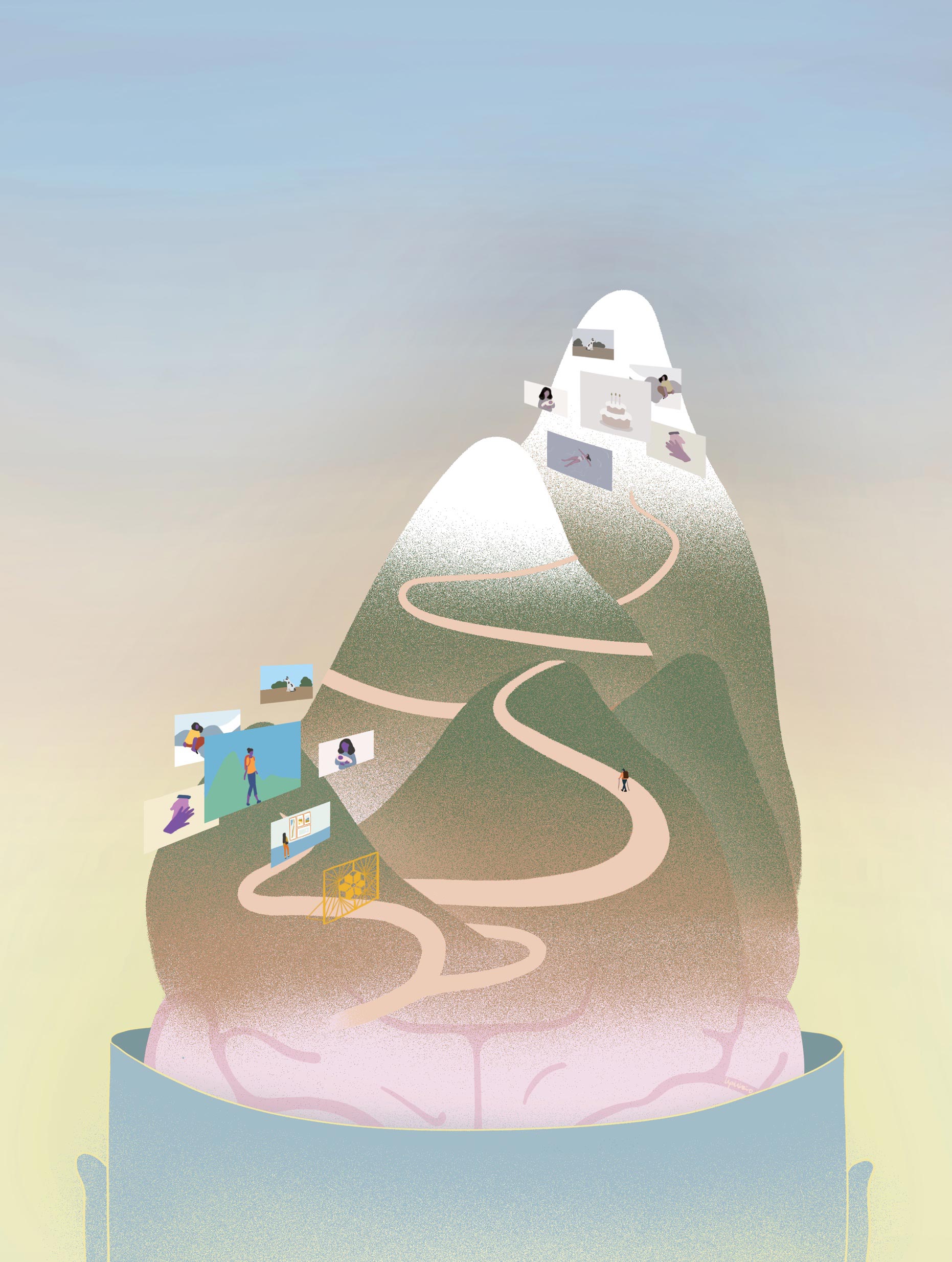
“This discovery is akin to finding a secret pathway to a permanent gallery in the brain,” said Dr. Shin, the study’s lead author. “The prevailing theory suggested a single pathway, where short-term memories were consolidated into long-term memories. However, we now have strong evidence of at least two distinct pathways to memory formation—one dedicated to short-term memories and another to long-term memories. This could mean our brains are more resilient than previously thought.”
The Key Finding: Disrupting short-term memory formation did not block long-term memory
The research team focused on a specific enzyme in neurons called CaMKII, which is critical for short-term memory formation. Previously, they developed an optogenetic approach that uses light to temporarily deactivate CaMKII. With this tool in hand, the team set out to use light to block short-term memory formation in a mouse.
Mice prefer dark spaces and, when given a choice, will immediately enter a dark space from a brightly lit one. However, if a mouse is frightened in a particular dark space, the memory of the frightening experience will alter its behavior, and the mouse will avoid entering the dark space again. When the research team used their tool to disrupt memory formation, even those mice that had a frightening experience an hour earlier entered the dark space, suggesting they had no memory of the experience. The scientists had successfully blocked short-term memory formation.
What happened next was surprising to the research team. A day, week, or even a month later, these mice were altering their behavior to avoid where they were previously frightened. Mice that didn’t seem to remember the frightening experience an hour after it occurred, showed clear evidence of remembering at later times. In other words, blocking short-term memory of the event did not disrupt long-term memory.
“We were initially quite surprised by this observation, as it was inconsistent with how we thought memories were formed. We didn’t think it was possible to have a long-term memory of an event without a short-term memory. However, when we repeated these experiments and used multiple tools and approaches to verify our findings, we were convinced,” describes Dr. Shin. “Rather than long-term memory formation being a linear process, that requires short-term memory, a parallel pathway to long-term memory formation that bypasses short-term memory must exist.”
Implications for Memory Dysfunction
This study has changed the model of how memories are formed in the brain. Significant scientific advances often come after previous models of understanding are overturned, and the team is excited to see where this line of research will take them.
“This new finding has revised our understanding. We are now investigating how this newly discovered pathway to long-term memory formation occurs. We are excited to see what we can learn and what this could mean for preserving long-term memory retention, even when short-term memory is compromised by aging or cognitive impairment,” says Dr. Yasuda.
Reference: “Formation of long-term memory without short-term memory revealed by CaMKII inhibition” by Myung Eun Shin, Paula Parra-Bueno and Ryohei Yasuda, 5 December 2024, Nature Neuroscience.
DOI: 10.1038/s41593-024-01831-z
This research was funded by the National Institute of Health and the Max Planck Society.
Never miss a breakthrough: Join the SciTechDaily newsletter.
Follow us on Google and Google News.
1 Comment
Perhaps our subconscious brain pays attention better than our conscious brain.