
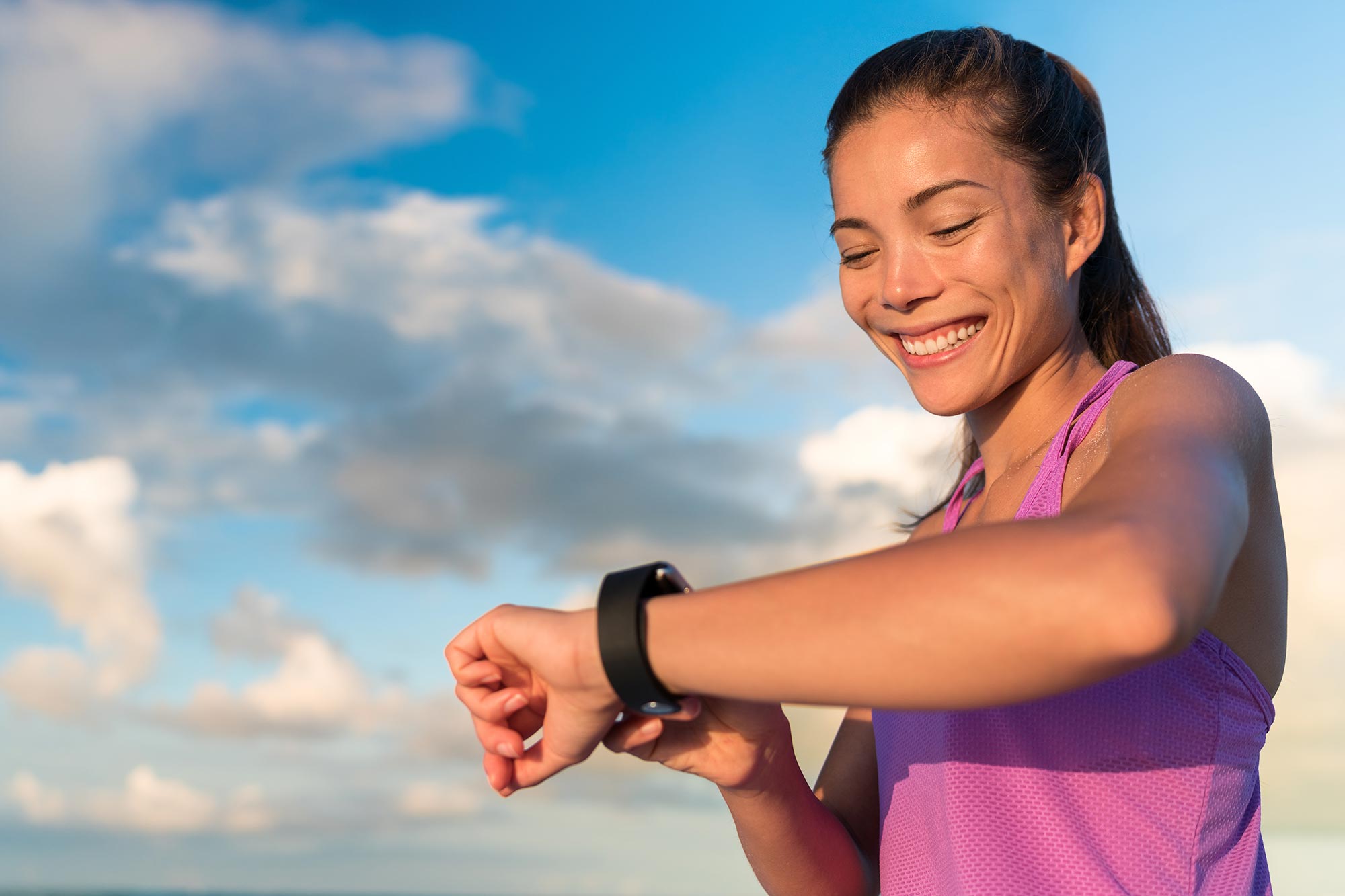
Step it up: Activity trackers and smartwatches prove useful as a research tool for insights on physical activity and heart health.
The smart watches seen on the wrists of roughly 1 in 5 Americans could be more than just a fun gimmick but a potentially useful research tool to track habitual physical activity levels. People who took more steps daily, as tracked by their watch, had lower blood pressure on average than those taking fewer steps in a study presented at the American College of Cardiology’s Annual Scientific Session Together with World Congress of Cardiology (ACC.20/WCC).
The research is part of the Framingham Heart Study, a project focusing on factors affecting heart disease that has been ongoing for more than 70 years. Researchers analyzed data from 638 study participants who were asked to wear an Apple Watch daily and record their blood pressure at home weekly. Over the course of the study, participants’ average systolic blood pressure was 122 mm Hg and average diastolic blood pressure was 76 mm Hg, levels that are considered normal to slightly elevated according to the 2017 ACC/AHA High Blood Pressure in Adults guideline.
The study is one of the first to use commercially available wearable devices to track habitual physical activity in a large group of people in the context of daily life outside of a health care setting or research center.
“Measuring habitual physical activity in community-based settings in this way distinguishes our study from prior studies that have looked at either self-reported physical activity or used accelerometers to measure daily activity for only a short amount of time, usually about a week,” said Mayank Sardana, MD, a clinical fellow at the University of California, San Francisco, and the study’s lead author.

Although the study was observational and does not show cause and effect, the findings align with previous research suggesting that being more physically active can help lower blood pressure. After accounting for demographic factors, the study found participants’ systolic blood pressure was about 0.45 points lower for every 1,000 daily steps taken, meaning that a person taking 10,000 steps daily would have a systolic blood pressure 2.25 points lower than a person taking just 5,000 steps daily, on average. Given that study participants had an average systolic blood pressure of 122 mm Hg, this amount could make the difference between blood pressure that is considered normal (less than 120 mm Hg) and elevated (120 mm Hg or higher).
“This study solidifies our understanding of the relationship between physical activity and blood pressure and raises the possibility that obesity or body mass index accounts for a lot of that relationship,” Sardana said. “Going forward, it would be useful to look at how smart devices might be leveraged to promote physical activity, reduce the burden of obesity and potentially reduce blood pressure.”
Researchers excluded data from the participants with less than 30 days of wear time to ensure participants were accustomed to wearing the watch. They also excluded data from the days on which the watch was worn for less than five hours to ensure the step counts reflected most of a person’s daily movements. Over the course of about five months, participants averaged about 7,500 steps per day. Those with a higher daily step count had significantly lower systolic and diastolic blood pressure. In a secondary analysis, the researchers found the association between step count and blood pressure was no longer significant if BMI was taken into account, which suggests BMI might be a mediating factor in the relationship.
However, the study was not designed to discern whether BMI affects step count or the other way around.
“We should look to future studies to answer the question of directionality with a randomized trial or cohort intervention,” Sardana said.
Sardana added that the electronic Framingham Heart Study cohort is the largest sample of participants developed leveraging the seminal Framingham Heart Study who are providing continuous data from smart devices for research. Their findings support the role of leveraging the data from wearable devices in epidemiology research to enhance the understanding of the relationship between cardiovascular risk factors and cardiovascular disease.
Nearly half of U.S. adults are estimated to have high blood pressure, and many don’t know they have it. Over time, elevated blood pressure can weaken the heart, blood vessels, kidneys and other parts of the body.
ACC.20/WCC will take place on March 28-30, 2020, bringing together cardiologists and cardiovascular specialists from around the world to share the newest discoveries in treatment and prevention.
Never miss a breakthrough: Join the SciTechDaily newsletter.
Follow us on Google and Google News.