

A major study by Flinders University has linked regular snoring to increased risks of hypertension, particularly in overweight middle-aged men. Utilizing home-based monitoring, the research highlights snoring’s significant impact on blood pressure, emphasizing the importance of including it in clinical assessments and potential therapeutic strategies to mitigate hypertension.
That loud snoring keeping you up at night could be more than a noisy annoyance – it could be an early warning sign of dangerous hypertension.
New research from Flinders University sleep experts found that people, particularly overweight middle-aged men, who regularly snore at night are more likely to have elevated blood pressure and uncontrolled hypertension.
The study, published in the prestigious journal npj Digital Medicine is the largest objective study and the first to use multiple night home-based monitoring technologies over a prolonged period to explore the association between snoring and hypertension.
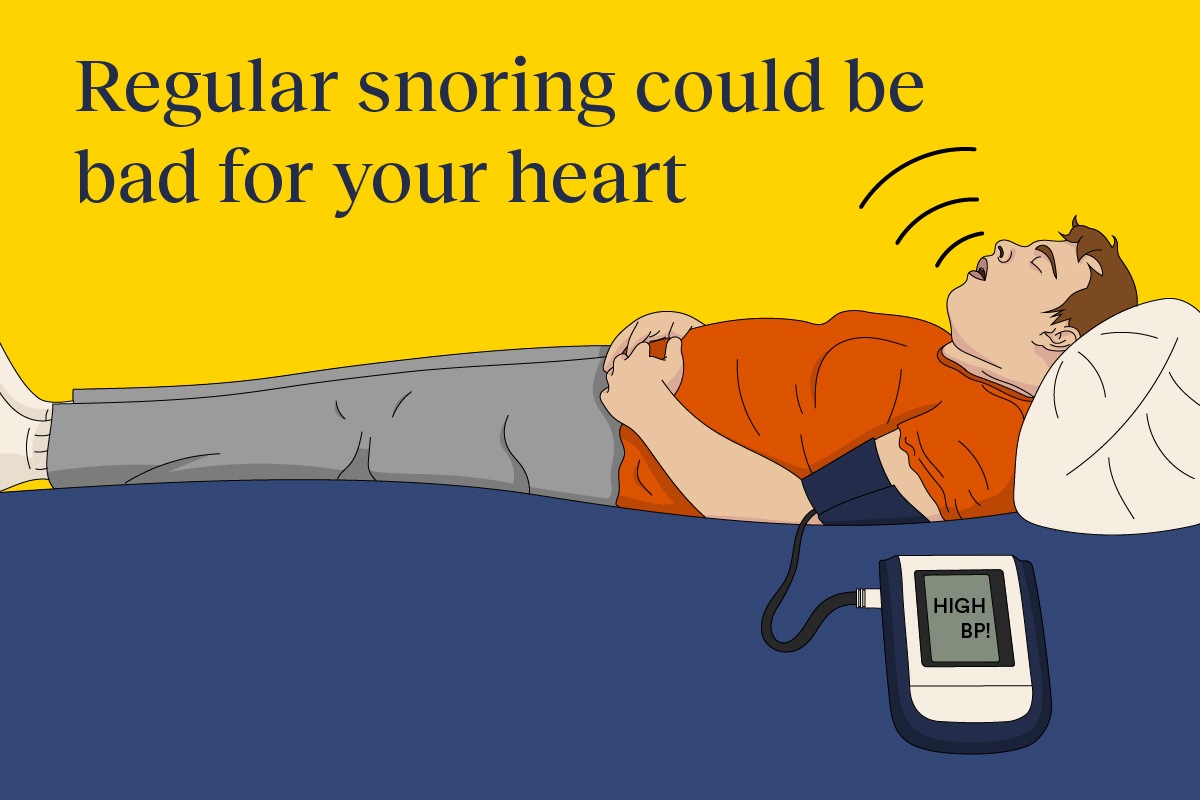
“For the first time, we can objectively say that there is a significant connection between regular nighttime snoring and high blood pressure,” says lead author Dr. Bastien Lechat from the College of Medicine and Public Health.
“We found that 15 percent of all participants in the study, who were primarily overweight men, snore for more than 20 percent of the night on average and that this regular nightly snoring is associated with elevated blood pressure and uncontrolled hypertension,” says Dr. Lechat.
“These results emphasize the significance of considering snoring as a factor in healthcare and treatment for sleep-related issues, especially in the context of managing hypertension.”
The Overlapping of Snoring and Sleep Apnea
Snoring is a common occurrence, affecting a large percentage of the population, and is often underestimated in terms of its negative health implications. Snoring and sleep apnea often overlap indicating shared common causes.
“We observed that in those who snore regularly the risk of having uncontrolled hypertension was almost double. This risk almost doubled again in people who snored regularly and had sleep apnea versus those who did not snore regularly,” says Professor Danny Eckert, Director of Sleep Health at Flinders University and senior author of the paper.
Snoring alone may also serve as an early warning sign of high blood pressure, as poor sleep quality due to snoring may worsen the risk of hypertension.
Health Implications and Study Methodology
Hypertension is the medical term for high blood pressure over a long period of time. It can lead to serious health problems such as heart failure, stroke, heart disease, or kidney disease.
The study used sleep tracker data collected by an under-mattress sensor to detect snoring and sleep apnea, along with an FDA-registered at-home blood pressure monitor in more than 12,000 participants globally over a nine-month period.
“This is the largest study to date investigating the potential relationships between snoring, sleep apnea, and hypertension using objective assessments in people’s homes, and it reveals important insights into the potential consequences of snoring on hypertension risk,” says Dr. Lechat.
“It also highlights the need to consider snoring as part of clinical care and management of sleep problems, particularly in the context of hypertension management.
“The findings of this study pave the way to further investigate whether therapeutic interventions directed toward snoring can reduce hypertension and reduce the risks associated with it,” he adds.
If you experience snoring along with signs of inadequate sleep, excessive sleepiness or observed breathing issues during sleep, it’s advisable to have a conversation with your doctor or a specialist who may recommend a sleep study.
Reference: “Regular snoring is associated with uncontrolled hypertension” by Bastien Lechat, Ganesh Naik, Sarah Appleton, Jack Manners, Hannah Scott, Duc Phuc Nguyen, Pierre Escourrou, Robert Adams, Peter Catcheside and Danny J. Eckert, 17 February 2024, npj Digital Medicine.
DOI: 10.1038/s41746-024-01026-7
Dr. Lechat and Professor Eckert are supported by National Health and Medical Research Council (NHMRC) of Australia Fellowships.
Never miss a breakthrough: Join the SciTechDaily newsletter.
Follow us on Google and Google News.
2 Comments
I have conducted sleep studies, and this study misses the mark. They show no causal link between snoring and high blood pressure, just a correlation which they don’t really understand. They ignored sleep position, and especially head-of bed elevation, and its impact on brain circulation. Studies from NASA and others show that sleeping with the head of the bed elevated between 10 and 30 degrees is optimal for brain and heart circulation. Sleeping too flat pressurizes the brain and reduces brain circulation, resulting in reduced sugar and oxygen in the brain throughout the night. This affects the many brain centers that control things like breathing and heart function. Central sleep apnea, which is caused by dysfunction of the respiratory centers of the brain stem, has been treated with head-of-bed elevation. Glaucoma, another result of high head pressure from sleeping too flat, is also known to be treated with head-of-bed elevation. We have shown that migraines are a defense mechanism response to get the brain fresh blood with more sugar and oxygen. When people raise the heads of their bed, their chronic migraines stop happening. The mind is also less groggy and the sinuses are not stuffy in the morning when sleeping elevated. Snoring is caused by sleep position, too, and is reduced to some extent by elevating the head of the bed.
This effect of sleep position on head and brain pressure and lack of circulation is worse in obese people, as is known. This is because, when lying down, their heavy abdomens press on their descending aorta and ascending veins, creating pressure resistance to blood flow down the body and back. This shifts blood towards the head, increasing brain and head pressure and reducing overall brain and head circulation. In fact, obese people suffer more from glaucoma and sleep apnea due to this excessive abdominal pressure and its effect on the brain. This also means that their brains are not getting the circulation they need, affecting the control centers for blood pressure and respiration, among other things.
Elevating the head of the bed could help solve this problem. It can reduce snoring, improve brain circulation, and improve brain function. So the problem can be explained by sleep position, and treated by raising the head of the bed. Sleep studies, however, ignore this issue entirely, which is a major oversight, and why research into the snoring/hypertension link has been inconsistent and confusing. They left out an essential aspect of sleeping, which is the impact of sleep position on brain function, which affects heart function, as well. In fact, NASA scientists found 30 degree head of bed elevation optimal for brain and heart circulation.
The article above concludes with a self-serving commercial: “If you experience snoring along with signs of inadequate sleep, excessive sleepiness or observed breathing issues during sleep, it’s advisable to have a conversation with your doctor or a specialist who may recommend a sleep study.” Of course, if they get you in a sleep study, they won’t consider sleep position or head of bed elevation, making the study a sales pitch for a CPAP mask.
As a now eighty year old lay male with documented multiple nearly subclinical non-IgE-mediated food and toxic food additive allergies I cannot dispute Mr. Singer’s findings but I can add to them with personal experience proving to me that the underlying cause, especially in older adults, is chronic inflammation due to long-term (e.g., months to decades; highly individual; many individual variables) very, very mild allergy reactions (e.g., Dr. Arthur F. Coca, by 1935) which mainstream medicine still fails to recognize and/or research as true allergies. And, snoring is just one of the least harmful symptoms of my kind of allergy reactions which may include a low oral temperature (sluggish metabolism), rapid pulse, a high blood serum level of uric acid (asymptomatic gout), a calcium (natural tranquilizer) deficiency, depression, insomnia, obesity, osteoporosis, failed or failing joints, premature tooth loss, short-term memory problems and/or early onset Alzheimer’s Disease, minimally. Yes, of course, elevate your head when you sleep if it helps to undo what your allergy and toxic food additive ignorant and incompetent healthcare professionals failed to help you prevent.