
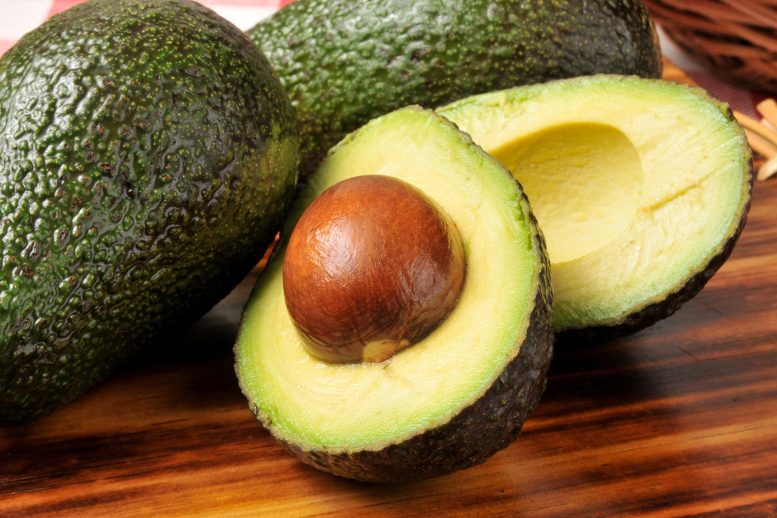
Randomized controlled trial found that families with high avocado consumption self-reported reduced caloric intake and an overall healthier diet.
In a novel study, researchers at University of California San Diego School of Medicine and the Herbert Wertheim School of Public Health and Human Longevity Science conducted a randomized controlled trial comparing the potential health effects between families that consumed a low allotment of avocados (three per week) and families that consumed a high allotment (14 per week) over six months. All families were of Mexican descent.
They found that the high avocado allotment families self-reported lower caloric consumption, reducing their intake of other foods, including dairy, meats, and refined grains, and their associated negative nutrients, such as saturated fat and sodium.
The findings, published in the November 11, 2021, online issue of Nutrients, may offer insights into how to better address the burgeoning public health issues of obesity and related diseases, particularly in high-risk communities, said the authors.
The study was funded, in part, by the Hass Avocado Board, which had no role in study design, collection, analyses, and interpretation of data, writing of the findings or publication. The board did provide avocados used in the trial at no cost.
“Data regarding the effects of avocado intake on family nutritional status has been non-existent,” said senior author Matthew Allison, MD, professor and chief of the Division of Preventive Medicine in the Department of Family Medicine at UC San Diego School of Medicine.
“Recent trials have focused on individuals, primarily adults, and limited to changes in cardiometabolic disease blood markers. Our trial’s results provide evidence that a nutrition education and high avocado allotment reduces total caloric energy in Mexican heritage families.”
Avocados as Nutrient-Dense Superfoods
In terms of nutrition, the avocado is the toast of the town. Its soft and buttery insides are rich in vitamins C, E, K and B6, plus riboflavin, niacin, folate, pantothenic acid, magnesium, potassium, lutein, beta carotene, and omega-3 fatty acids.
Half of a medium-sized fruit provides up to 20 percent of the recommended daily fiber, 10 percent potassium, 5 percent magnesium, 15 percent folate, and 7.5 grams of monounsaturated fatty acids.
For the study, researchers enrolled 72 families (231 individuals) consisting of at least three members each over the age of 5, residing in the same home, free of severe chronic disease, not on specific diets, and self-identified as Mexican heritage. The families were randomized into the two allotment groups for six months, during which time both groups also received bi-weekly nutrition education sessions.
The rationale for focusing on families of Mexican heritage was two-fold: First, Hispanic/Latino people in the United States have a higher-adjusted prevalence of obesity and lower intake of key nutrients than other demographic groups in the country. Second, for Hispanic/Latino immigrants, dietary quality worsens as they become acculturated, adopting a Western dietary pattern that is higher in refined carbohydrates and animal-based fats.
Researchers wanted to assess if increased but moderated consumption of a single, nutrient-dense food might measurably improve overall health and decrease diet-related disparities. The avocado was chosen because it is a traditionally consumed plant-food that was originally domesticated thousands of years ago in Mexico and parts of Central and South America.
No BMI Change but Higher Satiety Reported
Though researchers discerned no change in body mass index measurements or waist circumference between the two groups during the trial, they did note that consuming more avocados appeared to speed satiety — the feeling of fullness after eating. Fats and some dietary fibers, such as those found in avocados, can impact total energy intake (the amount of food consumed) by affecting gastrointestinal functions, such as introducing bulk that slows gastric emptying, regulating glucose and insulin reactions, prolonging nutrient absorption and modifying key peptide hormones that signal fullness.
Interestingly, the study found that families consuming more avocados correspondingly reduced their consumption of animal protein, specifically chicken, eggs, and processed meats, the latter of which are typically higher in fat and sodium. Current nutrition guidelines recommend reduced consumption of both fat and sodium.
Unexpected Reductions in Key Nutrients
But surprisingly, high avocado consumers also recorded decreased intake of calcium, iron, sodium, vitamin D, potassium, and magnesium, which researchers said might be associated with eating less.
“Our results show that the nutrition education and high avocado intake intervention group significantly reduced their family total energy intake, as well as carbohydrate, protein, fat (including saturated), calcium, magnesium, sodium, iron, potassium and vitamin D,” said first author Lorena Pacheco, a postdoctoral researcher at Harvard T.H. Chan School of Public Health and co-investigator at Herbert Wertheim School of Public Health at UC San Diego.
“In secondary energy-adjusted analyses, the nutrition education and high avocado allotment group significantly increased their intake of dietary fiber, monounsaturated fatty acids, potassium, vitamin E and folate.”
Despite the mixed findings and limitations of the study, the researchers said the trial may provide a strategy for supporting existing public health efforts to reduce saturated fat and sodium, both nationally consumed in excess of nutritional guidelines. In addition, there was high adherence to the study protocols by participants, underscoring the value of using a single, nutrient-dense plant food already familiar and favored by participants.
“Testing of a culturally appropriate plant-foot on energy intake, by bicultural and bilingual community health workers, should be extended to other populations,” the authors wrote.
Reference: “Effects of Different Allotments of Avocados on the Nutritional Status of Families: A Cluster Randomized Controlled Trial” by Lorena S. Pacheco, Ryan D. Bradley, Julie O. Denenberg, Cheryl A. M. Anderson and Matthew A. Allison, 11 November 2021, Nutrients.
DOI: 10.3390/nu13114021
Co-authors include: Ryan D. Bradley, Julie O. Denenberg, and Cheryl A.M. Anderson, all at UC San Diego.
Funding for this study came, in part, from the Hass Avocado Board, the National Heart, Lung, and Blood Institute (T32 HL079891-11), the National Institute of Diabetes and Digestive and Kidney Diseases (T32 DK007703-26), and the Harvard Chan Yerby Fellowship at Harvard T.H. Chan School of Public Health.
Never miss a breakthrough: Join the SciTechDaily newsletter.
Follow us on Google and Google News.
5 Comments
Despite the mixed findings and limitations of the study, the researchers said the trial may provide a strategy for supporting existing public health efforts to reduce saturated fat and sodium, both nationally consumed in excess of nutritional guidelines. In addition, there was high adherence to the study protocols by participants, underscoring the value of using a single, nutrient-dense plant food already familiar and favored by participants.
No mention of excessively high carbon footprint in Avocado production
Be careful if you have any liver issues.
Unfortunately, avocados, which I absolutely love, are bad news for the environment, and for some social issues as well.
A web search for “avocado environment impact” will bring up scores of hits on this subject. 😕
CO2 is plant food.Ever hear of photosynthesis? Avocados improve the planet in my neighborhood.We eat one every day.