
Smart integration of solar, wind, and hydropower at Grand Ethiopian Renaissance Dam (GERD) could defuse regional tensions and deliver shared energy and water benefits across eastern Africa.
A new study shows that several disagreements between Ethiopia, Sudan, and Egypt around Africa’s largest hydropower plant, the new Grand Ethiopian Renaissance Dam (GERD), could be alleviated by massively expanding solar and wind power across the region. Adapting GERD operation to support grid integration of solar and wind power would provide tangible energy and water benefits to all involved countries, creating regional win-win situations.
“Our results call for integrated hydro-solar-wind planning to be taken up in the GERD negotiations,” says Sebastian Sterl, energy planning expert at Vrije Universiteit Brussel (VUB) and KU Leuven in Belgium and lead author of the study, published in Nature Energy.
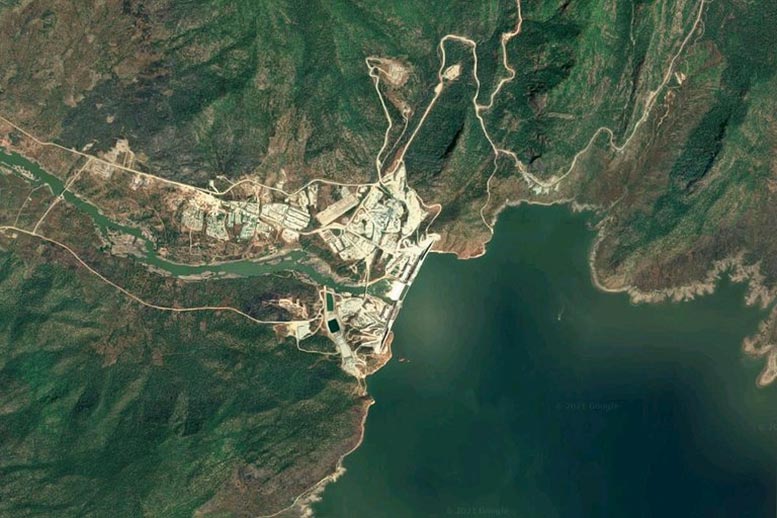
For several years, political tensions between Egypt, Sudan, and Ethiopia have been escalating in a conflict surrounding Africa’s largest hydropower plant: the nearly complete Grand Ethiopian Renaissance Dam (GERD) on the Blue Nile. Ethiopia, which started filling GERD’s massive reservoir in 2020, says it needs GERD’s electricity to lift millions of its citizens out of poverty. But Egypt is deeply concerned by the mega-dam’s consequences for the Nile River, since its agriculture depends completely on Nile water –Egypt raised this issue to the UN Security Council earlier in 2020. Sudan, meanwhile, appears caught between both sides. Ongoing African Union-led mediation talks to agree on the long-term operation of the dam have so far yielded little fruit. Certain tongues have even invoked the looming threat of a “water war” between Cairo and Addis Ababa.
Seasonal Synergy
Sebastian Sterl, energy planning expert at KU Leuven and VUB and lead author of the study, explains: “The Blue Nile is a highly seasonal river. The GERD’s reservoir is so large that it can store the river’s full peak flow and deliver hydropower at a stable rate throughout the year, removing the flow seasonality. This makes a lot of sense from the Ethiopian perspective, but it overhauls the natural timing of the water reaching Sudan and Egypt. Behind many disagreements around GERD lies the question of who, if anyone, should be allowed to exert such control over the Nile River.”
A group of researchers based in Belgium and Germany, led by Sterl, have now identified a surprising method that could solve multiple disagreements around the dam at once and benefit all three countries. The idea boils down to massively deploying modern, clean solar and wind power to serve as a complement to GERD’s hydropower. More concretely: the researchers propose that Ethiopia and its neighbours deploy large-scale solar and wind farms, work towards a regionally integrated power grid, and then agree on Ethiopia operating GERD in synergy with solar and wind power. This would mean turbining less water on sunny and windy days, and more water during cloudy, windless spells and at nighttime, to “firm up” the always-fluctuating solar and wind power.
“Regional cooperation in a common, Eastern African Power Pool could be key.”
The researchers realized that sunshine and wind in many regions of Ethiopia, Sudan, and their eastern African neighbors have opposite seasonal profiles to the Blue Nile flow. In these places, the sun shines brightest and the winds blow strongest during the dry season. This “seasonal synergy” between water, sun, and wind lies at the heart of the researchers’ findings.
The study found that, if GERD were operated to back up solar and wind power throughout the year – both hourly and seasonally – this would automatically mean producing less hydropower during the dry season, and more during the wet season, without negatively affecting GERD’s yearly average power output. The water flowing out of the dam would then have a seasonality somewhat resembling the natural river flow, with a clear peak in the wet season.
According to Sterl, if GERD were operated in this way, “Essentially, Ethiopia would have all the expected benefits of a big dam – but for Sudan and Egypt, it would look as if the Ethiopians only built a modest, relatively small reservoir. There are many such reservoirs already on the Nile, so no country downstream of Ethiopia could really object to this.”
Regional Cooperation
By reconciling parties around common energy and water objectives, the researchers identified at least five concrete benefits of such integrated hydro-solar-wind planning. First, Ethiopia could become Africa’s largest power exporter while reducing its dependence on hydropower and lowering its electricity generation costs on the long term. Second, consumption of polluting fossil fuels in Sudan and other eastern African countries could be displaced by solar and wind power, backed up by GERD. Third, thanks to the proposed operation scheme of GERD, Egypt could receive more water during dry years than before and would not need to change the operation of its own High Aswan Dam. Fourth, Ethiopia would make more efficient use of its mega-dam’s more than a dozen turbines by frequently producing at peak power whenever solar and wind would be unavailable. And fifth, Nile River ecology across Sudan would be less affected by the new dam, as flow seasonality is an important component of rivers’ ecological sustainability.
According to the authors, the entire eastern African region stands to contribute. “Ethiopia could theoretically go alone, using GERD to back up its own solar and wind power,” says Sterl. “But it would work much better if, say, Sudan were to join in – it has better solar and wind resources than Ethiopia, allowing for better hydro-solar-wind synergies and reducing the overall costs of renewable power generation. Egypt has great solar and wind resources too, as do Djibouti, South Sudan and other eastern African countries. Regional cooperation in a common, Eastern African Power Pool could be key.”
The results of the study suggest that integrated hydro-solar-wind planning could be a highly interesting option to discuss in the ongoing GERD negotiations between Ethiopia, Sudan, and Egypt. “You could call it a win-win situation,” says prof. Wim Thiery, climate researcher at VUB and co-author of the study. “The entire region would benefit.”
Reference: “Linking solar and wind power in eastern Africa with operation of the Grand Ethiopian Renaissance Dam” by Sebastian Sterl, Dalia Fadly, Stefan Liersch, Hagen Koch and Wim Thiery, 8 April 2021, Nature Energy.
DOI: 10.1038/s41560-021-00799-5
Never miss a breakthrough: Join the SciTechDaily newsletter.
Follow us on Google and Google News.
4 Comments
Lol this idea have a hidden agenda .. Sale your solar system or wind system to others in the mean time we will use our natural water resource period …what a joke ?
If the dam is full it can produce a peak power through out the year why need to spend extra cost? It seems Someone is trying to sell their product…
The thing that makes this proposal a weak one is the extraordinary cost, short working life and intermittent nature of solar PV and wind turbines.
At 5150 MW and a working life of GERD is well over 100 years, so the GERD is a good investment. For those seeking holistic solutions, consider for how long all that power would have to be devoted to creating a meaningful number of “renewable” installations. Many years.
The proposal would only be viable if the energy invested in creating such a parallel generating capacity was 1/9th or less of the total power produced by it – and this is never going to be the case. The EROI for solar is about nil and for wind is about 25%. I suspect the principal beneficiaries will be those selling solar and wind generators. If Germany cannot power itself with wind, how on earth can Ethiopia?
Yes the solar and wind greenies have their hands in this. Do a little research and find the green in solar and wind, only green you will find is $$$.