

Dynamic Imaging of Manganese Unveiled
Penn State researchers have developed a new biosensor that provides scientists with the first dynamic images of manganese, an elusive metal ion that is essential for life.
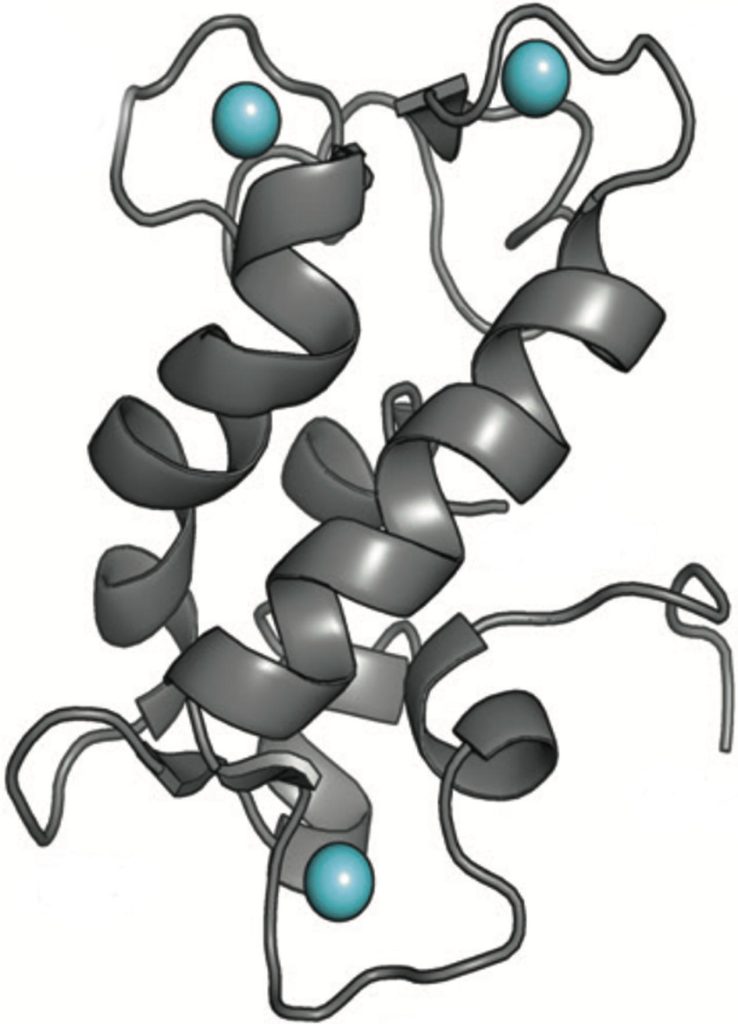
The researchers crafted the sensor using a natural protein called lanmodulin, which has the ability to bind rare earth elements with remarkable precision. This protein was uncovered five years ago by some of the same researchers from Penn State who are involved in the presented study.
They were able to genetically reprogram the protein to favor manganese over other common transition metals like iron and copper, which defies the trends observed with most transition metal-binding molecules.
The sensor could have broad applications in biotechnology to advance the understanding of photosynthesis, host-pathogen interactions, and neurobiology. It could also be potentially applied more generally for processes such as the separation of the transition metal components (manganese, cobalt, and nickel) in lithium-ion battery recycling.
The team recently published their findings in the Proceedings of the National Academy of Sciences.
Monitoring Manganese Dynamics
“We believe that this is the first sensor that is selective enough for manganese for detailed studies of this metal in biological systems,” said Jennifer Park, a graduate student at Penn State and lead author on the paper. “We’ve used it — and seen the dynamics of how manganese comes and goes in a living system, which hasn’t been possible before.”
She explained that the team was able to monitor the behavior of manganese within bacteria and are now working to engineer even tighter binding sensors to potentially study how the metal works in mammalian systems.
Like iron, copper, and zinc, manganese is an essential metal for plants and animals. Its function is to activate enzymes — molecules with vital jobs within living systems. For example, manganese is a key component of the photosynthetic process in plants — manganese is present at the site where water is converted to oxygen that is at the heart of photosynthesis. In humans, manganese is linked to neural development. Accumulation of excess manganese in the brain induces Parkinsonian-like motor disease, whereas reduced manganese levels have been observed in association with Huntington’s disease, the researchers explained.
However, scientific understanding of manganese has lagged behind that of other essential metals, in part because of a lack of techniques to visualize its concentration, localization, and movement within cells. The new sensor opens the door for all kinds of new research, explained Joseph Cotruvo, associate professor of chemistry at Penn State and senior author on the paper.
Real-Time Insights Into Metal-Pathogen Interaction
“There are so many potential applications for this sensor,” said Cotruvo. “Personally, I am particularly interested in seeing how manganese interacts with pathogens.”
He explained that the body works hard to restrict the iron that most bacterial pathogens need for survival, and so those pathogens instead turn to manganese.
“We know there is this tug-of-war for vital metals between the immune system and these invading pathogens, but we haven’t been able to fully understand these dynamics, because we couldn’t see them in real-time,” he said, adding that with new capabilities to visualize the process, researchers have tools to potentially develop new drug targets for a range of infections for which resistance has emerged to common antibiotics, like staph (MRSA).
Designing proteins to bind to particular metals is an intrinsically difficult problem, Cotruvo explained, because there are so many similarities between the transition metals present in cells. As a result, there has been a lack of chemical biology tools with which to study manganese physiology in live cells.
“The question for us was, can we engineer a protein to only bind to one thing, a manganese ion, even in the presence of a huge excess of other very similar-looking things, like calcium, magnesium, iron, and zinc ions?” Cotruvo said. “What we had to do was create a binding site arranged in just the right way, so that this protein bond was more stable in manganese than any other metal.”
Having successfully demonstrated lanmodulin is capable of such a task, the team is now planning to use it as a scaffold from which to evolve other types of biological tools for sensing and recovering many different metal ions that have biological and technological importance.
“If you can figure out ways of discriminating between very similar metals, that’s really powerful,” said Cotruvo. “If we can take lanmodulin and turn it into a manganese-binding protein, then what else can we do?”
Reference: “A genetically encoded fluorescent sensor for manganese(II), engineered from lanmodulin” by Jennifer Park, Michael B. Cleary, Danyang Li, Joseph A. Mattocks, Jiansong Xu, Huan Wang, Somshuvra Mukhopadhyay, Eric M. Gale and Joseph A. Cotruvo Jr., 12 December 2022, Proceedings of the National Academy of Sciences.
DOI: 10.1073/pnas.2212723119
The study was funded by the National Institutes of Health and start-up funding from Penn State.
Never miss a breakthrough: Join the SciTechDaily newsletter.
Follow us on Google and Google News.
1 Comment
Manganese levels are also associated with a number of diseases, from diabetes through Parkinsons. So, any viable intercellular probe would be invaluable.