
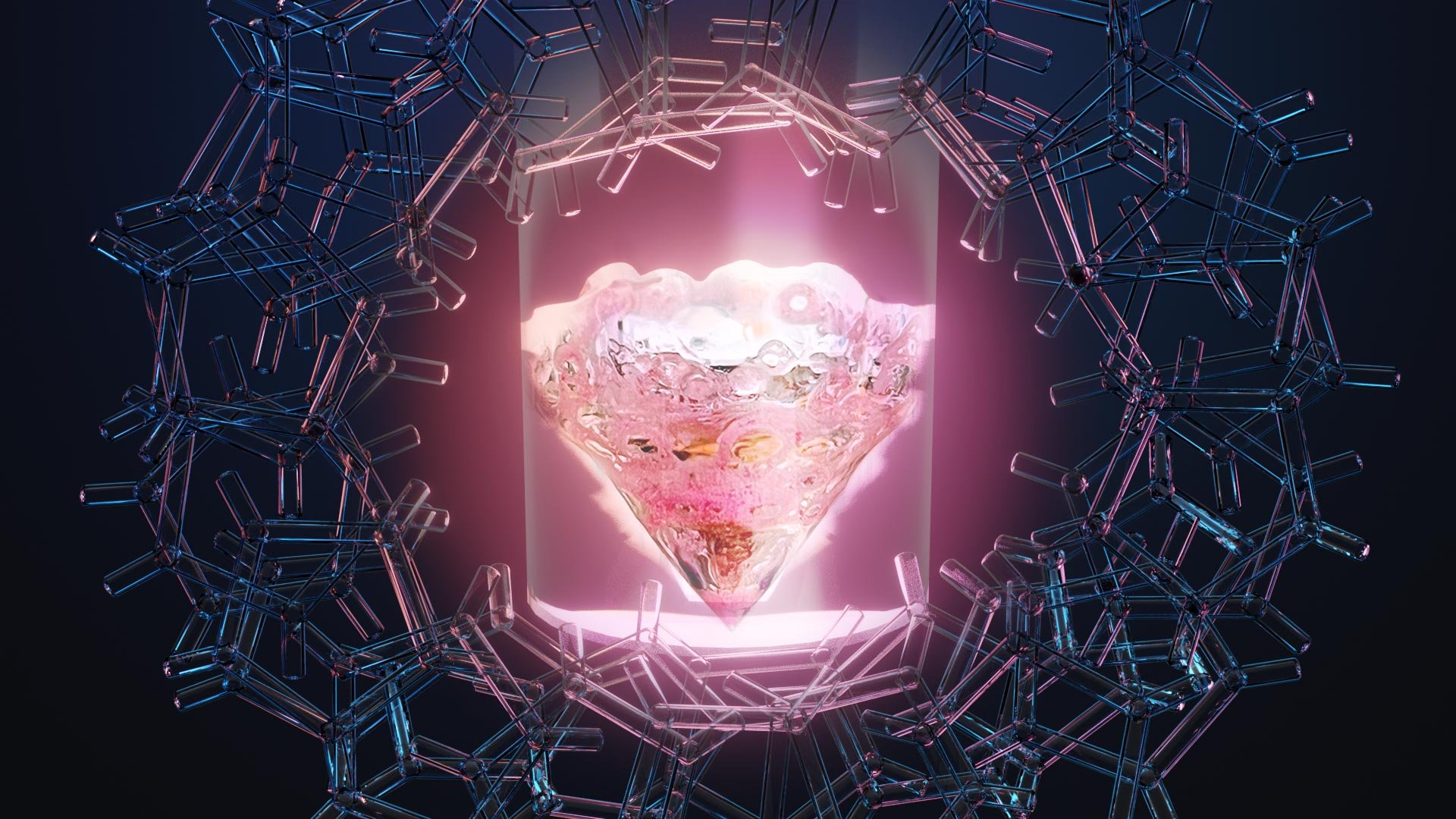
For the first time, scientists have characterized a promethium coordination complex, advancing the understanding of challenging lanthanide elements.
Promethium, a rare earth element, is unique in that it lacks stable isotopes. As a result, it constantly decays, making it challenging to study. In this research, scientists successfully isolated a pure sample of the isotope promethium-147 and bonded it with a molecule to form a stable complex in water. They then used X-ray absorption spectroscopy to analyze the compound’s structure and examine its chemical bonding.
The demand for promethium is growing due to its applications in luminous paint, lighting, and nuclear batteries, which power devices like pacemakers, guided missiles, communications equipment, and other technologies. Additionally, it shows potential for use in radioactive imaging and cancer treatments. Promethium is part of the lanthanide series, a group of 15 metallic elements that are chemically similar and difficult to separate.
Understanding promethium’s chemical properties could improve separation methods and open the door to new applications, facilitating the production of purer and larger quantities of the element. Currently, the Department of Energy Isotope Program is the sole global producer of promethium-147.
Bonding Promethium with an Organic Molecule
Scientists used an organic molecule known to form compounds with elements similar to promethium and bonded it to promethium in an aqueous solution. This created a stable compound, allowing the researchers to use X-ray absorption spectroscopy to measure the length of the bonds between promethium and the oxygen atoms it was linked to. The researchers were able to study the electronic structure of the promethium complex, providing new information about promethium’s chemical and physical properties and how those properties differ from those of the other lanthanides.
The differences between promethium and other lanthanides are especially important because scientists learned that in the lanthanide series, the bonds between elements and molecules get shorter as the atomic number increases – up to element 61, promethium. For promethium and lanthanides of higher atomic numbers, the contraction of the ionic radii slows, and the bond lengths decrease at a slower pace. Understanding this chemistry can lead to better separation methods that are needed to increase the production of promethium.
Reference: “Observation of a promethium complex in solution” by Darren M. Driscoll, Frankie D. White, Subhamay Pramanik, Jeffrey D. Einkauf, Bruce Ravel, Dmytro Bykov, Santanu Roy, Richard T. Mayes, Lætitia H. Delmau, Samantha K. Cary, Thomas Dyke, April Miller, Matt Silveira, Shelley M. VanCleve, Sandra M. Davern, Santa Jansone-Popova, Ilja Popovs and Alexander S. Ivanov, 22 May 2024, Nature.
DOI: 10.1038/s41586-024-07267-6
This work was primarily co-sponsored by the Department of Energy (DOE) Office of Science, Office of Basic Energy Sciences’ Chemical Sciences, Geosciences and Biosciences Division, and Materials Sciences and Engineering Division for ligand synthesis, lanthanide complexation studies, crystallization processes, spectroscopic analyses, and simulation efforts. The production, purification, and preparation of the promethium sample were supported by the DOE Isotope Program, managed by the Office of Isotope R&D and Production within the Office of Science. The single-crystal X-ray diffraction data collection and refinement were supported by the DOE Office of Science, Office of Basic Energy Sciences’ Chemical Sciences, Geosciences and Biosciences Division.
Never miss a breakthrough: Join the SciTechDaily newsletter.
Follow us on Google and Google News.
1 Comment
Thankyou great discovery