
Researchers link end of Green Sahara with Southeast Asia megadrought.
Physical evidence found in caves in Laos helps tell a story about a connection between the end of the Green Sahara — when once heavily vegetated Northern Africa became a hyper-arid landscape — and a previously unknown megadrought that crippled Southeast Asia 4,000 to 5,000 years ago.
In a paper published today in Nature Communications, scientists at the University of California, Irvine, the University of Pennsylvania, William Paterson University of New Jersey and other international institutions explain how this major climate transformation led to a shift in human settlement patterns in Southeast Asia, which is now inhabited by more than 600 million people.
“In this study, we provide the first proof for a strong link between the end of the Green Sahara and Southeast Asian monsoon failure during the mid- to late Holocene period,” said co-author Kathleen Johnson, UCI associate professor of Earth system science. “Our high-resolution and well-dated record suggests a strong connection between Northern Africa and mainland Southeast Asia during this time.”
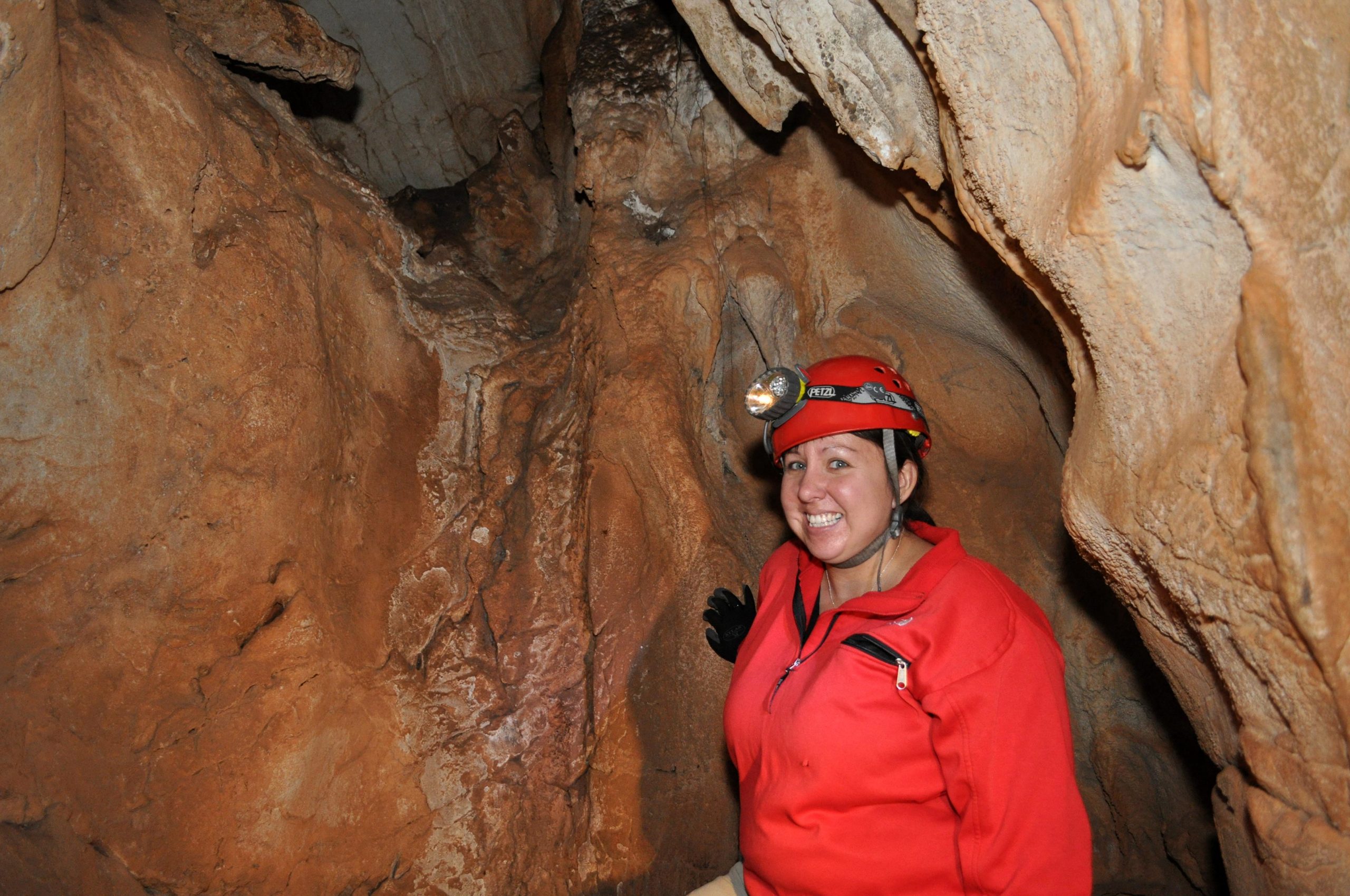
To create a paleoclimate record for the study, Johnson and other researchers gathered stalagmite samples from caves in Northern Laos. In her UCI laboratory, they measured the geochemical properties of the oxygen and carbon isotopes, carbon-14, and trace metals found in the specimens. This helped them verify the occurrence of the drought and extrapolate its impacts on the region.
Johnson said they combined data from the analysis of these stalagmite-derived proxies with a series of idealized climate model simulations — conducted by co-author Francesco Pausata of the University of Quebec in Montreal — in which Saharan vegetation and dust concentrations were altered in a way that permitted them to investigate the ocean-atmosphere feedbacks and teleconnections associated with such an abrupt shift in precipitation.
The modeling experiments suggested that reduced plant growth in the Sahara led to increased airborne dust that acted to cool the Indian Ocean and shift the Walker circulation pattern eastward, causing it to behave in ways similar to modern-day El Niño events. This, ultimately, led to a large reduction in monsoon moisture across Southeast Asia that lasted more than 1,000 years, according to Johnson.
Anthropologists and archaeologists have previously studied the effects of the demise of the Green Sahara, also known as the African humid period, on population centers closer to Western Asia and North Africa, noting the collapse of the Akkadian Empire of Mesopotamia, the de-urbanization of the Indus Civilization (near present-day Pakistan and India) and the spread of pastoralism along the Nile River.
But the link to the origin of the Southeast Asia megadrought and lifestyle pattern shifts in the region had not been previously investigated, according to lead author Michael Griffiths, professor of environmental science at William Paterson University of New Jersey.
“Archaeologists and anthropologists have been studying this event for decades now, in terms of societal adaptations and upheavals, but its exact cause has eluded the scientific community,” said Griffiths, who was a National Oceanic and Atmospheric Administration-supported postdoctoral scholar in Johnson’s lab and has collaborated with her on this research topic for more than 10 years.
“Results from this work provide a novel and convincing explanation for the origin of the Southeast Asia megadrought and could help us better understand, to varying degrees, the observed societal shifts across many parts of the tropics and extra-tropics,” he said.
The researchers suggest that the centuries-long megadrought corresponds to the “missing millennia” in Southeast Asia between 4,000 and 6,000 years ago, a time characterized by a noticeable lack of archaeological evidence in interior Southeast Asia compared to earlier and later portions of the Holocene.
They propose that the mid-Holocene megadrought may have been an impetus for mass population movements and the adoption of new, more resilient subsistence strategies — and that it should now be considered as a possible driver for the inception of Neolithic farming in mainland Southeast Asia.
“This is outstanding evidence for the type of climate change that must have affected society, what plants were available, what animals were available,” said co-author Joyce White, adjunct professor of anthropology at the University of Pennsylvania. “All of life had to adjust to this very different climate. From an archaeological point of view, this really is a game changer in how we try to understand or reconstruct the middle Holocene period.”
Reference: “End of Green Sahara amplified mid- to late Holocene megadroughts in mainland Southeast Asia” by Michael L. Griffiths, Kathleen R. Johnson, Francesco S. R. Pausata, Joyce C. White, Gideon M. Henderson, Christopher T. Wood, Hongying Yang, Vasile Ersek, Cyler Conrad and Natasha Sekhon, 21 August 2020, Nature Communications.
DOI: 10.1038/s41467-020-17927-6
The collection of speleothem samples from Laotian caves was made possible by Johnson’s collaboration since 2010 with the Middle Mekong Archaeological Project, managed by White, a consulting scholar at the University of Pennsylvania Museum of Archaeology and Anthropology. This project, which also involved researchers from Oxford University and Northumbria University in the United Kingdom, Los Alamos National Laboratory, and the University of New Mexico, was funded by the National Science Foundation, NOAA, the Swedish Research Council and a grant from the Henry Luce Foundation to the Penn Museum.
Never miss a breakthrough: Join the SciTechDaily newsletter.
Follow us on Google and Google News.
3 Comments
Could this explain the fall of “Indus valley” civilization ? Could this explain why there is no archaeological evidence found about the RMAYAN and MAHABHARAT periods in the GANGETIC valley ? An e-mail to me would be highly appreciated.
I don’t think we can look at individual factors, since the area was part of population migrations in and out of India. But I cite Wikipedia for the timing: “The Indus Valley Civilisation (IVC) was a Bronze Age civilisation in the northwestern regions of South Asia, lasting from 3300 BCE to 1300 BCE, and in its mature form from 2600 BCE to 1900 BCE.” “Gradual drying of the region’s soil during the 3rd millennium BCE may have been the initial spur for the urbanisation associated with the civilisation, but eventually also reduced the water supply enough to cause the civilisation’s demise, and to scatter its population eastward.” So it may be that the megadrought helped usher in the Indus civilization. The change lasted to about 3,500 – 3,000 years ago [see Fig. 3 of the paper] which *may* coincide with the end but I doubt it, since the local drought seems to occur later.
The last part of the comment seems to refer to Hindu myth texts, and that has nothing to do with nature and the science observation of it here.
Interesting conclusion:
“This work highlights the sensitivity of Southeast Asian hydroclimate to large and abrupt shifts in Earth’s boundary conditions, and in particular, demonstrates the potential for densely populated regions of East Asia to rapidly switch between wet and dry background climate states. The long-term and sub-regional societal responses to these profound and at times abrupt climate shifts remain to be elucidated through archeological investigations.”