
Scientists studying the remarkable regenerative abilities of planarian flatworms have uncovered a previously unknown type of immune cell with an unusually destructive defense strategy.
What if an immune cell could wipe out nearby threats by detonating itself?
That is exactly what Stanford researchers have discovered in one of nature’s most unlikely creatures: the planarian flatworm. Famous for its seemingly superhuman ability to regenerate lost body parts, this simple animal has now revealed an immune defense unlike anything seen in humans. The newly identified cells, called “ruptoblasts,” destroy nearby cells through a violent self-destruct sequence that unfolds in seconds, then vanish without a trace.
The finding, published in Cell, highlights just how much remains unknown about immune systems across the animal kingdom. While modern biomedical research focuses heavily on mammals, some of the most surprising biological innovations may be hiding in creatures that diverged from our evolutionary lineage hundreds of millions of years ago.
“We never expected that a cell could just explode like a bomb and kill the cells surrounding it,” said senior author Bo Wang, associate professor of bioengineering in the schools of Engineering and Medicine.
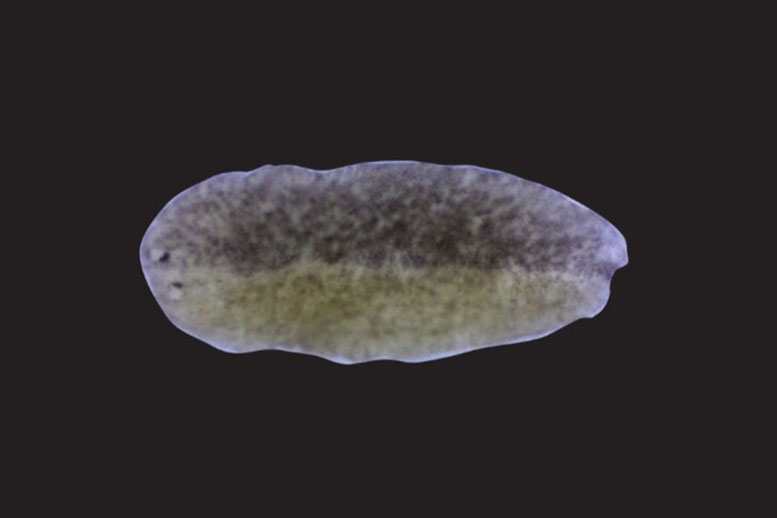
Chew Chai, a postdoctoral researcher in Wang’s lab, first encountered the cells while exploring whether flatworms can distinguish their own tissues from those of other individuals. To test this, she cut flatworms lengthwise and fused them with tissue from another worm. While planarians can readily regenerate their own tissues, Chai found that these “Frankenstein” worms rejected tissue from unrelated worms, much like the rejection of a transplanted organ in humans.
Instead of relying on the same immune defenses seen in people, the flatworms activated a different response.
“It’s this huge inflammatory response. Like there’s a fire and an alarm goes off, and the cells just blow up,” said Chai, who is lead author of the paper.
A Hormone Triggers an Extreme Response
Previous research has shown that the hormone activin plays a major role in flatworm biology. High activin levels reduce the animals’ ability to regenerate, while low levels interfere with reproduction.
When Chai observed the worms rejecting foreign tissue, she also detected a surge in activin levels followed by chronic inflammation. Although the worms did not die immediately, they typically died within a few days. Similar inflammation also occurred when healthy, nonfused flatworms were injected with activin.
To investigate what was happening at the cellular level, Chai used live cell microscopy and flow cytometry, a laser-based cell analysis method. After labeling cells with fluorescent dyes and sorting them individually, she identified a group of cells that responded to activin exposure.
These cells burst open, released substances that killed nearby cells, and then disappeared within five minutes. Chai and Wang named this newly identified process “ruptosis.”
One of the most unusual features of ruptosis is its speed.
“Some mammalian cells and bacteria may also do an explosive sort of cell death, but the timescale is really long. They are exploding, but it’s more like pores that slowly leak things out over the course of several hours,” said Chai. “Ruptosis happens within seconds to minutes.”
A Potentially Useful Immune Mechanism
Researchers tested ruptoblasts against E. coli bacteria, human kidney cells, and mouse blood cells. The cells successfully destroyed all three targets.
The effects, however, remained highly localized. Cell death was limited to the immediate vicinity of the explosion, with no chain reaction and no lasting toxicity. Wang said this precision could make the mechanism useful for developing treatments aimed at bacterial infections or tumors.
Ruptoblasts also differ from familiar immune cells such as T cells and neutrophils. Rather than being hematopoietic cells produced in bone marrow, they are glandular cells.
The researchers found that ruptoblasts appear to enhance their secretory machinery, allowing them to rapidly release toxic substances when activated by activin. The process is aided by a sharp rise in calcium released from the cell’s endoplasmic reticulum.
When Chai searched for similar cells in other animals, she found them only in basal bilaterians such as flatworms, suggesting an ancient evolutionary origin.
She speculates that vertebrates may have lost this immune strategy because they lack the extensive regenerative abilities needed to repair tissue damage caused by ruptosis. Flatworms, in contrast, possess abundant stem cells that support rapid tissue repair.
“It demonstrates there’s lots of different immune mechanisms out there. There’s all these animals that live in an environment where there’s lots of bacteria, lots of viruses, and we know so little about their immune mechanisms,” said Wang.
The findings highlight how even simple organisms can reveal unexpected biological strategies. According to Wang, studying less conventional species may help scientists uncover new ideas and approaches for tackling some of medicine’s most challenging problems.
Reference: “Explosive cytotoxicity of ruptoblasts bridges hormone surveillance and immune defense” by Chew Chai, Eliya Sultan, Souradeep R. Sarkar, Lihan Zhong, Dania Nanes Sarfati, Orly Gershoni-Yahalom, Christine Jacobs-Wagner, Hawa Racine Thiam, Benyamin Rosental and Bo Wang, 2 June 2026, Cell.
DOI: 10.1016/j.cell.2026.05.008
This research was funded by a National Science Foundation Graduate Research Fellowship, a Stanford Graduate Fellowship, a Stanford DARE fellowship, a Human Frontier Science Program grant, a National Institutes of Health grant, and the European Research Council.
Never miss a breakthrough: Join the SciTechDaily newsletter.
Follow us on Google and Google News.