
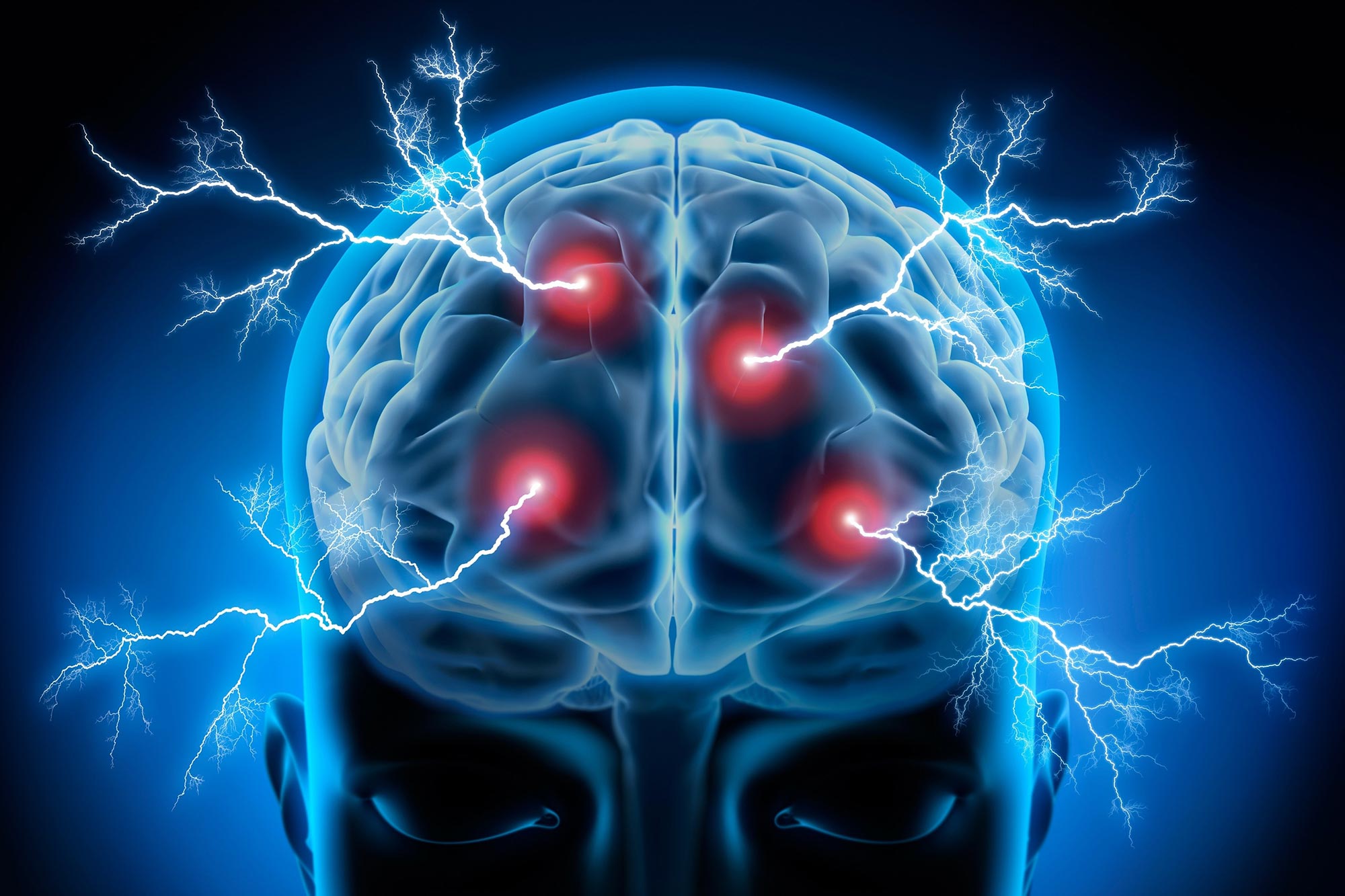
A study from MLU found that brain stimulation using tDCS can slightly influence decision speed and flexibility, though its effects are subtle and context-dependent.
A new study from Martin Luther University Halle-Wittenberg (MLU), published in the Journal of Cognitive Neuroscience, has found that a simple form of brain stimulation can influence decision-making. Researchers used transcranial direct current stimulation (tDCS), a well-established technique in both scientific research and clinical therapy.
tDCS works by delivering a low electrical current through electrodes placed on the scalp, targeting specific brain regions. The effect of the stimulation depends on the type of electrode used: anodal stimulation (positive electrode) increases neural activity, while cathodal stimulation (negative electrode) reduces it.
“The method has great advantages as it is non-invasive and very easy to use. This is why it is widely utilized in psychology,” says Dr. Sebastian Kübler, a psychologist at MLU. Its potential use in treating neurological and mental disorders is also being intensively investigated.
Experimental Design and Procedure
The scientists at MLU are studying whether direct current stimulation influences how people make decisions. In the study, which included 40 study participants, a specific region of the brain called the dorsolateral prefrontal cortex was stimulated.
“The region is crucial for planning and weighing up actions,” explains Torsten Schubert, a professor at the Institute of Psychology at MLU. The participants had to complete two tasks at the same time – an auditory and a visual task – and had to decide which one they would solve first.
The test subjects wore the electrodes throughout the entire experiment. However, at the time of the study, neither they nor the researchers knew what type of stimulation was being used or whether any current was flowing at all. The experiments were repeated at intervals of at least one week.
The study found that with anodal stimulation, which increased the activity in the region of the brain, the participants needed less time overall to choose the task; in other words, the decision was made more quickly. When cathodal stimulation was applied, which inhibits brain activity, participants tended to stick with a previously chosen order.
Cognitive Flexibility and the Brain
“This suggests that an activated or inhibited dorsolateral prefrontal cortex increases or reduces cognitive flexibility when people have to perform several tasks simultaneously,” says Sebastian Kübler. The difference was found to be in the range of around 100 milliseconds. “This seems small at first, but in experimental psychology it is a relevant change. It appears that transcranial direct current stimulation changes a person’s ability to decide which action to take,” explains Torsten Schubert.
Devices that use transcranial direct current stimulation are now even being sold commercially and are touted as being able to increase creativity and concentration. “Such sweeping promises are not credible. However, our study does show that the method can, under controlled conditions, influence cognitive processes such as decision-making. It should also be noted that the effects are very subtle and depend on many factors,” says Kübler.
Reference: “Transcranial Direct Current Stimulation of the Dorsolateral Prefrontal Cortex Modulates Voluntary Task-order Coordination in Dual-task Situations ” by Sebastian Kübler, Leif Langsdorf, Marlene Meyer and Torsten Schubert, 1 March 2025, Journal of Cognitive Neuroscience.
DOI: 10.1162/jocn_a_02270
Never miss a breakthrough: Join the SciTechDaily newsletter.
Follow us on Google and Google News.
2 Comments
I am a musician and work on music therapy
Isn’t religion an attempt to get people to think about the consequences of their actions? And a cult is an attempt to get people to submit o someone’s will? I am a person who likes to think. I am an INTJ who tends to over think, I think! Ha.