

On September 14, 2024, the Sun released a powerful X4.5 solar flare, observed by NASA’s Solar Dynamics Observatory.
This flare is classified as an X4.5 flare and peaked at 11:29 a.m. ET. X-class denotes the most intense flares, while the number provides more information about its strength. High-energy bursts of this magnitude can disrupt communication systems, electric grids, and navigation signals, posing significant risks to spacecraft and astronauts.

Solar flares are powerful bursts of radiation emanating from the Sun, observable as bright spots on the star’s surface. These events result from the sudden release of magnetic energy stored in the solar atmosphere. The intensity of solar flares can vary, impacting Earth in different ways, from minor disruptions in polar sky displays to severe interference in communications and navigation systems.
Solar flares are primarily classified into five categories according to their X-ray brightness: A, B, C, M, and X. Each category is further divided into a scale from 1 to 9, which helps quantify their strength more precisely. However, X-class flares can exceed this scale, indicating exceptionally intense events that can unleash cascades of geomagnetic storms and radiation pulses, potentially harmful to satellites and astronauts.
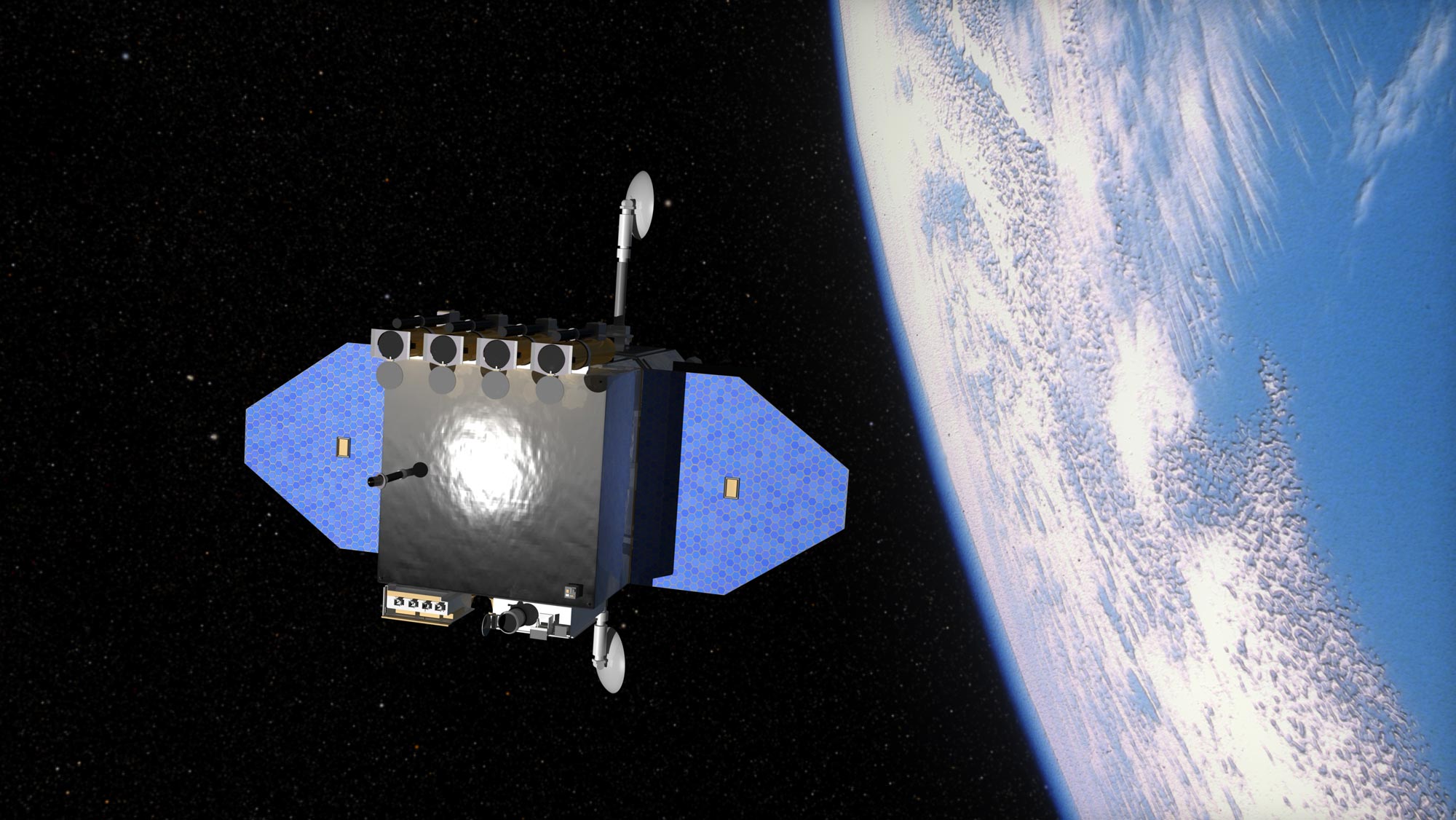
NASA’s Solar Dynamics Observatory (SDO) is a mission dedicated to observing the Sun and its various activities. Launched on February 11, 2010, SDO is part of NASA’s Living With a Star (LWS) program, which aims to understand the causes of solar variability and its impacts on Earth. SDO’s primary goal is to monitor the Sun’s influence on Earth and near-Earth space by studying the solar atmosphere across multiple wavelengths.
It provides high-resolution images of the Sun in 13 different wavelengths, each highlighting various aspects of solar activity such as flares, sunspots, and magnetic fields. This wealth of data helps scientists improve space weather forecasting, thereby aiding in the protection of satellites and other space-based technologies.
Never miss a breakthrough: Join the SciTechDaily newsletter.
Follow us on Google and Google News.
6 Comments
I want to thank you for a very interesting subject!
I am a land surveyor and we always have trouble with solar flares!
With are gps systems,knowing what satalites to block and seems to work very well!
We keep on trying to figure what mothet nature has in store for us!!
Thank you ,merci
Same here man! Always checking for solar flares for this very reason. Stay safe out there.
Thank you!
Dear sun,
I love you with the utmost, I think I’m not a God fearing man, you help not upset… Please collect me.
Love Andrew Telford.
Perfect and thank you
I would like to know honestly how solar flares HONESTLY affect the earth. If it affects our manpgnetic protection we could end up like mars, no atmosphere.
Solar flares are intense bursts of radiation from the Sun that can affect Earth in various ways, but they do not directly strip our planet of its atmosphere like what happened on Mars. Here’s how they work:
1. **Impact on Earth’s Magnetic Field**: When a solar flare occurs, it releases a large amount of energy, including electromagnetic radiation and energetic particles. These particles interact with Earth’s magnetic field, sometimes causing geomagnetic storms. These storms can disrupt communication systems, GPS signals, and even power grids. The most significant threat to technology comes from the electromagnetic radiation and high-energy particles that can cause voltage instability in power lines and satellite malfunctions.
2. **Atmosphere and Magnetosphere**: Earth is protected by both its atmosphere and its magnetosphere, which act as shields against the harmful effects of solar radiation. The atmosphere absorbs most of the high-energy particles, while the magnetosphere deflects the majority of solar wind and cosmic rays. Solar flares themselves do not weaken our magnetic field, but extreme solar activity, particularly *coronal mass ejections (CMEs)*, can temporarily distort the magnetosphere, allowing some solar radiation to penetrate deeper into the atmosphere. However, this disruption is temporary, and the magnetosphere returns to normal after the storm subsides.
3. **Comparison to Mars**: Mars lost most of its atmosphere billions of years ago due to the weakening of its magnetic field. Without a strong magnetosphere, the solar wind gradually stripped away its atmosphere, leading to its current cold, dry state. On Earth, the magnetosphere remains robust enough to prevent this from happening, despite periodic disturbances from solar flares and CMEs. There’s no evidence suggesting that solar flares, even in extreme cases, could degrade our magnetic protection to the point where we’d lose our atmosphere like Mars.
In short, while solar flares can disrupt technology and impact Earth’s magnetic field temporarily, they do not pose a significant threat to the stability of Earth’s magnetosphere or atmosphere in the way Mars experienced